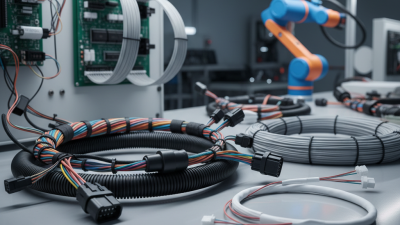
Choosing reliable Board Wire suppliers in 2026 requires more than comparing online prices. Global buyers need stable conductivity, consistent insulation, accurate dimensions, and dependable delivery. A polished website proves very little. A tested sample proves more.
Dr. Douglas G. Brooks, a respected PCB interconnect specialist, often stresses a practical engineering principle: “You cannot improve what you do not measure.” This idea should guide every Board Wire purchasing decision. Buyers should request resistance data, conductor specifications, insulation details, test reports, and batch traceability. They should also examine how suppliers manage copper quality, production tolerances, packaging, and final inspection.
The best suppliers explain their process clearly. They do not hide behind vague claims. They provide samples before large orders and answer technical questions with evidence. Certifications related to quality, environmental management, and product safety can strengthen confidence, but certificates still require verification. Requirements may also differ across markets.
Real purchasing experience reveals uncomfortable details. Some suppliers quote aggressively, then change materials after approval. Others meet the first shipment but struggle with repeat orders. No supplier is perfect. Even strong manufacturers can face delays, capacity limits, or communication gaps.
This guide reviews leading Board Wire suppliers for global buyers. It focuses on measurable quality, production capability, documentation, customization, export experience, and after-sales support. The rankings are not absolute. A supplier suitable for high-volume electronics may not fit a small industrial project. Buyers should compare evidence carefully, test samples independently, and keep expectations realistic. Reliability begins before the purchase order.
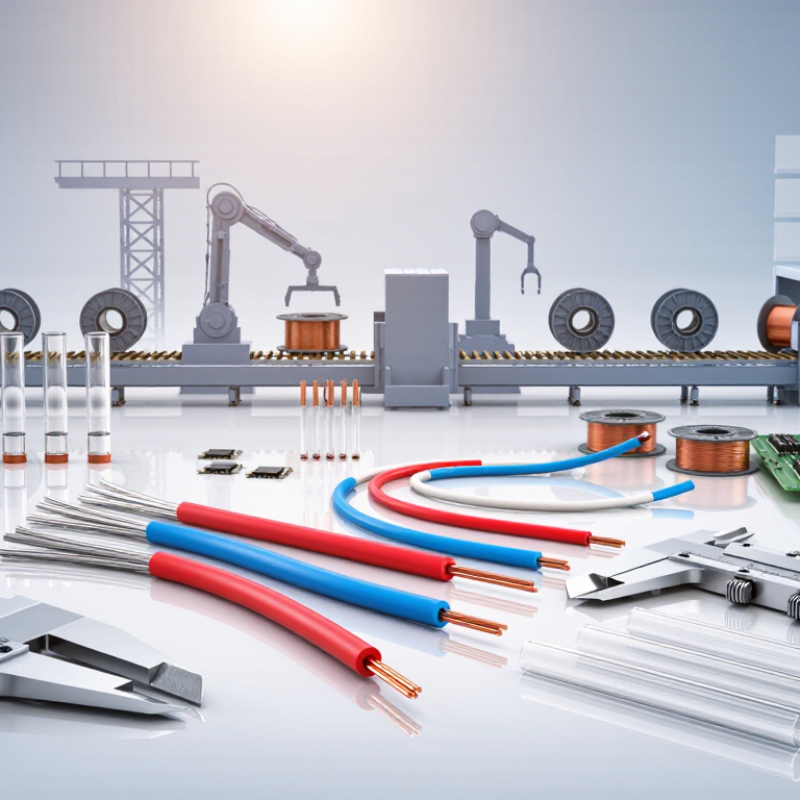
Board wire is insulated conductor used for internal connections in control panels, circuit boards, and compact electrical assemblies. Its size is commonly stated in AWG, or American Wire Gauge. A lower AWG number means a thicker conductor, greater current capacity, and usually lower voltage drop.
For example, 22 AWG suits many low-current signal circuits, while 18 AWG may handle higher loads. The correct choice still depends on length, temperature, bundling, and installation conditions. Copper marked 100% IACS meets the conductivity reference for annealed copper. It supports efficient current flow and predictable resistance. However, “copper” alone does not prove purity or performance. Request conductivity data, conductor size, and test records from the supplier.
Insulation ratings need equal attention. Check voltage rating, temperature range, flame behavior, flexibility, and chemical resistance. PVC may suit general panel wiring, while specialized materials perform better in heat or oil exposure. A rating that looks adequate on paper can fail in a crowded enclosure. That part is easy to underestimate.
Tips: Match the wire gauge with the actual load, not only the connector size. Confirm the insulation diameter before ordering, especially for tight terminal blocks. Ask for samples and test them under realistic bending and temperature conditions. I would also verify stripping performance; clean stripping saves time and prevents hidden conductor damage.
This chart compares common solid copper board-wire sizes by nominal conductor resistance at 20°C. Lower resistance indicates lower voltage drop and heat generation. The values are based on standard copper AWG conductor dimensions and approximate DC resistance per 100 meters. High-conductivity copper is commonly referenced against 100% IACS, equal to approximately 58 MS/m at 20°C. Insulation temperature ratings vary by construction and material; typical wire products may be rated at 80°C, 105°C, or 125°C, so the supplier’s datasheet should be checked before selection.
Global buyers need more than a low price when selecting board wire suppliers. Compliance must be visible in the product file, not hidden in a sales promise. IPC/WHMA-A-620 supports workmanship expectations for wire and cable assemblies, including crimp quality, stripping, routing, and insulation clearance. Inspectors may check terminal placement under magnification. Small defects matter.
UL requirements depend on the wire construction, insulation system, voltage rating, and intended application. A reliable supplier should provide traceable certification details, test reports, material specifications, and production inspection records.
RoHS compliance addresses restricted substances such as lead, mercury, and certain flame retardants. REACH requires careful communication about substances of very high concern. Declarations should match the exact material and revision supplied.
In sourcing reviews, I have found that certificates alone are not enough. A document can be valid, yet the delivered wire may use a different jacket compound or conductor size. That gap deserves attention. Ask for lot identification, change-control procedures, and sample approval records. Check whether color, flexibility, stripping force, and crimp performance remain stable across shipments. Test samples independently when the application is safety-critical. Some suppliers overlook regional documentation updates. That is not a minor weakness for global purchasing teams. Reliable board wire sourcing depends on evidence, repeatable process control, and honest disclosure when a requirement remains uncertain.
2026 Best Board Wire Suppliers for Global Buyers
Gauge range and voltage ratings should be checked together. For compact control boards, 28–22 AWG wire usually supports tight routing and low-current signals. Power assemblies often need 20–16 AWG, while heavier loads may require 14–10 AWG. Typical insulation ratings range from 30 V to 600 V. However, gauge alone does not prove safety. Temperature, conductor stranding, insulation thickness, and installation conditions also matter. IEC 60227 and IEC 60245 provide useful international reference points for insulated cable performance.
MOQ and lead time can change the real purchase cost. Current supplier comparisons commonly show 500–5,000 meters for standard colors and constructions. Custom jackets, special stripping, or printed markings may push MOQs above 10,000 meters. Standard orders often ship within 2–4 weeks. Custom production may require 6–10 weeks. These figures are buyer benchmarks, not guarantees. IPC’s 2024 industry outlook highlights continuing supply-chain and demand volatility across electronics manufacturing.
Copper pricing deserves attention. The U.S. Geological Survey’s Mineral Commodity Summaries 2024 identifies copper as a strategically important industrial material. The International Energy Agency’s Global Critical Minerals Outlook 2024 also flags copper supply growth as a potential constraint. Ask suppliers for conductor resistance, voltage-test records, batch traceability, and sample approval. A polished comparison can still mislead. I would verify every lead-time promise against recent shipment evidence.
| Supplier Profile | Typical Product Focus | Conductor / Wire Gauge Range | Typical Voltage Ratings | Insulation Materials | Common Compliance Options | Typical MOQ | Sample Lead Time | Bulk Lead Time | Best Fit for Global Buyers |
|---|---|---|---|---|---|---|---|---|---|
| Profile A: Catalog Stock Supplier | UL 1007 electronic hook-up wire | 30–10 AWG 0.25–6.0 mm² |
300 V | PVC insulation, typically 80°C | UL, CSA, RoHS, REACH | 100–500 m per color and size | 3–7 business days | 2–4 weeks | Prototype builds, repair parts, and recurring standard sizes |
| Profile B: High-Voltage Board Wire Supplier | UL 1015 appliance and control wire | 30–4 AWG 0.25–25 mm² |
600 V | PVC insulation, typically 105°C | UL, CSA, RoHS, REACH | 500–1,000 m per color and size | 5–10 business days | 3–6 weeks | Power boards, industrial controls, and higher-voltage assemblies |
| Profile C: Fine-Gauge Automation Supplier | UL 1569 and UL 1061 internal wiring | 32–16 AWG 0.03–1.5 mm² |
150–300 V | PVC insulation, typically 80–105°C | UL, CSA, RoHS, REACH | 300–1,000 m per color and size | 5–12 business days | 3–5 weeks | Compact PCBs, sensors, displays, and low-current electronics |
| Profile D: Flexible Cable Supplier | UL 2651 ribbon cable and IDC cable | 28–20 AWG 0.08–0.50 mm² |
300 V | PVC insulation with flat parallel construction | UL, RoHS, REACH, halogen-free options | 100–500 m per width and color | 7–14 business days | 4–7 weeks | Board-to-board connectors, test fixtures, and control panels |
| Profile E: High-Flex Silicone Supplier | Silicone-insulated hookup wire | 30–6 AWG 0.25–16 mm² |
300–600 V | Silicone rubber, commonly -60°C to 180°C | RoHS, REACH, UL options, halogen-free options | 200–500 m per color and size | 7–14 business days | 4–8 weeks | High-flexibility, vibration, heat, and tight-bend applications |
| Profile F: Battery and Power Assembly Supplier | Flexible battery wire and power lead assemblies | 26–4 AWG 0.14–25 mm² |
300–600 V, application dependent | PVC, XLPE, silicone, or TPU insulation | UL, CSA, RoHS, REACH; connector approvals vary | 100–300 finished assemblies or 300–1,000 m bulk wire | 10–20 business days | 5–9 weeks | Battery packs, power distribution, robotics, and portable equipment |
| Profile G: Custom OEM Wire Supplier | Cut, strip, tin, crimp, and labeled board-wire assemblies | 32–4 AWG 0.03–25 mm² |
150–600 V | PVC, silicone, XLPE, PTFE, or TPU | UL, CSA, RoHS, REACH, customer-specific documentation | 500–2,000 pieces per part number | 2–4 weeks, including tooling review | 6–10 weeks | OEM production requiring repeatability, traceability, and customized terminations |
| Profile H: Specialty Temperature Supplier | PTFE, FEP, ETFE, and high-temperature board wire | 30–8 AWG 0.25–10 mm² |
300–600 V | Fluoropolymer insulation, commonly -65°C to 200°C or higher | UL options, RoHS, REACH, low-outgassing options | 500–1,000 m per size | 10–20 business days | 6–12 weeks | Aerospace electronics, laboratory equipment, thermal zones, and harsh environments |
| Planning reference: gauge ranges, voltage ratings, minimum order quantities, and lead times represent common 2026 market practices for comparable board-wire products. Final specifications depend on conductor material, strand construction, insulation thickness, color, packaging, certifications, tooling, destination, and order volume. Buyers should confirm current datasheets, approval files, Incoterms, and production schedules before placing an order. | |||||||||
Global buyers should read IEC 60228 data before comparing board wire suppliers. The standard defines conductor classes, nominal cross-sections, and maximum direct-current resistance. Class 1 uses solid conductors. Class 2 uses stranded conductors for fixed installations. Class 5 supports flexible wiring. Class 6 offers even greater flexibility. Small control panels often need Class 5, especially near hinges or moving terminals. Class 2 may suit fixed internal routing and reduce unnecessary cost.
Temperature ratings require separate attention. IEC 60228 does not set the complete operating temperature of insulated wire. The insulation system, cable design, and application standard determine that limit. PVC constructions commonly use 70°C conductor ratings, while some cross-linked insulation systems allow 90°C continuous operation. Actual ratings can change with bundling, ambient heat, and installation space. A crowded board enclosure may run hotter than its laboratory test.
Tips: Request resistance values at 20°C, conductor class, cross-section tolerance, insulation rating, and test reports. Check whether the supplier states copper purity and stranding details. Ask for sample lengths before placing a large order. Do not compare temperature numbers alone. I have seen specifications that looked precise but omitted the reference standard. That omission matters. It can create costly redesigns during approval testing. Record the test method, batch number, and measured resistance for every approved wire type.
2026 Best Board Wire Suppliers for Global Buyers
When evaluating board wire suppliers, buyers should inspect evidence, not polished claims. ISO’s Survey of Certifications 2022 recorded 1,265,216 ISO 9001 certificates across 188 countries. That figure shows broad adoption, but certification alone does not prove consistent wire performance. ISO 9001 evaluates the management system, not every conductor or insulation layer.
Ask for the supplier’s current certificate, scope, issuing body, and surveillance status. Then request a sample batch record. It should connect the purchase order to copper lot, insulation compound, production line, operator, and test results. Useful checks include conductor resistance, diameter, tensile strength, elongation, insulation thickness, and spark testing. IEC 60228 provides recognized conductor requirements for resistance and construction classes.
Traceability must work backward and forward. One reel should lead to raw-material records. One copper lot should reveal every affected shipment. This sounds simple. It often fails.
Buyers should compare laboratory reports with independent sampling. Test dates matter. So do equipment calibration records. A supplier may present excellent results from an old batch while current production has changed. That uncomfortable gap deserves attention.
Request retention periods and corrective-action records. Repeated deviations can expose process weakness before failure reaches the assembly line. Digital traceability helps, yet handwritten records are not automatically unreliable. I have seen clean software hide incomplete data, while disciplined paper logs preserved useful details. Verification remains more important than appearance.