2026 Best Flat Cable Options for Global Buyers?
In the rapidly evolving landscape of electronics, the relevance of flat cables cannot be overstated. As businesses and consumers pursue versatile and reliable connection solutions, flat cable technology has gained significant traction. According to a recent market analysis by ResearchAndMarkets, the global flat cable market is projected to experience a compound annual growth rate (CAGR) of over 8% from 2022 to 2026. This indicates a rising demand for flat cables across various sectors, including consumer electronics, automotive, and telecommunications.
Flat cables offer several advantages, such as space efficiency and flexibility, making them ideal for compact and intricate electronic designs. For instance, the automotive industry increasingly utilizes flat cables in electric vehicle architectures. They provide critical connections without occupying excessive space. However, not all flat cable solutions are created equal. Some have durability issues and may not withstand harsh environments.
Choosing the best flat cable options requires careful consideration. Buyers should evaluate specific requirements, such as electrical performance and environmental robustness. This market offers a plethora of choices, but the challenge remains: ensuring the selected flat cable meets the evolving demands of technology while maintaining reliability.

Overview of Flat Cable Types Available Globally
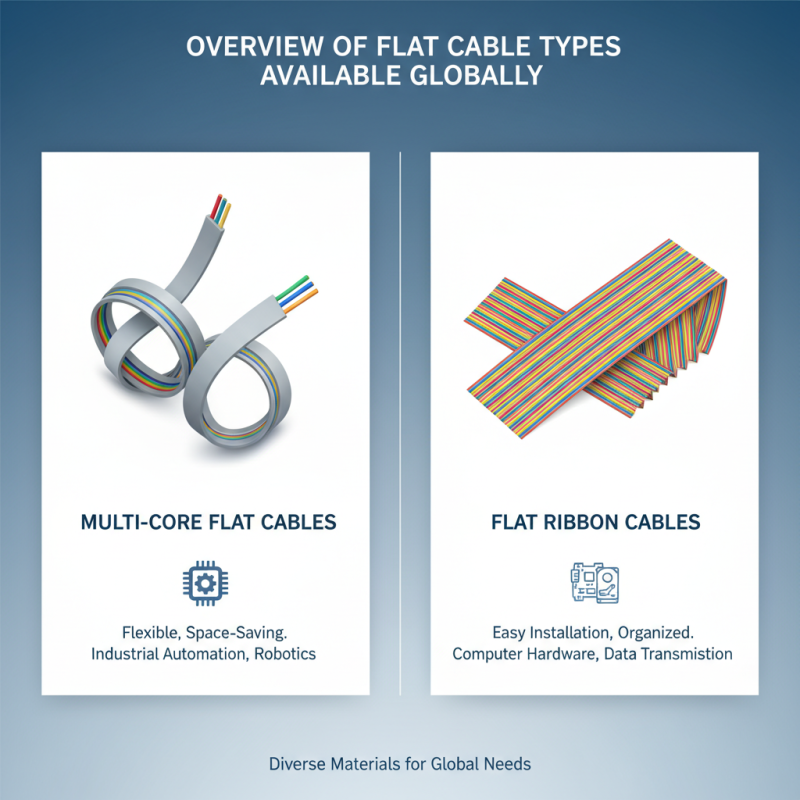
Flat cables come in various types and materials, catering to diverse global needs. Key varieties include multi-core and flat ribbon cables. Multi-core cables are known for their flexibility and are often used in applications where space is a constraint. Flat ribbon cables, on the other hand, are frequently seen in computer hardware and signal transmission due to their ease of installation and organization.
According to a 2022 market analysis, the global flat cable market is projected to grow by 6% annually. Such growth underscores the rising demand for efficient wiring solutions in electronics and automotive sectors. The growing trend toward miniaturization in devices also drives the need for narrower and more flexible flat cable options. Interestingly, while these cables offer many advantages, there are concerns regarding durability under extreme conditions. Testing and validation are crucial to ensure reliability and performance over time.
Moreover, environmental considerations are becoming increasingly relevant. Innovations in biodegradable materials are emerging, but production costs can be higher. This creates a dilemma for manufacturers who seek to balance eco-friendliness with affordability. Continuous development is essential to meet both industry standards and sustainability goals.
Key Factors to Consider When Choosing Flat Cables
When selecting flat cables, several important factors come into play. Material quality is crucial. Cables made from high-quality copper or aluminum offer better conductivity and durability. The insulation type also matters. PVC and TPE are common, but each has its pros and cons. Consider how these materials perform in different environments.
Another key factor is cable flexibility. Flexibility impacts installation and long-term usage. Look for cables designed to bend easily without damage. A cable that is too stiff may break under stress, while one that is too loose can affect performance. The length of the cable should match your needs, preventing excess clutter and ensuring tidy setups.
Compatibility is vital. Ensure the cable works with your devices and equipment. Not all flat cables are universal. Research the specifications you need. Finally, while decisions may seem straightforward, understanding each factor deeply helps in making the best choice. Sometimes, trial and error reveals what works best for your unique situation.
Top Brands for Flat Cables in the Market
In 2026, the demand for flat cables is soaring globally. Many industries rely on high-quality flat cable solutions for their electrical needs. Research shows that the flat cable market is projected to grow by over 5% annually. This growth stems from diverse sectors such as automotive, telecommunications, and consumer electronics.
Top brands in flat cables often focus on performance and durability. They invest heavily in R&D to meet the latest standards. Notably, professional reports highlight that flat cables should offer excellent heat resistance and flexibility. Many manufacturers now provide data sheets that emphasize these features. Yet, despite advancements, not all products on the market maintain consistent quality. Variations exist that might impact installation and long-term performance.
Quality assurance is a vital aspect. The right certifications can indicate whether a flat cable meets safety standards. However, buyers must remain vigilant. Industry experts often point out that some brands may not fully disclose their testing processes. It's essential for consumers to do their homework. Seeking genuine reviews can mitigate risks of unreliable products. Understanding these market dynamics will aid global buyers in making informed choices.
Comparative Analysis of Flat Cable Prices Worldwide
Flat cables have become increasingly popular in various industries due to their versatility and space-saving design. However, their prices vary significantly across different regions. A recent report from an industry research firm highlighted that flat cable prices in North America often exceed those in Asia by nearly 30%. This discrepancy can be attributed to factors like raw material costs and manufacturing labor fees.
Examining the European market reveals another interesting trend. The average price of flat cables in Europe is consistently 10% lower than in North America. This difference suggests competitive manufacturing practices and local availability of materials in Europe. Yet, many consumers may overlook the potential for quality variations that accompany price differences.
Another consideration is the trade agreements that affect pricing globally. Tariffs can impact flat cable costs in some regions, making them less appealing to buyers. Despite lower prices in certain areas, buyers must evaluate whether lower costs equate to lower quality. Thus, while seeking the best flat cable options, understanding these price variations is crucial.
2026 Best Flat Cable Options for Global Buyers
This chart displays the comparative analysis of flat cable prices across various regions in 2026. The data reflects the average prices (in USD) for select categories of flat cables, providing insight into the market trends globally.
Future Trends in Flat Cable Technology and Design
The flat cable market is evolving rapidly. According to a recent market analysis, the global demand for flat cables is projected to reach $4.8 billion by 2026. Innovations in materials and design are driving this growth, with a focus on enhancing flexibility and durability.
One significant trend is the use of advanced materials such as silicone and thermoplastics. These materials offer better heat resistance and flexibility. This means they can be used in tight spaces without compromising their integrity. Industry experts note that demand for lightweight and flexible solutions is rising, particularly in automotive and electronic applications.
However, challenges remain. The production of these cables can be more complex due to innovative manufacturing processes. Sustainability is also a concern. As manufacturers strive to reduce waste, they must balance efficiency with eco-friendly practices. It’s crucial to focus on these aspects to meet the evolving needs of the global market while maintaining high standards of quality.
2026 Best Flat Cable Options for Global Buyers
| Cable Type |
Max Data Rate (Gbps) |
Length Options (m) |
Material |
Key Features |
| HDMI Flat Cable |
48 |
1 - 20 |
Copper |
4K/8K Support, High Durability |
| USB Type-C Flat Cable |
10 |
0.5 - 5 |
Aluminum |
Fast Charging, Data Transfer |
| Ethernet Flat Cable |
100 |
1 - 50 |
Copper |
Ultra Thin, Flexible Design |
| Audio Flat Cable |
24 |
1 - 10 |
Copper |
Noise Resistant, High Fidelity |
| DisplayPort Flat Cable |
32 |
2 - 15 |
Copper |
8K Support, Locking Connector |