Leave Your Message

How to Choose Cable Wire Connectors for Global Sourcing?

Choosing Cable Wire Connectors for global sourcing is not simply a price comparison. It is a reliability decision made across factories, climates, standards, and supply chains. A connector that fits perfectly in a clean warehouse may loosen after vibration, humidity, salt exposure, or repeated installation.

Industry data supports this wider view. MarketsandMarkets’ Global Connectors Market reports identify automotive electrification, industrial automation, and communication infrastructure as major demand drivers. Grand View Research also highlights growing requirements for reliable electrical connection systems in energy and manufacturing applications. These trends matter because sourcing volumes are rising while failure tolerance is shrinking.

Ron Bishop, founder of Bishop & Associates and a long-time connector industry analyst, once described connectors as “the most important component in the system.” The wording may sound excessive. It is not always wrong. One corroded terminal can stop an entire machine.

A practical sourcing review should examine contact material, current rating, insulation temperature, ingress protection, locking design, and applicable IEC or UL requirements. Ask for batch traceability and test reports. Request samples from production, not only polished development units. Check crimp height with a calibrated tool. Pull the wire by hand. Small details reveal weak process control.

Global sourcing also requires honest skepticism. A lower unit price can hide higher tooling costs, inconsistent plating, or difficult replacement orders. Supplier certifications help, but they do not replace independent verification. The best choice balances electrical performance, environmental resistance, documentation, lead time, and long-term availability. There is no perfect connector. There is only a connector matched carefully to its real operating conditions.
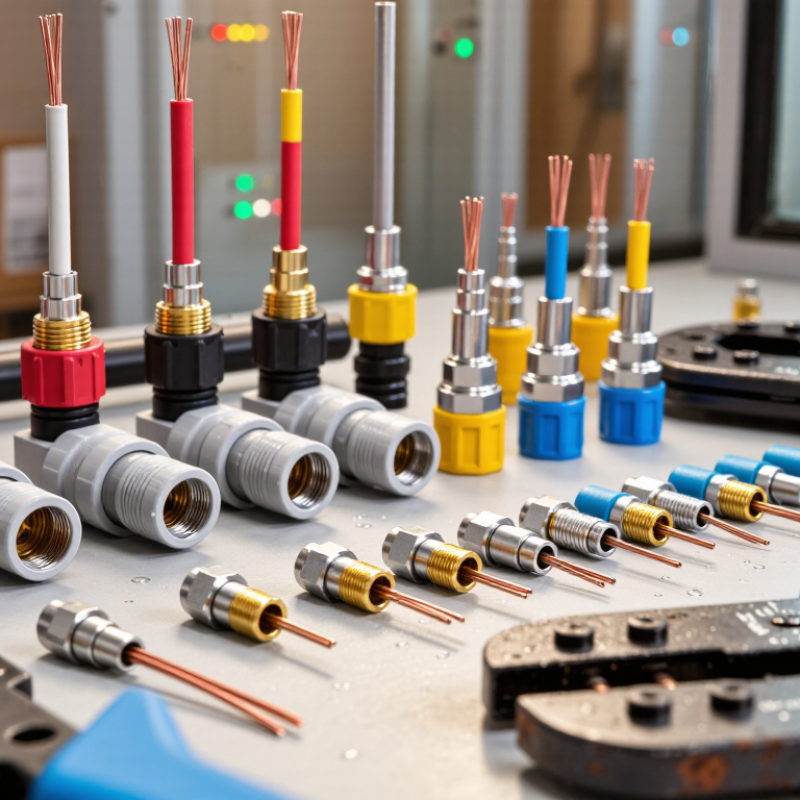
How to Choose Cable Wire Connectors for Global Sourcing?

Define the Application and Technical Requirements

Choosing cable wire connectors for global sourcing starts with the application, not the catalog.

Describe the real installation first. Will the connector sit inside a sealed control cabinet, beneath a vehicle floor, or beside a vibrating motor? The 2024 Global EV Outlook from the International Energy Agency reports more than 17 million electric cars were sold worldwide in 2024. That growth increases demand for connectors that manage heat, vibration, moisture, and frequent service cycles. A connector for a charging system may need high current capacity, touch protection, and controlled temperature rise. A sensor harness may need signal stability instead.

Translate those conditions into measurable requirements. Specify voltage, continuous and peak current, wire gauge, contact resistance, mating cycles, operating temperature, flame rating, and ingress protection. IEC 60529 defines IP protection levels, while IPC/WHMA-A-620 provides widely used workmanship guidance for cable and wire harness assemblies. For automotive applications, environmental testing should also reflect vibration, fluids, salt exposure, and thermal cycling. Do not rely on “industrial grade” alone. It is too vague.

Sourcing teams should request test reports, material declarations, dimensional drawings, and sample approvals. Check whether ratings apply to the complete assembly or only the connector body. That detail is often missed. A lower-cost part can become expensive after crimp failures, field returns, or tooling changes. Specifications can still be wrong. Review them with assembly technicians before mass purchasing.
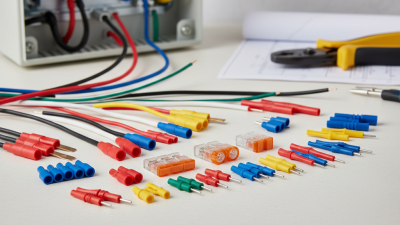
Compare Connector Types, Materials, and Compatibility

How to Choose Cable Wire Connectors for Global Sourcing?

Global sourcing starts with compatibility, not price. MarketsandMarkets valued the electrical connectors market at about USD 84.7 billion in 2024. Its report projects roughly 5.4% annual growth through 2029. This expansion increases supplier choice, but it also increases specification mistakes.

Match the connector to conductor size, strand class, insulation diameter, and current demand. IEC 60228 conductor classes help confirm whether the cable is solid, stranded, or highly flexible. Copper connectors suit many power applications, while aluminum versions require careful attention to oxidation and contact pressure. Plated surfaces can improve corrosion resistance. The wrong plating still fails in humid storage.

Choose by connection method. Crimp connectors need controlled tooling and pull-force checks. Screw terminals allow field adjustment but may loosen under vibration. Spring connectors support faster assembly, although wire size limits are easy to overlook. Check rated voltage, temperature, ingress protection, and insulation clearance against the destination market’s requirements. IEC 60529 ratings provide a useful reference for dust and water protection.

The cable market itself is broad. Grand View Research estimated its global value at approximately USD 211.2 billion in 2023. That number hides major differences between automotive, industrial, building, and renewable-energy applications. I would request samples, cross-sections, test reports, and batch traceability before approval. A datasheet can look complete. It may still omit mating-cycle performance or mixed-metal contact risks. Small oversight, expensive rework.

Evaluate Safety Standards and Global Certifications

When choosing cable wire connectors for global sourcing, safety certification should guide the shortlist. Product appearance is not enough. A connector may fit perfectly yet fail under heat, vibration, or sustained current.

Check the exact safety standard for the connector’s intended use. Common references include IEC 60998 for household and similar connections, and UL 486 series requirements for wire connectors. Requirements can differ by region and application. Confirm rated voltage, current, conductor size, temperature range, insulation material, and flame performance. For outdoor installations, review the IP rating and corrosion resistance. Small details matter. They often decide whether a component survives real service conditions.

Tips: Request a current certificate, test report, and declaration of conformity. Match every document to the exact model, material, factory, and production site. A certificate covering a product family may not cover every variation. Check whether the approval applies to copper, aluminum, or both. Ask for batch traceability and sample testing before large orders. Do not rely on a printed certification mark alone. Verify it through the issuing organization’s database when possible.

In practical sourcing, documentation is sometimes treated as paperwork rather than engineering evidence. That is a mistake. I would also inspect crimp quality, terminal grip, and insulation damage on physical samples. Supplier documents can be incomplete, and my own review can miss details. Independent testing is worth considering for high-risk applications. A connector should pass both the document check and the workshop test.

Assess Supplier Quality, Production Capacity, and Reliability

Choosing cable wire connectors for global sourcing requires more than comparing unit prices. Supplier quality must be visible in daily production. During factory evaluations, inspect crimping machines, mold conditions, and material storage areas. A clean warehouse reduces contamination risks. Ask for copper composition records, insulation specifications, and batch traceability documents. Request samples from regular production, not specially prepared pieces. Test crimp strength, pull resistance, insulation fit, and temperature performance. Small defects often appear after repeated assembly.

Production capacity deserves equal attention. A supplier may quote large volumes without proving its output. Review machine numbers, operating shifts, staffing levels, and maintenance schedules. Compare stated capacity with recent delivery records. Ask how the factory handles sudden demand during peak seasons. Check whether critical materials come from one source. That creates risk. A practical trial order can reveal packing accuracy, inspection speed, and actual lead time. My experience is that capacity figures are sometimes optimistic, especially when subcontracting is involved.

Reliability depends on repeatable systems, not confident promises. Examine quality-control procedures at incoming, in-process, and final stages. Confirm whether inspectors use calibrated gauges and keep inspection records. Audit how the supplier handles defects, customer complaints, and corrective actions. Clear answers matter. Contact suitable trade references when available, but do not treat them as complete proof. I once accepted a supplier with excellent samples and weak follow-up. That mistake delayed production. A written quality agreement, realistic delivery schedule, and small initial order provide stronger protection than certificates alone.

How to Choose Cable Wire Connectors for Global Sourcing? Assess Supplier Quality, Production Capacity, and Reliability through measurable evidence and risk controls.
Evaluation Area Assessment Dimension Evidence or Metric to Request Practical Benchmark Verification Method Risk Signal
Supplier Quality Quality management system Current ISO 9001 certificate, certificate scope, issuing body, audit status, and corrective-action records. Certificate scope should cover the relevant connector manufacturing and testing activities; certificate should be valid and independently verifiable. Check the certificate number with the certification body and conduct a process audit. Expired certificate, unclear scope, or repeated unresolved audit findings.
Supplier Quality Product and process specifications Controlled drawings, material specifications, crimp or termination instructions, inspection plans, and revision history. Every production lot should be made against an approved drawing with defined dimensions, materials, tolerances, and acceptance criteria. Compare the approved specification with samples, inspection records, and production-line documents. Uncontrolled revisions, undocumented substitutions, or verbal specifications.
Supplier Quality Material conformity and compliance Material declarations, certificates of analysis, restricted-substance declarations, and records for resin, copper alloy, plating, and insulation materials. Materials should meet the applicable customer specification and relevant requirements such as RoHS and REACH where required by the destination market. Review supplier documents and perform periodic laboratory or third-party testing. Missing lot traceability, unexplained material changes, or generic declarations without product scope.
Supplier Quality Electrical and mechanical performance Test data for contact resistance, dielectric withstand, insulation resistance, temperature rise, crimp pull-out force, and dimensional conformity. Acceptance limits must follow the approved drawing and applicable product standard; results should be recorded by lot and test method. Review raw data, calibration records, test methods, and retained samples. Only summary pass/fail reports, missing test conditions, or results without lot identification.
Supplier Quality Applicable certifications and standards Declarations or certification evidence for the target market and connector type, such as IEC requirements or North American wire-connector requirements where applicable. The standard should match the connector construction, wire range, installation method, voltage, temperature, and destination market. Confirm the exact model, ratings, test scope, and certificate status with the relevant certification database or laboratory. Certification applies to a different model, wire size, or installation method.
Production Capacity Rated and available capacity Installed machines, tooling count, working shifts, monthly rated output, current utilization, and capacity reserved for the program. Available capacity should cover forecast demand plus a documented contingency margin; capacity should be supported by actual equipment and labor records. Conduct a site visit, review machine lists, and reconcile capacity claims with recent production records. Capacity based only on theoretical machine speed or subcontracted production not disclosed in advance.
Production Capacity Tooling and changeover control Tooling register, preventive-maintenance schedule, setup instructions, first-piece approval, and changeover time. Critical tooling should be uniquely identified, maintained, inspected, and protected against unauthorized adjustment. Inspect tooling condition and review maintenance, setup, and first-article records. Worn dies, shared undocumented tooling, or frequent unplanned machine stoppages.
Production Capacity Lead time and delivery performance Quoted production lead time, order-to-ship history, on-time delivery percentage, backlog, and expedite policy. Use a documented lead-time commitment and measure on-time delivery against the confirmed date for at least several production cycles. Review historical shipment records and compare promised dates with actual dispatch dates. Long or unstable lead times, unexplained schedule changes, or dependence on emergency freight.
Reliability Design validation and life testing Temperature cycling, humidity exposure, vibration, corrosion, mating-cycle, current-loading, and aging test reports as applicable to the connector design. Test severity, duration, sample size, and acceptance criteria should reflect the intended application and applicable standard. Audit the test plan, equipment calibration, raw results, failure analysis, and sample identification. Testing performed only on prototypes or reports lacking environmental conditions and acceptance criteria.
Reliability Process capability and defect control In-process inspection results, control charts, first-pass yield, scrap rate, nonconformance reports, and corrective-action effectiveness. Critical dimensions and termination parameters should have defined control limits and reaction plans; corrective actions should be verified for effectiveness. Review trend charts and trace a nonconforming lot from detection through final disposition. Repeated defects, manual rework without records, or corrective actions that address symptoms only.
Reliability Traceability and recall readiness Lot coding, raw-material batch records, machine and operator records, inspection results, shipment records, and retention period. A finished lot should be traceable backward to materials and process conditions and forward to shipped customers. Perform a mock traceability exercise using a randomly selected production lot. Mixed lots, unreadable codes, incomplete records, or inability to isolate affected shipments.
Reliability Business continuity and supply resilience Disaster-recovery plan, backup utilities, alternate tooling or sites, critical-material risk assessment, and inventory policy. The supplier should identify single points of failure and maintain tested recovery actions for critical processes and materials. Review the continuity plan, test history, recovery time assumptions, and dependency map. Single-source materials, no tested recovery plan, or undisclosed subcontracting.
Global Sourcing Export, packaging, and documentation readiness Commercial invoice data, packing specifications, country-of-origin information, carton labeling, pallet standards, and export experience. Documents and packaging should match destination-country requirements and protect terminals, seals, plating, and insulation during transit. Approve a shipping-document checklist and inspect a pilot shipment before full-scale ordering. Inconsistent product descriptions, weak packaging, missing origin data, or repeated customs delays.
Global Sourcing Supplier communication and change notification Named technical and commercial contacts, response-time records, engineering-change procedure, and customer notification process. Material, tooling, process, location, and sub-supplier changes should require documented review and customer approval when they may affect fit, form, function, or compliance. Review the change-control procedure and test response times using technical questions or sample change scenarios. Unannounced changes, slow escalation, or reliance on a single contact person.
Use of benchmarks: The benchmarks are practical sourcing criteria rather than universal pass/fail limits. Final acceptance values should be defined in the approved drawing, purchase specification, customer requirements, and standards applicable to the connector type and destination market.

Calculate Total Costs, Logistics, and Long-Term Value

How to Choose Cable Wire Connectors for Global Sourcing?

A low unit price can hide expensive logistics. Calculate the landed cost before approving samples. Include connector price, tooling, testing, packaging, freight, duties, insurance, and local handling. Add inventory financing and expected inspection costs. The 2024 CSCMP State of Logistics Report valued United States business logistics costs at 2.3 trillion dollars in 2023, equal to 8.7% of GDP. This shows why freight and storage deserve serious attention. For ocean shipments, allow buffer time. UNCTAD reports that ships carry over 80% of global merchandise trade by volume. Delays can stop an assembly line.

I compare suppliers using the same connector specification and delivery terms. Contact material, plating thickness, temperature rating, pull strength, and mating cycles affect long-term value. Ask for test records aligned with IEC 60512 and request traceable material documents. A pilot order can reveal crimp variation, damaged cartons, or unclear labeling. Small defects become costly after thousands of installations. I once focused too heavily on piece price. That was a poor assumption. A slightly cheaper connector created more sorting work and slower production. The lesson still needs testing under real conditions.

Tips: Build a five-year cost model. Include failure rates. Check carton dimensions before booking freight. Request two production batches, not one. Compare air, sea, and regional inventory options. Review supplier audits annually, because quality can drift after approval.

How to Choose Cable Wire Connectors for Global Sourcing?

Estimated five-year total cost per 1,000 cable connections, including purchase, international logistics, installation labor, and replacement allowance.

Lower total cost does not always mean the lowest purchase price. Connectors with better sealing, retention, and installation efficiency can reduce labor, shipping impact, and replacement costs over the product life cycle.