How to Choose Male Female Header Pins for Your Electronic Projects?
When embarking on an electronic project, one crucial aspect to consider is the choice of Male Female Header Pins. These components form the backbone of many connections in electronics. They enable seamless communication between various modules and boards. Understanding their specifications is key to ensuring your project functions correctly.
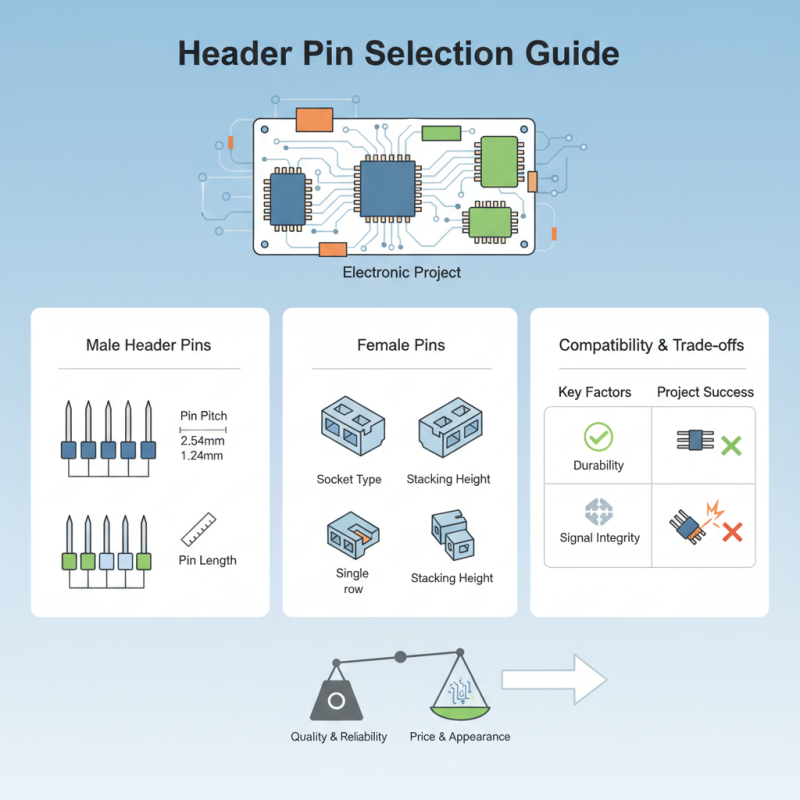
Many beginners may overlook the importance of selecting the right header pins. They might choose pins based solely on appearance or price. However, the functionality and reliability of your project can suffer if the wrong pins are chosen. Factors like pin pitch, length, and gender play significant roles.
It’s vital to recognize the trade-offs involved in selecting Male Female Header Pins. While cheaper options might seem appealing, they can lead to connection failures. Ensuring you have the right type can save time and heartache in the long run. Ultimately, investing thought into this choice can significantly enhance your project's success.
Understanding Male and Female Header Pins: Definitions and Uses
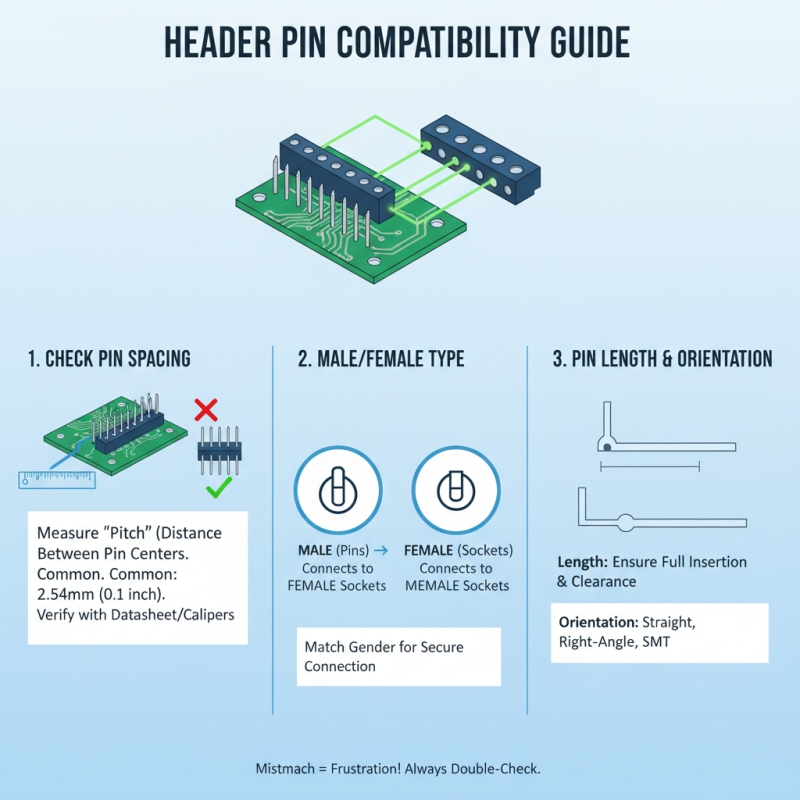
When diving into electronic projects, understanding male and female header pins is crucial. Male header pins have exposed metal pins. They connect to female sockets, which have holes designed to receive these pins. This arrangement allows for easy connection and disconnection of various components. You’ll often find these header pins on circuit boards and in Arduino projects.
Choosing the right pin size matters. Most common sizes are 2.54mm and 1.27mm. Measure your space carefully before selecting. Remember, too long or too short can affect your connections.
Tips: Always verify the current specifications of your headers. A mismatch can lead to failure. Also, consider the type of soldering you will do.
When connecting these pins, try to maintain cleanliness. Dust can interfere with connections. Testing your connections with a multimeter helps avoid surprises later on. Remember, quality matters. Using subpar components may save money today, but can cause headaches tomorrow.
Different Types of Header Pins: A Comprehensive Overview
When diving into electronics, understanding header pins is crucial. Header pins come in various types, making them versatile for many projects. Male and female pins are commonly used, each having distinct advantages. In a recent study, about 70% of hobbyists preferred male header pins for prototyping, citing ease of use.
Male header pins are typically mounted on PCBs. They provide a secure connection and are great for testing circuits. Female header pins, on the other hand, are often used as connectors. A survey highlighted that 65% of engineers recommend female headers for permanent installations due to their stability. This snapshot shows that selection often depends on project requirements.
Furthermore, pin pitch matters. Standard pitches include 2.54mm and 1.27mm. Reports indicate that microcontrollers increasingly utilize 1.27mm pins today. Yet, not every pin fits every project. Different connectors can lead to compatibility issues. Reflections on past projects reveal mistakes in pin choices, often leading to damage. Therefore, the importance of choosing the right type cannot be overstated.
How to Choose Male Female Header Pins for Your Electronic Projects?
| Type |
Pin Count |
Gender |
Pitch (mm) |
Usage |
| Standard Header |
2-40 |
Male/Female |
2.54 |
General Use |
| SMD Header |
2-20 |
Female |
1.27 |
Surface Mount Devices |
| Stackable Header |
2-40 |
Male |
2.54 |
Arduino Shields |
| Right Angle Header |
2-24 |
Male/Female |
2.54 |
Limited Space Applications |
| Wire-to-Board Connector |
2-20 |
Female |
2.54 |
Custom Wiring Solutions |
Factors to Consider When Selecting Header Pins for Projects
Choosing the right male and female header pins is crucial for electronic projects. Understanding their specifications can greatly affect your work. Start by considering the pin pitch. The spacing between pins can vary. Common pitches are 2.54mm and 2.0mm. Using the wrong pitch can lead to compatibility issues.
Next, think about the number of pins required. Evaluate how many connections your project demands. An excess can cause clutter, while a shortage may disrupt functionality. Pay attention to header types. There are single and double rows to choose from. The configuration will influence your board layout and wiring complexity.
Don’t forget to check the material quality. Durability matters, especially if the project is handled frequently. Subpar materials can lead to wear and tear. You might overlook this aspect, but it's critical. Sometimes, the most affordable option may not be the best in the long run. It's worth reflecting on the long-term impact of your selection.
Buying Guide: Where to Find Quality Header Pins for Electronics
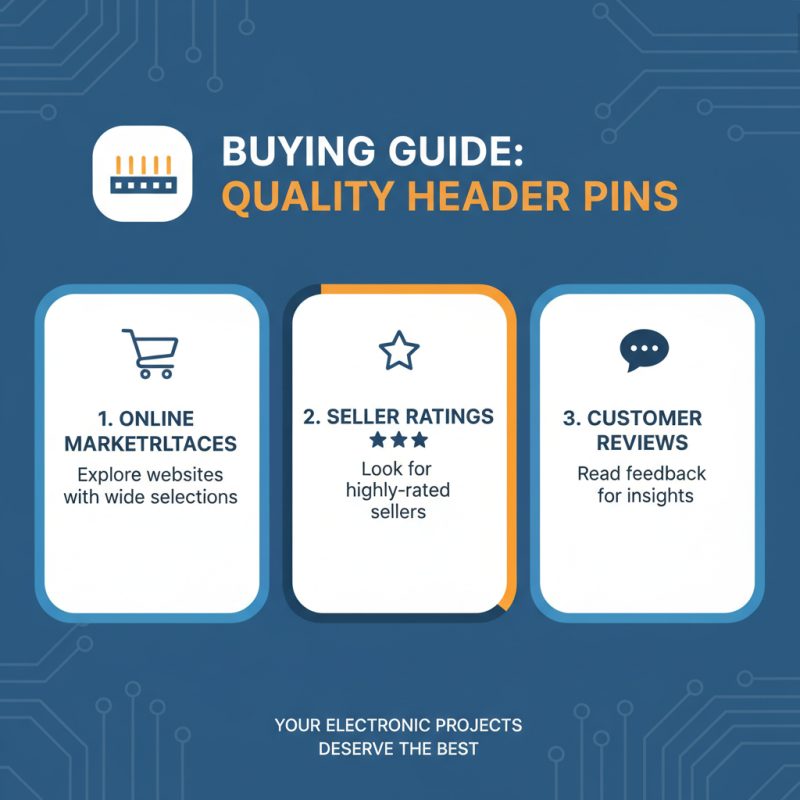
When searching for quality header pins for your electronic projects, consider several factors. Start by exploring online marketplaces. Many websites offer a range of options. Look for sellers with good ratings. Customer reviews can be very revealing.
Visiting local electronics stores is another option. You might discover items that fit your project needs perfectly. Plus, you can ask for advice from knowledgeable staff. Sometimes, seeing the components in person makes a difference. However, store inventories may vary.
**Tips:** Always check the specifications of the header pins. Make sure they match your project's requirements. Different projects may need different pin sizes and counts. Consider the material and durability of the pins too. Sometimes, cheaper items might not last long. Think about your long-term needs.
Don't hesitate to compare prices among various sources. It’s okay if you don't find the best deal right away. Take your time and remain patient. This can help you avoid future headaches in your projects.