How to Choose the Best Tactile Switch for Your Projects?
When embarking on a project that involves user interaction, the choice of a Tactile Switch is crucial. These switches provide feedback through physical sensation, enhancing the user's experience. The right Tactile Switch can make all the difference in functionality and satisfaction.
Different projects demand different characteristics from Tactile Switches. Factors like actuation force, travel distance, and size come into play. Each project may require specific features, which can seem overwhelming. But understanding your needs simplifies the selection process.
Selecting the best Tactile Switch is not just a technical decision. It influences how users engage with your device. Experimentation and feedback are key. Not every choice will be perfect, and adjustments might be needed along the way. Be prepared to refine your selections as you learn what works best in practice.
Understanding Tactile Switches: Types and Characteristics
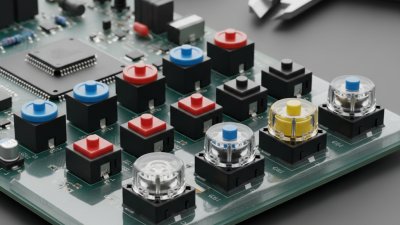
Tactile switches are essential components in many electronic projects. They provide feedback, durability, and versatility. Understanding their types and characteristics is crucial for selecting the right switch.
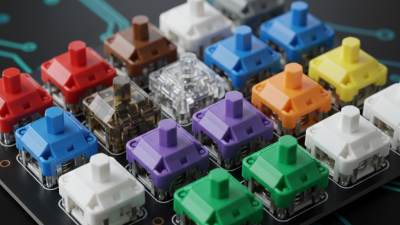
Different types of tactile switches include momentary and latching varieties. Momentary switches only activate when pressed. They are ideal for short, quick tasks. Latching switches remain active until pressed again. This feature is helpful in applications where a constant state is needed. Each type serves unique purposes and suits different projects.
Characteristics such as actuation force and travel distance also play significant roles. The actuation force determines how much pressure is required to activate the switch. A lighter force may lead to accidental presses. On the other hand, a heavier force can make usage uncomfortable. Travel distance refers to how far the switch moves when pressed. A shorter distance is quick but may lack satisfying feedback. Finding the right balance is key.
How to Choose the Best Tactile Switch for Your Projects?
| Type |
Actuation Force (g) |
Travel Distance (mm) |
Lifespan (cycles) |
Mounting Type |
| Mini Tactile Switch |
45 |
0.25 |
100,000 |
Through Hole |
| Standard Tactile Switch |
60 |
0.5 |
200,000 |
Surface Mount |
| Low Profile Tactile Switch |
30 |
0.3 |
50,000 |
Surface Mount |
| Compact Tactile Switch |
70 |
0.4 |
1,000,000 |
Through Hole |
Key Factors to Consider When Selecting a Tactile Switch
When selecting a tactile switch for your project, there are several factors to keep in mind. Key characteristics include actuation force, travel distance, and longevity. According to industry data, the ideal actuation force can range from 45g to 60g, providing a satisfying tactile feedback without excessive strain during use. Travel distance is usually between 0.5mm and 2mm, significantly affecting user experience and sensitivity. Users have expressed preferences for shorter travel distances, leading to faster response times without sacrificing precision.
In addition to these basic parameters, environmental conditions should influence your choice. Some tactile switches are rated for higher temperature variations or moisture resistance. According to a recent report by industry experts, up to 30% of switch failures are environmental-related. Users might overlook these factors, yet they play a critical role in reliability. A switch might feel great under ideal conditions, but its performance can degrade in less-than-ideal environments.
Lastly, consider the mounting layout. Through-hole and surface-mount options each have advantages and drawbacks. A well-designed layout can simplify the assembly process and enhance durability. Understanding the nuances of these choices may require additional research. Taking time to evaluate these factors could lead to a more successful project outcome.
Evaluating Durability and Performance Ratings of Tactile Switches
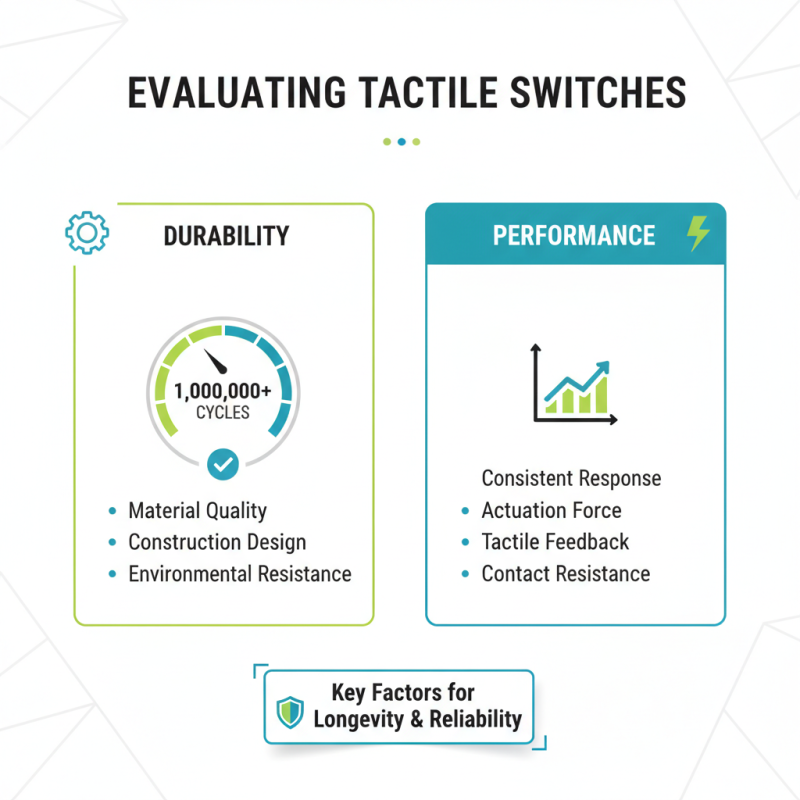
When selecting tactile switches, durability and performance ratings play essential roles. Many manufacturers report switch life spans exceeding 1 million cycles. However, not all tactile switches are created equal. Factors like material quality, construction design, and environmental resistance significantly impact longevity.
Durability encompasses not just cycle life but also switch characteristics. For instance, resistance to dust and moisture can prolong a switch's effectiveness. A study by the Electronics Industry Association suggests that switches with higher IP ratings tend to offer better protection. Ratings like IP67 indicate a robust construction suitable for various environments, ensuring consistent performance over time.
Tip: When evaluating switches, always check the datasheet for durability ratings. Consider your project's specific needs. If a project involves heavy usage, opt for switches with proven lifecycle endurance. Pay attention to tactile feedback as well — an optimal switch should not only last but also provide a comfortable user experience.
Performance ratings include actuation force and travel distance. Typical forces range from 45g to 60g. A mismatch can lead to user fatigue or decreased efficiency. It’s crucial to test different options to find the best fit. Sometimes, you might find a switch with great durability but less than ideal performance. Balancing these factors is key to making the right choice.
Common Applications of Tactile Switches in Various Projects
Tactile switches are widely used in various projects, offering a satisfying click when pressed. Their common applications include electronics, automotive, and household devices. For instance, in consumer electronics, tactile switches enhance user interaction. Users often appreciate their feedback when pushing buttons on remote controls or keyboards. This feature is essential for devices that require precise input.
In the automotive industry, tactile switches are found in dashboards and control panels. They provide an intuitive way to operate various functions, ensuring that drivers maintain focus on the road. The tactile feedback reassures users, but choosing the wrong switch can lead to frustrating experiences. If the button feels too soft or too hard, it may affect usability.
Home appliances benefit from tactile switches as well. Appliances like microwaves and washing machines often utilize these components for user controls. While they can be durable, some users may find certain models less reliable over time. It's vital to consider the environment where the switch will be used. Temperature, humidity, and exposure to wear can all impact performance. Thus, selecting the best tactile switch involves careful evaluation beyond mere preference.
Common Applications of Tactile Switches in Various Projects
Tips for Integrating Tactile Switches into Your Designs
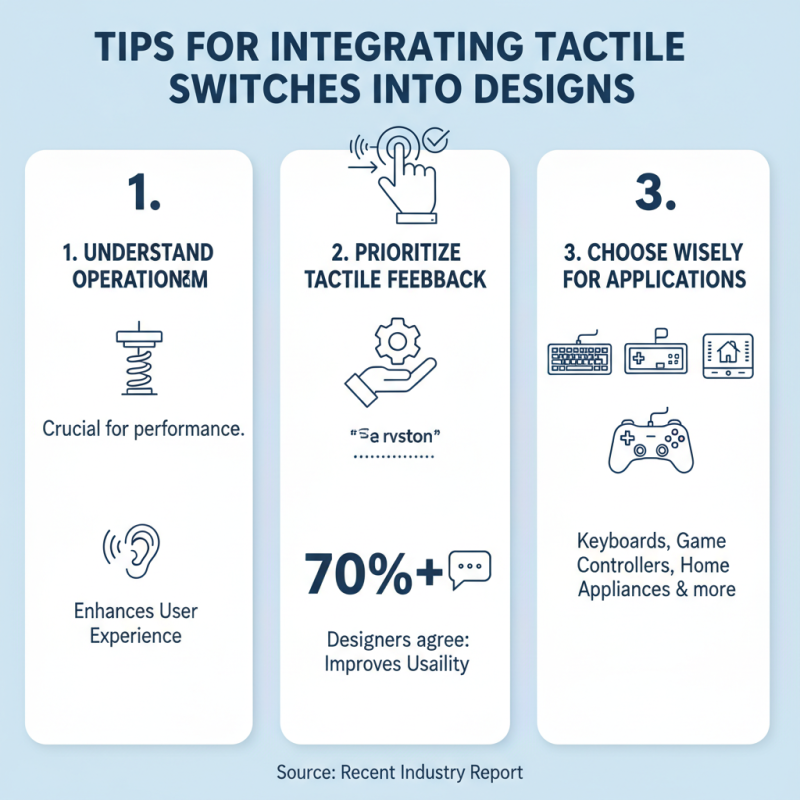
When integrating tactile switches into your designs, it’s essential to consider their operational mechanism. A well-chosen switch can enhance user experience significantly. According to a recent industry report, over 70% of designers believe tactile feedback improves product usability. Feedback is crucial in applications like keyboards, game controllers, and home appliances.
Next, focus on the switch's actuation force. The optimal force will depend on the intended use cases. For instance, lighter switches might be suitable for mobile devices, while heavier ones could work better in automotive applications. Additionally, understanding the durability is important. Many tactile switches can sustain around 50,000 cycles, but some may only endure 10,000 cycles, leading to potential failures over time.
Lastly, consider the environmental factors at play. Tactile switches can be affected by temperature and humidity. In an industry study, 30% of failed designs cited environmental factors as a key reason. A thorough testing phase can prevent this. It is also wise to keep in mind that more complex designs may require iterative refinement. Embracing imperfections during prototyping can lead to a better understanding of user needs and ultimately result in a more successful product.