How to Choose the Best Wire Harness for Your Needs?
Choosing the right Wire Harness can significantly impact your project's success. According to John Thompson, a leading expert in wire harness manufacturing, “Quality and compatibility are essential in every Wire Harness selection.” His insight emphasizes the importance of understanding your specific needs.
In various sectors, from automotive to aerospace, Wire Harnesses play a critical role. Selecting the best option isn't just about looking at specs. It requires careful evaluation of performance and reliability. A well-chosen Wire Harness can enhance efficiency and reduce potential issues. However, inadequate choices may lead to safety hazards.
Moreover, the variety in materials and designs can complicate decision-making. It’s vital to consider environmental factors, such as heat resistance and flexibility. Reflecting on these elements can help pinpoint the right product for your requirements. Ultimately, investing time in selection pays off in long-term benefits and safety.
Understanding Wire Harness Basics and Their Applications
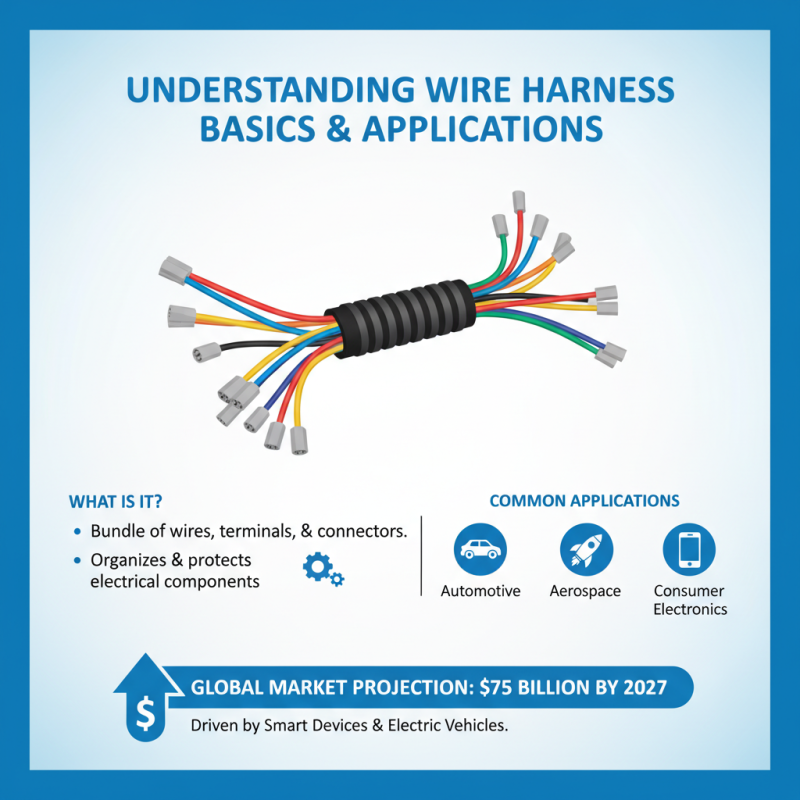
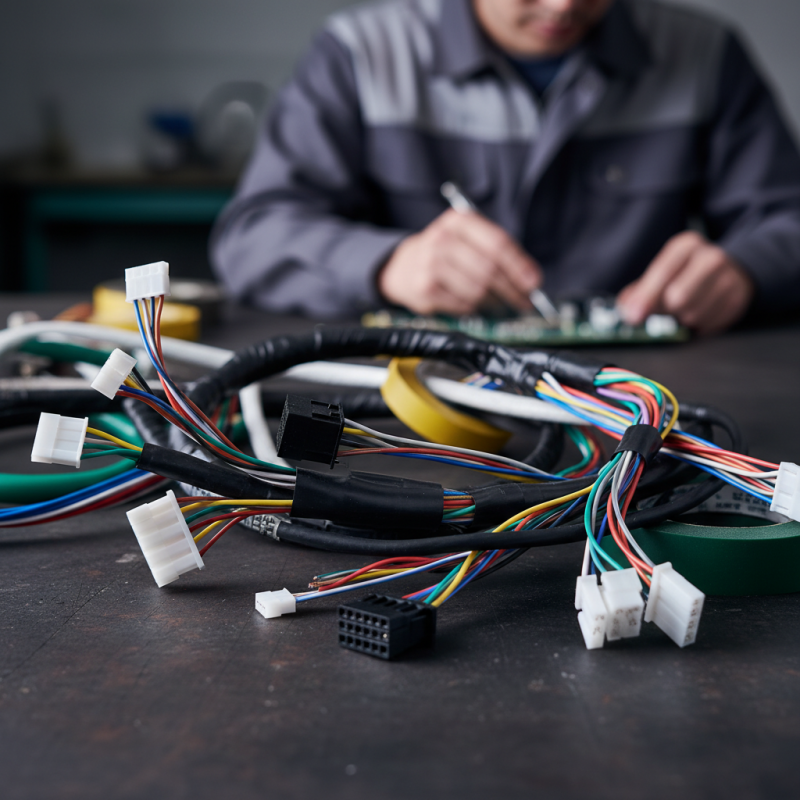
When selecting a wire harness, understanding its basics is crucial. A wire harness is a bundle of wires, terminals, and connectors. It organizes and protects electrical components, ensuring proper functionality in various applications. Common uses include automotive, aerospace, and consumer electronics. According to industry data, the global wire harness market is projected to reach $75 billion by 2027, driven by increasing demand for smart devices and electric vehicles.
Tip: Determine the specific requirements of your project early on. This includes voltage levels, environmental conditions, and compatibility with other components. Choosing the right material for insulation and protection, such as PVC or cross-linked polyethylene, is also essential for longevity and performance.
Another important consideration is the design and layout. A well-designed harness minimizes the risk of interference and enhances reliability. Poor layout can lead to failures or high maintenance costs. Many companies report issues due to subpar design, highlighting the need for expert input during the planning phase.
Tip: Consult industry standards and guidelines to ensure compliance with safety and performance benchmarks. Engaging experienced professionals for custom designs can significantly reduce errors. Stay informed about emerging technologies and innovations to make better choices for your wire harness needs.
Key Factors to Consider When Choosing a Wire Harness
Choosing the right wire harness involves evaluating several key factors. First, consider the
application environment. Wire harnesses are used in various settings, including automotive, aerospace, and industrial applications. Each environment presents unique challenges. For instance,
automotive wire harnesses require high resistance to heat and vibrations. According to a report by
Research and Markets, the global wire harness market is projected to reach $81.64 billion by 2025, emphasizing the growing demand for durable solutions.
Next, assess the materials used in the wire harness. Copper is a common choice due to its excellent conductivity. However, in specific applications like aerospace,
aluminum may be more suitable due to its weight advantages. A breakdown of materials and their properties can lead to better decision-making. Additionally, consider the
insulation types. PVC is widespread, but PVC's limitations in high-temperature environments remind users of potential risks.
Lastly, the complexity of the design plays a crucial role. Simpler designs can be more cost-effective but may lack functionality. Complexity can lead to challenges in installation and maintenance. A study by
MarketsandMarkets highlights that demand for customized wires is increasing due to specific application needs. Understanding your
requirements will ensure the wire harness meets both functional and budgetary specifications. This tailored approach can significantly impact overall project success.
Types of Wire Harnesses and Their Specific Uses
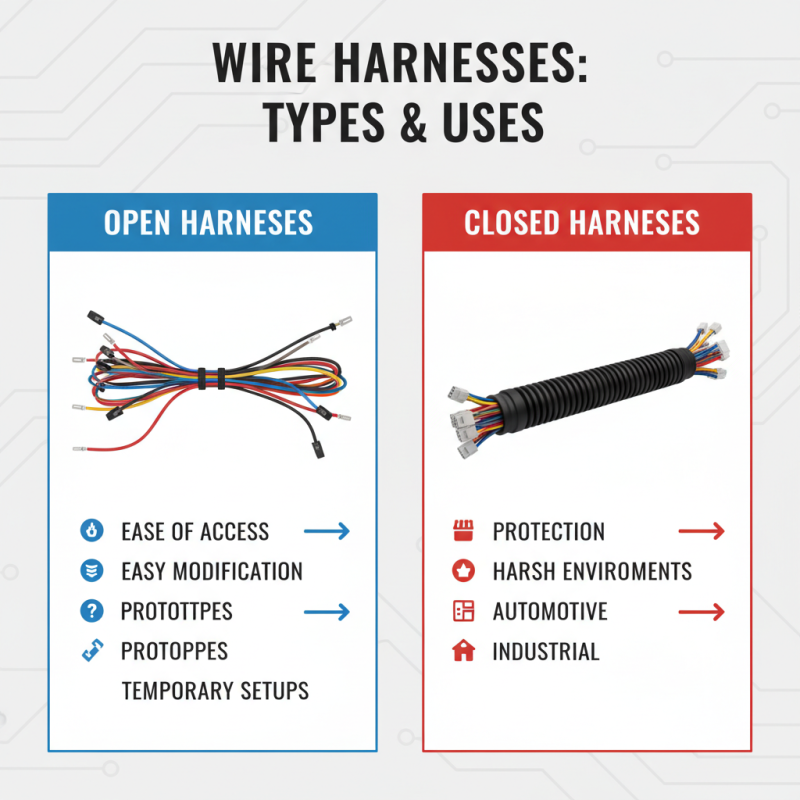
When selecting a wire harness, understanding its types is crucial. There are several common types, each suited for specific applications. For instance, open harnesses provide ease of access and modification, making them ideal for prototypes or temporary setups. On the other hand, closed harnesses offer protection, suitable for environments where wires might be exposed to hazards, such as automotive or industrial applications.
Data from industry reports show that the automotive sector accounts for over 38% of global wire harness usage. These harnesses are essential for efficient electrical connections in vehicles. Additionally, the aerospace industry relies heavily on custom wire harnesses for their lightweight and compact designs. This trend is driven by a need for reliability and performance in critical systems.
**Tip:** Always consider the environmental factors your wire harness will face. This includes exposure to heat, moisture, and vibration. Choosing the right materials can enhance durability.
Some users overlook the importance of proper insulation. Insufficient insulation might lead to short circuits or failures. If a wire harness isn't designed for your specific needs, it can lead to maintenance issues. Testing the finished harness is essential to ensure it meets your requirements before deployment.
Assessing Quality Standards and Compliance for Wire Harnesses
When selecting a wire harness, understanding quality standards and compliance is crucial. Wire harnesses must meet specific industry standards such as IPC/WHMA-A-620 for assembly requirements. Reports from industry experts suggest that non-compliance with these standards can lead to product failures and safety hazards. Investing in wire harnesses that adhere to established guidelines ensures not only performance but also longevity.
Tips: Always request documentation of compliance from your supplier. Look for certifications that verify adherence to relevant standards.
Quality assessments should include factors like material reliability and manufacturer practices. In a study, 40% of electrical failures traced back to poor wire harness quality. Inspecting the manufacturing processes can reveal whether the production facility employs strict quality controls.
Tips: Prioritize manufacturers who demonstrate transparency. A reliable manufacturer will be willing to share details about their quality assurance procedures.
While many manufacturers claim high standards, independent verification is essential. It's not uncommon for companies to overlook details, leading to compromised products. Engaging third-party audits can help ensure compliance and quality in the wire harnesses you choose.
Wire Harness Quality Standards Comparison
Tips for Customizing Wire Harnesses to Suit Your Needs
When customizing wire harnesses, it’s essential to start with a clear understanding of your specific needs. Consider the environment where the harness will be used. Will it be exposed to extreme temperatures or moisture? These factors influence your choice of materials. Selecting the appropriate insulation can make a significant difference in durability. Use high-quality materials to ensure long-lasting performance.
Next, focus on cable management. The design should enable easy routing and minimize tangling. Labeling cables correctly aids in identification during troubleshooting. Think about connectors too. They should align with your application requirements. For unique projects, custom connectors might be necessary.
Finally, don’t underestimate the importance of testing. After assembly, ensure the wire harness functions as expected. Conduct thorough inspections to identify any issues. Addressing problems early can prevent costly errors later. Reflection on this phase is crucial. Each customization can lead to new insights for future projects.