10 Essential Tips for Choosing the Right Tactile Switch
Selecting the right tactile switch is crucial in various applications, from consumer electronics to industrial machinery. According to a report by ResearchAndMarkets, the tactile switch market is projected to reach USD 3.4 billion by 2025, reflecting a growing demand for user-friendly interface solutions. The tactile switch enhances user experience by providing feedback and improving accuracy.
Dr. Emily Ross, an industry expert, emphasizes, "Choosing the right tactile switch can significantly influence product success." This statement underlines the importance of informed selection. Many engineers overlook critical factors such as actuation force, size, and durability. Ignoring these details can lead to design flaws and user dissatisfaction.
It is vital to consider various aspects, including environmental factors. For instance, switches exposed to moisture may require specific coatings. Balancing these considerations can be tricky, yet it is essential for product reliability. Understanding the tactile switch landscape can pave the way for innovation and better user experiences.
Key Factors to Consider When Selecting Tactile Switches
Choosing the right tactile switch can greatly impact your project's success. Understanding key factors is crucial. For instance, consider the actuation force required. This force affects how users interact with the switch. A recent industry report noted that improper force selection can lead to user frustration in up to 30% of cases. Finding a balance is essential.
Another important factor is switch lifespan. Some switches can endure millions of cycles, while others may fail after a few thousand. Reports indicate that long-lasting switches reduce maintenance costs by nearly 25%. This can significantly benefit projects with regular use. Skimping on quality could result in frequent replacements and higher expenses.
When selecting switches, also evaluate the feedback type. Tactile feedback provides a physical response, enhancing user experience. A survey showed that 40% of users prefer tactile feedback over others. This indicates a clear trend towards switch types that offer that satisfying "click." However, it’s essential to test various options, as personal preference plays a huge role. Each choice should be made thoughtfully, considering your audience's needs.
Understanding Tactile Feedback: What to Look For
When selecting tactile switches, understanding tactile feedback is crucial. Tactile feedback refers to the physical response felt when a switch is activated. This can greatly influence the user experience for keyboards, gaming controllers, and other devices. A noticeable bump in the switch's travel can signal an action has been triggered. Users appreciate this definite feedback, but preferences vary widely. Some may prefer a lighter touch, while others might want a more pronounced feel.
Pay attention to the amount of force required for activation. A switch that is too stiff can cause fatigue during extended use. On the other hand, one that is too light may lead to accidental presses. Finding the right balance is key. Consider the depth of the actuation point as well. A shallow actuation may not provide enough satisfaction, while a deep one can feel sluggish. Testing different options is essential—what feels good initially might not be comfortable over time. Listen to your instincts and trust your hands.
Comparing Different Types of Tactile Switches and Their Uses
When choosing tactile switches, understanding their types is crucial. There are various options available, including rubber dome, mechanical, and membrane switches. Each type has distinct characteristics. Rubber dome switches offer a soft feel but can wear out over time. Mechanical switches are more durable and provide a satisfying click. However, they can be noisy and are often bulkier. Membrane switches are cost-effective but may lack the tactile feedback some users prefer.
Industry reports suggest that mechanical switches have a growing market share, estimated to reach 45% by 2025. This reflects their popularity in gaming and professional settings. Tactile switches are used in keyboards, appliances, and automotive applications. Understanding the user environment can influence the choice greatly. For instance, in quiet office spaces, noise levels become a significant factor. Some users may not consider this aspect until they face complaints from colleagues.
Different applications demand different switches. For portable devices, size and weight are key. In contrast, industrial settings may prioritize durability over feel. Selecting the right switch requires a balance between functionality and user experience. Users must often reflect on their specific needs and preferences. This is where many overlook important details, leading to inefficient choices.
Comparison of Different Types of Tactile Switches
Evaluating Size and Mounting Options for Tactile Switches
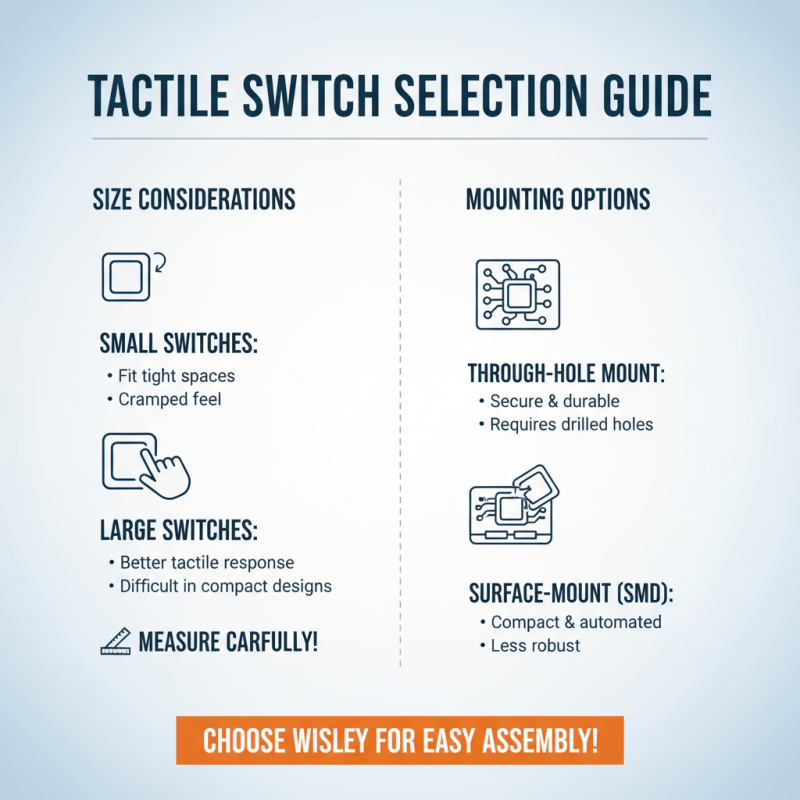
When selecting a tactile switch, size and mounting options are crucial. A small switch might fit in tight spaces, but it could feel cramped. Larger switches may offer a better tactile response but can be difficult to incorporate into compact designs. Consider the dimensions of your project carefully. Measure twice, cut once, as the saying goes. A poorly chosen size can complicate assembly.
The mounting options of tactile switches vary widely. Surface mount and through-hole options each have their pros and cons. Surface mount switches often require precise PCB design but save space. Through-hole switches are easier to handle but take up more room. It's essential to weigh these factors based on your design needs. You may discover that the easiest solution isn’t always the right one. Testing both types in prototypes can provide clarity.
There’s a trade-off between size and functionality. Small switches can sometimes compromise on feel, while larger ones may not fit aesthetically. Be prepared to iterate on your designs. Often, the first choice isn't the ideal one. A second look can reveal better options you might have missed initially. Balancing size and mounting requires careful thought. Keep your project goals in sight while exploring these aspects.
Assessing Durability and Lifespan for Long-Term Performance
When selecting a tactile switch, assessing durability and lifespan is crucial for ensuring long-term performance. A switch that wears out quickly can lead to frustrating user experiences. It’s important to consider materials and design. High-quality switches often utilize durable plastic and robust metal components. This combination can enhance longevity.
One tip is to examine the rated lifespan of a tactile switch. Many switches have a lifespan rating measured in millions of operations. Testing the switch's endurance through repeated use can help reveal its weaknesses. Additionally, consider the environmental factors. Humidity and temperature can affect performance. A switch that performs well in one condition may fail in another.
Don’t overlook the feedback feel. How it responds can influence user satisfaction. Some users prefer a soft touch, while others want a distinct click. This difference can impact usage. Testing various switches helps discover personal preferences and potential issues. It's advisable to review user feedback on performance and durability. Real-world accounts can often highlight flaws not seen in specifications. Being informed will guide you to make a better choice.