10 Essential Tips for Choosing the Right Terminal Lugs for Your Projects?
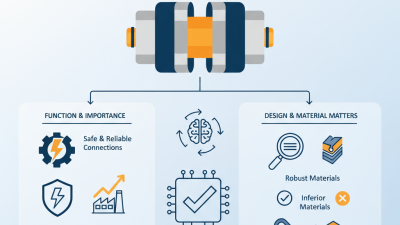
Choosing the right terminal lugs is crucial for ensuring dependability in electrical projects. In 2023, the demand for reliable connectors surged by over 15% in various industries. Terminal lugs play a vital role in establishing strong electrical connections. Selecting the correct type can prevent costly failures and enhance system longevity.
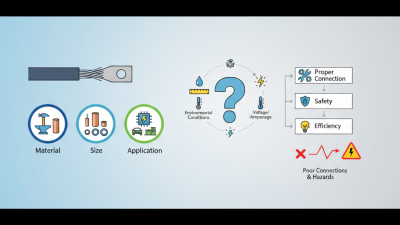
Inadequate connection can lead to equipment malfunctions. Reports indicate that over 30% of electrical failures stem from poor connections. It's essential to understand the specifications of terminal lugs to match them with project requirements. Gauge size, material, and environmental factors are key elements to consider. Miscalculations can hurt project efficiency and safety.
While many professionals recognize the importance of terminal lugs, some still overlook critical details. For example, using the wrong material can increase corrosion risks. A common mistake is ignoring the application environment. Each project has unique needs that must be met for optimal results. It's time to reflect on these challenges and make informed decisions.
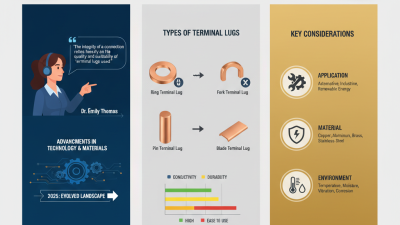
Understanding Terminal Lugs: Types and Applications
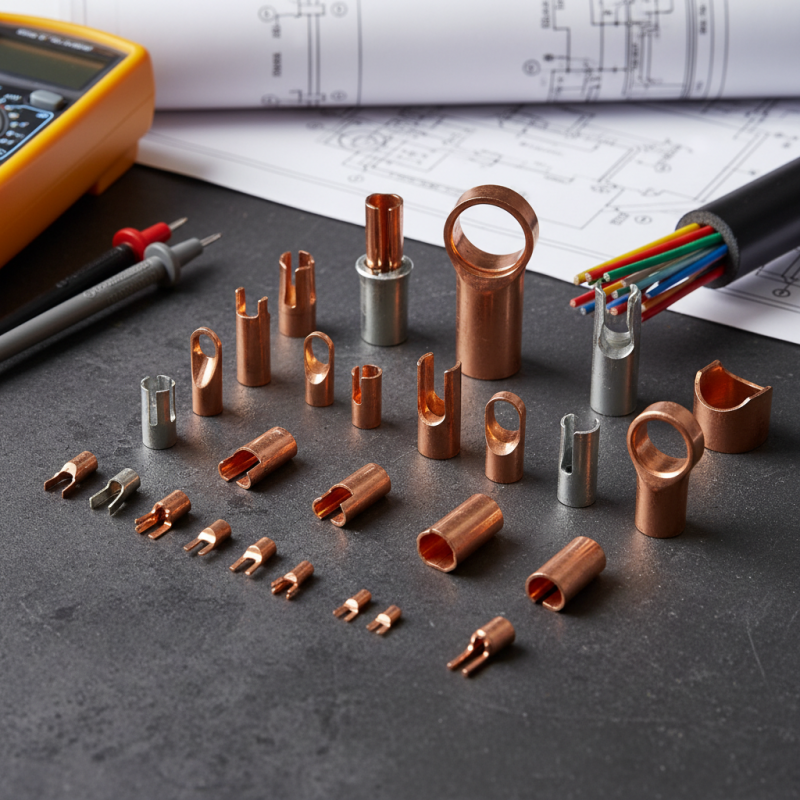
Understanding terminal lugs is essential for any electrical project. These components serve as critical links in creating secure connections. Different types of terminal lugs are designed for various applications. For example, insulated lugs are common in household wiring, while non-insulated lugs are often used in industrial settings. A recent industry report indicated that approximately 45% of electrical failures are due to poor connections. This underscores the importance of choosing the right type of lug based on specific project needs.
Selecting terminal lugs requires careful consideration of factors such as wire gauge and environmental conditions. The material of the lug affects conductivity and longevity. Copper lugs offer excellent conductivity, while aluminum lugs are lighter but less conductive. In harsher environments, corrosion-resistant lugs are necessary. A study from the Electrical Safety Foundation found that 30% of electrical incidents stem from the misuse of components. This highlights the need for thorough assessment during the selection process.
In some cases, over-engineering connections may lead to complications. Using oversized lugs can cause stress on wires, resulting in damage. Conversely, under-specifying may lead to overheating. Balancing safety with practicality is crucial. Regular reviews of project requirements and materials play a vital role in ensuring optimal performance of terminal lugs.
10 Essential Tips for Choosing the Right Terminal Lugs for Your Projects
This chart illustrates the importance level of different factors when choosing the right terminal lugs for your projects, ranging from material quality to wire gauge compatibility.
Assessing Electrical Ratings for Terminal Lugs in Your Projects
When selecting terminal lugs, assessing electrical ratings is crucial. The American National Standards Institute (ANSI) emphasizes that lugs should match the wire gauge and rated current. For example, a typical copper wire with an AWG of 10 can handle about 30 amps. But lugs must be rated for at least this current to ensure safety and functionality.
It’s also essential to consider other factors, such as voltage ratings. Terminal lugs can have different ratings, often ranging from 600V to 1000V. Using a lug rated for lower voltage can lead to potential failure or hazards. An industry report revealed that nearly 25% of electrical failures occur due to improper connections or incompatible ratings.
Environmental factors may influence your choice as well. Corrosive settings require lugs with robust materials, such as tin-plated copper. These can withstand harsh conditions and prevent oxidation. However, it’s vital to ensure compatibility with your specific project needs. Often, projects overlook these details, leading to premature failures and costly repairs. Consider all these aspects carefully before making a selection.
Material Selection: Copper vs. Aluminum Terminal Lugs
When choosing terminal lugs, material matters significantly.
Copper and aluminum are two leading options.
Copper is known for its excellent conductivity.
It generally delivers lower resistance than aluminum, offering better performance in electrical applications.
According to the International Copper Association, copper lugs can reduce energy loss in circuits by up to 30%.
This can be crucial in energy-sensitive applications.
On the other hand, aluminum lugs are lighter and more affordable.
They are an excellent choice for large-scale projects where weight can be a concern.
However, aluminum has a higher resistance than copper. This difference can lead to more heat generation under high loads.
In fact, the Aluminum Association estimates that aluminum lugs require larger sizes to match copper’s performance.
Although copper may be costlier, it often proves to be the more efficient long-term investment.
Installation of terminal lugs also varies.
Copper lugs require careful handling due to their softness.
Over-tightening can lead to deformation.
Aluminum, being more brittle, can break if not installed correctly.
These installation challenges add complexity to decision-making.
Weighing the pros and cons of materials is essential. Not every project will benefit from the same choice.
Understanding these elements can guide better material selection for terminal lugs.
Sizing Terminal Lugs: Key Factors to Consider
When selecting terminal lugs, sizing is often a crucial factor. The right size ensures optimal electrical conductivity and mechanical integrity. According to the Electrical Contractors Association, incorrect sizing can lead to resistance issues. This could result in overheating and, eventually, equipment failure. Proper sizing can avoid these costly problems and improve the longevity of electrical systems.
It’s important to consider the wire gauge. The American Wire Gauge (AWG) system provides invaluable guidelines. Wire sizes range from 0.1 to 40, and each size corresponds to specific lug sizes. Misalignment between wire and lug sizes can create gaps. These gaps lead to unreliable connections.
The lug's barrel size also matters. A snug fit increases contact area and reduces electrical resistance. For instance, a study indicated that a poor fit increases resistance by up to 15%. It’s essential to test fit before finalizing connections. Additionally, environment plays a role in sizing. Extreme temperatures might affect materials and require adjustments in sizing. Aim for a balance between snugness and flexibility to ensure a durable, efficient setup.
10 Essential Tips for Choosing the Right Terminal Lugs for Your Projects
| Sizing Factor |
Recommended Size |
Wire Gauge |
Material Type |
Usage Application |
| Current Rating |
#10 |
6 AWG |
Copper |
Low Voltage Systems |
| Temperature Rating |
#8 |
8 AWG |
Tin-Plated Copper |
Automotive Applications |
| Connection Type |
#6 |
10 AWG |
Aluminum |
Industrial Equipment |
| Environmental Factors |
#4 |
12 AWG |
Coated Copper |
Marine Applications |
| Mechanical Strength |
#2 |
14 AWG |
Stainless Steel |
Construction Equipment |
Installation Techniques for Optimal Performance of Terminal Lugs
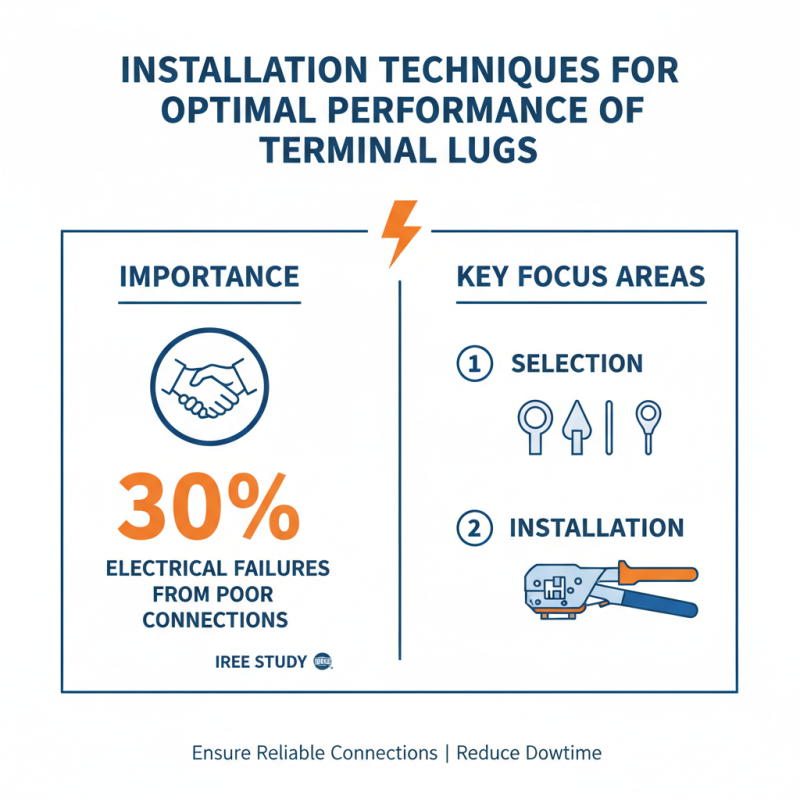
When selecting terminal lugs, proper installation techniques are crucial for ensuring optimal performance. A study by the Institute of Electrical and Electronics Engineers (IEEE) indicates that approximately 30% of electrical failures result from poor connections. Therefore, it is vital to focus on both the selection and the installation of terminal lugs.
For effective installation, begin by stripping the wire to the right length. Ensure that the exposed copper fits snugly into the lug. A loose connection can lead to resistance and heat build-up, escalating the risk of failure. According to a report from the National Electrical Manufacturers Association (NEMA), increased resistance can reduce the lifespan of electrical components by nearly 50%. Using the correct crimping technique is also essential; a well-crimped lug creates a strong mechanical bond, preventing future issues.
Proper torque specifications must be followed when fastening lugs. Ignoring these can cause both under-tightening and over-tightening, leading to failure. An estimated 20% of electrical problems stem from incorrect torque application, based on various industry reports. Regularly revisiting and reassessing installation practices can yield improvements in performance and longevity. Even seasoned technicians must reflect on their methods to ensure reliability in their work.