Choosing the right Flexible Flat Cable manufacturer can shape an entire product’s reliability, cost, and launch schedule. Global buyers need more than attractive pricing. They need repeatable dimensions, stable copper quality, accurate pitch, and dependable insulation performance.
A cable may look simple on a sample table. It still carries critical decisions. Consider conductor count, contact orientation, bend radius, operating temperature, shielding, and required mating cycles. A strong manufacturer should provide clear drawings, controlled tolerances, traceable materials, and realistic prototype support. Certifications also matter. Depending on the market, buyers may request UL recognition, RoHS compliance, REACH documentation, or other regional requirements.
Dr. Michael Pecht, a respected electronics reliability expert, states, “Reliability is designed in, not tested in.” That principle applies directly to Flexible Flat Cable sourcing. Factory audits, first-article inspections, and ongoing electrical testing can reveal problems before mass production. They cannot replace thoughtful design.
This guide introduces leading manufacturers serving international buyers. It compares engineering capability, customization, production scale, quality systems, communication, and delivery performance. No ranking is perfect. A supplier that excels in automotive assemblies may not suit medical equipment or compact consumer electronics. That difference is easy to miss.
Real purchasing decisions often involve imperfect drawings, changing forecasts, and urgent samples. Buyers should ask difficult questions early. Can the factory support a new pitch? How are crimp contacts inspected? What happens when a batch fails? The best partner answers clearly, documents limitations, and improves when challenged. That is where confidence begins.
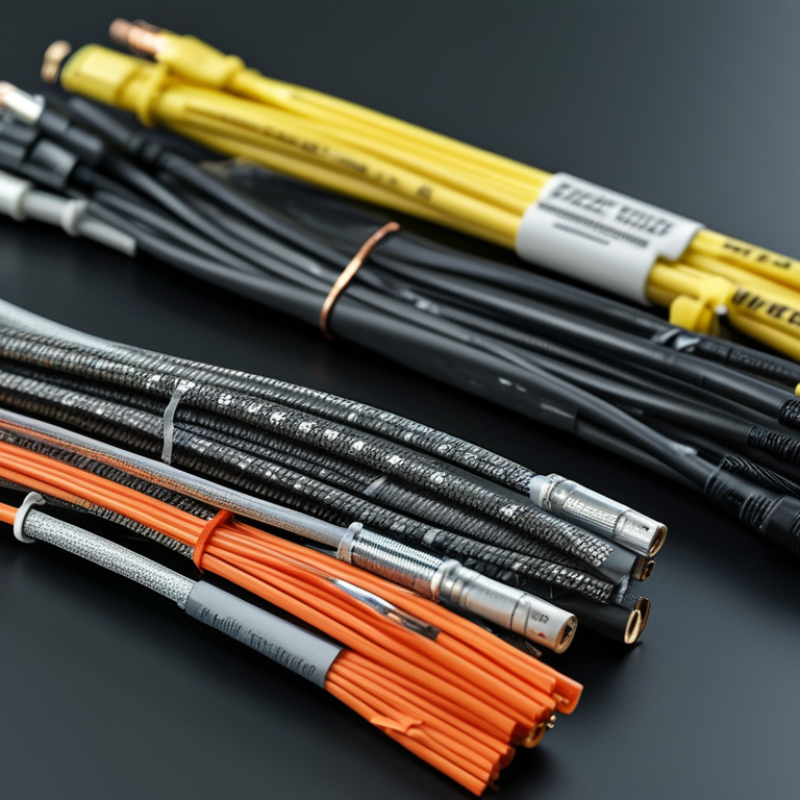
Flexible flat cables serve compact electronics where space and repeatable routing matter. Their defining measurement is pitch, the center-to-center distance between adjacent conductors. A 0.3 mm pitch suits dense layouts, but it demands cleaner alignment and more precise connectors. Larger pitches, such as 1.0, 1.27, or 2.54 mm, usually simplify assembly and inspection. Small details matter.
For global buyers, temperature ratings need practical interpretation. A stated operating range from 28°C to 105°C may describe tested limits, not every installed condition. Heat near motors, lamps, or sealed enclosures can create local peaks. Review conductor plating, insulation material, bend radius, and current capacity together. A cable surviving 105°C briefly may not perform reliably under constant heat and vibration. That distinction is often missed.
Qualified manufacturers should provide dimensional drawings, material declarations, batch traceability, and test evidence. Request samples cut to production length, then check insertion force, contact alignment, and insulation damage after bending. Field feedback is useful, though it can be incomplete. I have seen designs pass bench checks and fail after repeated flexing because the bend path was underestimated. It is an imperfect lesson. Verify the actual route, not only the datasheet. For pitches below 0.5 mm, optical inspection and controlled handling can reduce assembly defects, while protective packaging helps preserve contacts during international shipping.
This chart compares common FFC nominal pitches from 0.3 mm to 2.54 mm. Contact density is calculated as 25.4 mm divided by the pitch, representing the theoretical number of pitch positions across one inch.
Smaller pitch supports higher contact density, while larger pitch can provide more spacing for assembly and connector handling. For this product range, the stated operating temperature span is 28–105°C; actual performance depends on insulation, conductor material, connector design, and application conditions.
For global buyers, FFC and FPC compliance starts with evidence, not attractive samples. IPC/WHMA-A-620 defines workmanship expectations for cable and wire-harness assemblies, including crimping, insulation, routing, and strain relief. It does not replace a product-specific FPC specification. Buyers should request controlled drawings, revision records, and inspection criteria.
UL 94 V-0 means a tested plastic specimen self-extinguishes within defined limits. It does not prove complete cable fire safety. The connector housing, adhesive, stiffener, and insulation must match the approved material system. Flame ratings can change after molding, aging, or color modification. A certificate alone is insufficient.
RoHS verification requires material declarations and, when risk justifies it, laboratory testing. The restricted thresholds are generally 0.1% for lead, mercury, hexavalent chromium, PBBs, PBDEs, and four phthalates, plus 0.01% for cadmium.
The 2024 Global E-waste Monitor reported 62 million tonnes of electronic waste generated in 2022, while only 22.3% was formally collected and recycled. That figure makes traceable material control more than paperwork. It is environmental discipline. One weakness remains: documentation can outpace physical inspection. Serious suppliers therefore combine supplier declarations, incoming checks, and periodic XRF screening. Yet XRF cannot identify every restricted substance, so analytical limits and sampling plans still need careful review.
Global FFC manufacturers are often compared by production capacity, certifications, and market reach. Capacity is not only a monthly meter count. It also reflects line stability, tooling availability, and the ability to repeat fine-pitch designs. A capable factory can manage 0.5 mm pitch cables, custom lengths, stiffeners, and controlled bend areas without frequent variation. Ask for recent sample data, not only a capacity statement. Numbers can mislead.
Certifications reveal how consistently a manufacturer controls materials and processes. Quality systems based on ISO 9001 support traceability, corrective action, and inspection records. Automotive or medical projects may require additional quality systems, safety testing, and restricted-substance controls. Buyers should review certificate scopes, expiration dates, and testing responsibilities. A certificate alone proves little. Production evidence matters more.
Market reach shows whether a supplier can support international programs after sampling. Export experience should include clear documentation, stable packaging, and responsive technical communication across time zones. Check whether the factory handles engineering changes, approved vendor procedures, and replacement planning. Some manufacturers serve many regions but lack local support. That gap can delay a small connector revision for weeks. Factory audits, pilot runs, and measured failure data provide stronger evidence than polished presentations. Even experienced buyers should leave room for doubt. A promising supplier may still struggle when demand suddenly doubles.
| Evaluation Dimension | Industry Benchmark | What Global Buyers Should Verify | Commercial Relevance |
|---|---|---|---|
| Production Capacity | High-volume FFC production is commonly measured in millions of pieces per month, depending on pitch, length, conductor count, and reinforcement requirements. | Installed monthly capacity, current utilization, reserved capacity, production shifts, and expansion plans. | Indicates whether the supplier can support mass production and seasonal demand increases. |
| Conductor Configuration | Common constructions use flat copper conductors with polyester or polyimide insulation; conductor counts and dimensions are customized by application. | Conductor thickness, width, spacing, exposed-contact length, plating, and impedance requirements. | Confirms electrical compatibility with displays, cameras, printers, automotive modules, and consumer electronics. |
| Pitch Capability | FFC products are widely available in fine-pitch formats, including approximately 0.30 mm, 0.50 mm, 0.80 mm, 1.00 mm, and 1.25 mm designs. | Minimum production pitch, alignment tolerance, contact dimensional tolerance, and inspection method. | Fine-pitch capability is important for compact assemblies and high-density connectors. |
| Insulation Materials | Polyester is frequently used for general electronics, while polyimide is selected for higher-temperature, thinner, or more demanding applications. | Material grade, dielectric strength, temperature rating, flexibility, flame performance, and material traceability. | Material selection affects durability, bend performance, thermal reliability, and total cost. |
| Quality Management | ISO 9001 is the principal internationally recognized quality-management framework used by cable and electronic-component manufacturers. | Certificate validity, certification scope, audit status, corrective-action process, and lot-level traceability. | A current quality certificate reduces process and supplier-management risk. |
| Automotive Readiness | IATF 16949 is the automotive-sector quality standard commonly requested for suppliers serving vehicle and automotive-electronics programs. | IATF 16949 certification, PPAP capability, process FMEA, control plans, change management, and traceability. | Supports qualification for automotive production and long-term platform programs. |
| Environmental Compliance | RoHS and REACH documentation is commonly required for electronics sold into major international markets. | Declarations of conformity, restricted-substance testing, material declarations, and update procedures for regulatory changes. | Helps buyers satisfy product-compliance and customs requirements across multiple regions. |
| Safety Recognition | UL recognition or certification may be required for products used in regulated electrical and electronic assemblies, subject to the applicable construction and end-use requirements. | Applicable UL file or certification scope, insulation system, flammability rating, and whether the exact cable construction is covered. | Provides additional assurance for North American product approvals and customer audits. |
| Testing Capability | Core tests commonly include continuity, short-circuit detection, conductor resistance, insulation resistance, dimensional inspection, adhesion, and visual inspection. | Automated electrical testers, optical inspection, test frequency, sampling plan, calibration records, and retained samples. | Strong test coverage improves consistency and lowers field-failure risk. |
| Market Reach | International suppliers typically support regional or global shipments through export documentation, multilingual technical support, and established logistics partners. | Export markets served, delivery terms, customs documentation, regional warehouses, lead-time performance, and after-sales support. | Reduces logistical friction and improves continuity for multinational procurement programs. |
| Customization and Engineering | Qualified FFC manufacturers commonly provide custom lengths, contact-side configurations, stiffeners, shielding options, insulation materials, and connector-compatible geometries. | Engineering response time, drawing review, prototype tooling, design-for-manufacturing support, and engineering-change control. | Shortens development cycles and improves fit with specialized equipment designs. |
| Supply Continuity | A robust supply program normally includes approved raw-material sources, documented business-continuity procedures, safety stock options, and defined change-notification practices. | Dual sourcing, supplier-risk assessment, inventory policy, disaster recovery, obsolescence management, and notification lead time. | Supports stable production and minimizes the impact of material shortages or process disruptions. |
Note: The benchmarks above describe commonly used industry evaluation criteria and should be validated against the supplier’s current certificates, technical drawings, test reports, and audited production data.
Global buyers compare FFC suppliers by more than unit price. Material selection often predicts durability, flexibility, and signal stability. Copper conductor quality affects resistance and heat generation. Rolled copper bends well, while electrolytic copper can reduce cost. Insulation also matters. PET suits many standard assemblies, while polyimide supports higher temperatures. Ask for test data, lot traceability, and controlled material thickness. Not every datasheet tells the full story.
Thickness from 0.05 to 0.30 mm changes the design balance. A 0.05 mm cable saves space and bends easily, but it needs careful handling. A 0.30 mm structure usually offers better mechanical support. It also consumes more room and may resist sharp folds. Middle ranges often suit displays, sensors, and compact controls. Confirm conductor width, pitch, exposed length, and bend radius together. Measuring only finished thickness can hide variation. Small errors matter.
Signal performance needs validation inside the actual assembly. Check resistance, dielectric strength, impedance, insertion loss, and crosstalk at the working frequency. Parallel high-speed lines need stable spacing and reference conditions. Repeated bending can change contact resistance before visible damage appears. Request samples made with production tooling, not hand-cut prototypes. Test them through temperature cycling and repeated flexing. Some cables pass room-temperature checks yet fail after installation. That result is inconvenient, but useful. It reveals why supplier audits, incoming inspection, and application-level testing must work together.
For global buyers, selecting a flexible flat cable manufacturer requires more than a polished catalog. A low quoted MOQ can hide setup charges or tooling fees. Ask whether the MOQ changes with conductor count, insulation type, or custom length. Request a written quotation. Tolerance needs equal attention. For precision assemblies, require a ±0.1 mm dimensional tolerance where the drawing identifies critical features. Confirm measurement points, instruments, and inspection frequency before production begins. A vague tolerance statement is not protection.
Reliable suppliers should explain their testing process before accepting an order. Typical checks include conductor continuity, insulation resistance, dielectric strength, dimensional accuracy, and bend performance. Ask for sample reports with serial numbers, test conditions, and acceptance limits. Photos help, but they are not test evidence. For high-volume orders, consider an independent pre-shipment inspection. It can reveal uneven spacing, damaged insulation, or connector misalignment before shipping.
Lead time should be separated into sample production, tooling, mass production, and transport. Get each date in writing, including approval deadlines and revision handling. A supplier promising ten days may exclude material preparation or final testing. That creates avoidable pressure. In practical sourcing work, buyers often focus on unit price and overlook packaging conditions, moisture protection, and replacement procedures. I have seen this assumption fail. Ask for corrective-action records when defects occur, even if the supplier seems experienced. The response quality matters as much as the original quotation.