How to Source High Quality Printed Circuit Board for Your Needs?
When sourcing a Printed Circuit Board (PCB), quality is paramount. The right PCB can significantly impact your electronic projects. Sourcing high-quality PCBs involves understanding your specific needs and the capabilities of manufacturers. Not all PCBs are created equal; variations in materials and production methods can lead to differing levels of performance.
Selecting a reliable supplier is critical. You must trust that they adhere to industry standards. Look for manufacturers with proven expertise and experience. References and certifications can provide valuable insights into their reliability. Additionally, consider the complexity of your design. More intricate designs may require advanced manufacturing techniques.
Overlooking important details in your PCB design can lead to costly mistakes. It’s essential to communicate your requirements clearly. Seek a balance between cost and quality. In some cases, the cheapest option may result in subpar performance. Thus, it pays to invest time in selecting the right Printed Circuit Board. Understanding the nuances of PCB sourcing leads to better outcomes in your electronic endeavors.
Identifying Your Specific Printed Circuit Board Requirements
When sourcing a printed circuit board (PCB), identifying your specific requirements is crucial. Start by defining the functionality needed. Consider the type of devices the PCB will support. Are you working with simple electronics or complex machinery? This distinction guides your design choices.
Next, think about the environment where the PCB will operate. Will it face extreme temperatures or moisture? These conditions affect the materials chosen for the PCB. High humidity can lead to corrosion, while high temperatures may require specialized materials.
Budget is another critical factor. Determine how much you can invest without compromising quality. Quality PCBs can be costly, but they provide long-term reliability. It’s vital to balance cost with performance needs. Assess the potential for errors during production. Mistakes can lead to wasted time and resources. Reflecting on these aspects ensures a more informed decision.
How to Source High Quality Printed Circuit Board for Your Needs?
| Feature |
Importance Level |
Specification |
Recommended Quality Check |
| Layer Count |
High |
1-20 Layers |
Visual inspection and layer count verification |
| Material Type |
Medium |
FR-4 / High-Frequency Materials |
Material analysis and sourcing from certified suppliers |
| Copper Thickness |
High |
1 oz / 2 oz |
Measurement and testing for conductivity |
| Surface Finish |
Medium |
ENIG / OSP |
Quality assurance via solderability testing |
| Min Hole Size |
High |
0.2 mm |
Drilling precision assessment |
Researching Reliable PCB Manufacturers
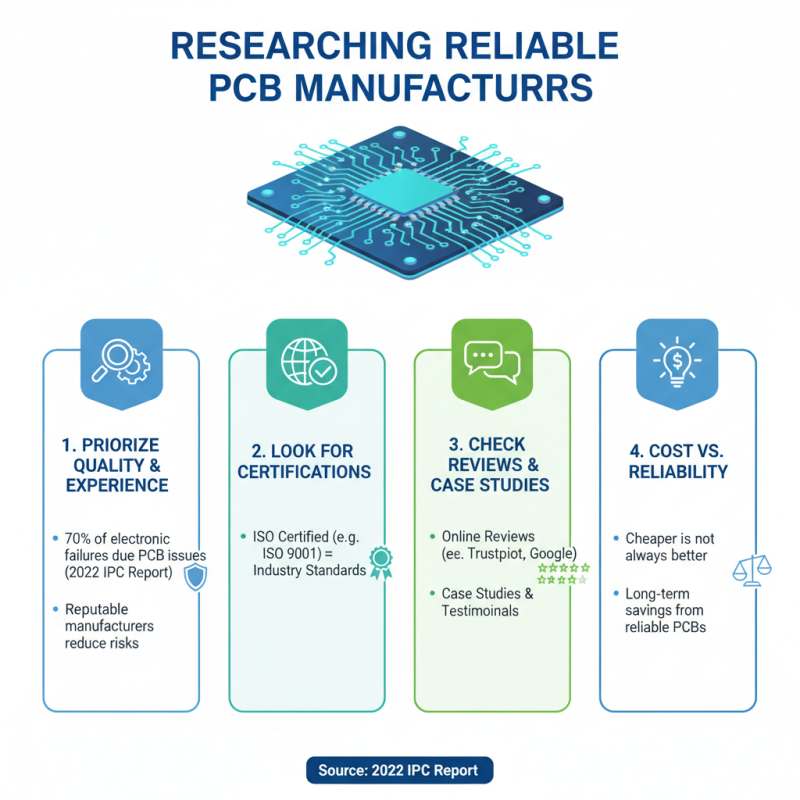
When searching for reliable PCB manufacturers, industry reports suggest prioritizing quality and experience. According to a 2022 IPC report, over 70% of electronic failures are related to PCB issues. Thus, sourcing from reputable manufacturers is crucial. Look for companies with ISO certifications; these ensure adherence to industry standards. Online reviews and case studies can provide insights into a manufacturer’s reliability.
Tip: Ask for samples before making large orders. This helps assess the quality of their work. Many manufacturers will provide prototypes, allowing you to test before full production.
Transparency is another vital factor. A good manufacturer will openly share their processes and quality control measures. Reports indicate that companies focusing on quality see a 20% increase in client satisfaction. This highlights the importance of clear communication during sourcing.
Tip: Engage with potential manufacturers through detailed inquiries. This can reveal their knowledge and willingness to collaborate. Trust your instincts; if something feels off, consider other options. Always keep an open mind for potential improvements.
Evaluating PCB Quality and Certification Standards
When evaluating PCB quality, start by understanding the key certification standards. Certifications like ISO 9001 and IPC-A-600 provide a framework for assessing manufacturing processes and end products. These standards ensure the PCBs meet essential quality benchmarks. You should look for manufacturers that visibly comply with these certifications on their platforms. It adds to their credibility.
Tips: Always ask for documentation. Valid certifications will come with proof. Request samples for testing, too. A reliable manufacturer should provide these without hesitation.
Don’t overlook the importance of material quality. High-grade substrates and laminates lead to better performance. Be cautious about vendors offering overly cheap options. They might compromise on materials, which can lead to failures. Since reliability is critical, focus on long-term benefits rather than short-term savings.
Tips: Research material types. Knowing the difference between FR-4 and other substrates can help. Engage with experts to dissect performance claims. Their insights can unveil hidden nuances.
Evaluation of PCB Quality Parameters
Understanding the PCB Sourcing Process and Cost Factors
When sourcing high-quality printed circuit boards (PCBs), understanding the sourcing process and cost factors is crucial. The PCB market is expected to reach $80 billion by 2027, according to industry reports. These reports highlight how design complexity influences production costs. Producing PCBs with unique specifications can lead to increased expenses.
Tips: Always assess your project requirements before selecting a manufacturer. This can help avoid costly customizations later on.
Material choice significantly impacts costs. While standard FR-4 is widely used, advanced materials can enhance performance but are pricier. For example, using high-frequency ceramic substrates can increase costs by 20%. It's essential to balance performance with budget constraints. Yet, pursuing the cheapest option may result in quality issues.
Tips: Communicate openly with suppliers about your budget. This can lead to better solutions tailored to your needs.
Additionally, manufacturing location influences both quality and pricing. Offshore manufacturing may reduce costs, but it can introduce risks such as longer lead times and communication barriers. A study indicated that 70% of companies experienced delays due to sourcing issues. It’s vital to weigh the pros and cons of local versus overseas suppliers critically.
Ensuring Effective Communication with PCB Suppliers
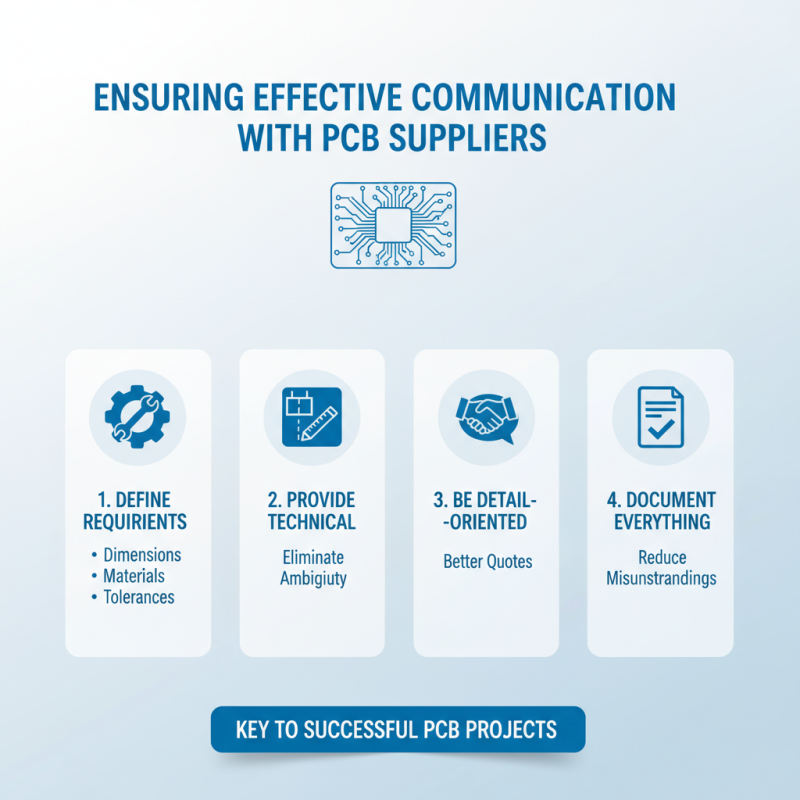
Effective communication is key when working with PCB suppliers. Start by clearly defining your project requirements. Specify dimensions, materials, and tolerances. The more detail you provide, the better the quotes you’ll receive. Use technical drawings or specifications to eliminate ambiguities. Effective documentation can significantly reduce misunderstandings.
Regular check-ins are also important. These conversations help to align your expectations with the supplier’s capabilities. Discuss timelines—ensure they are realistic and achievable. A good supplier will respect your deadlines. Be open to their suggestions; they often possess valuable insights that can enhance the final product.
However, don’t overlook potential challenges. Sometimes, miscommunication can arise from technical jargon or assumptions. Ensure that everyone is on the same page. Utilize simple language if needed, and encourage questions. Strive for a collaborative atmosphere where both parties can learn. This approach sometimes reveals hidden issues that might complicate the sourcing process. Knowing these details helps in making informed decisions.