Why Are Terminal Lugs Essential for Your Electrical Projects?
In the world of electrical projects, terminal lugs play a crucial role. These components ensure safe and efficient connections between wires and terminals. According to a recent industry report by the Electrical Safety Foundation International (ESFI), improper connections are a leading cause of electrical failures, highlighting the importance of reliable connections.
Expert John Smith, a leader in electrical engineering, notes, "Terminal lugs are vital for creating secure and lasting connections." His insights reflect a growing consensus in the industry. Lugs prevent current loss and overheating, which can lead to significant hazards. The right terminal lug can enhance the longevity of any electrical system.
Neglecting the quality of terminal lugs can result in costly mistakes. Many projects overlook this critical element, leading to inefficiencies and safety risks. Investing in high-quality terminal lugs minimizes these concerns. Understanding their importance can make a notable difference in project outcomes, ensuring both safety and performance.
The Functionality of Terminal Lugs in Electrical Connections
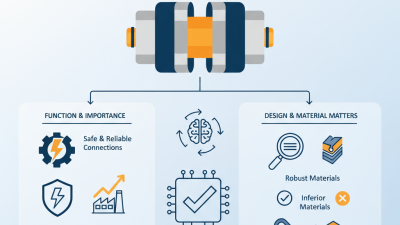
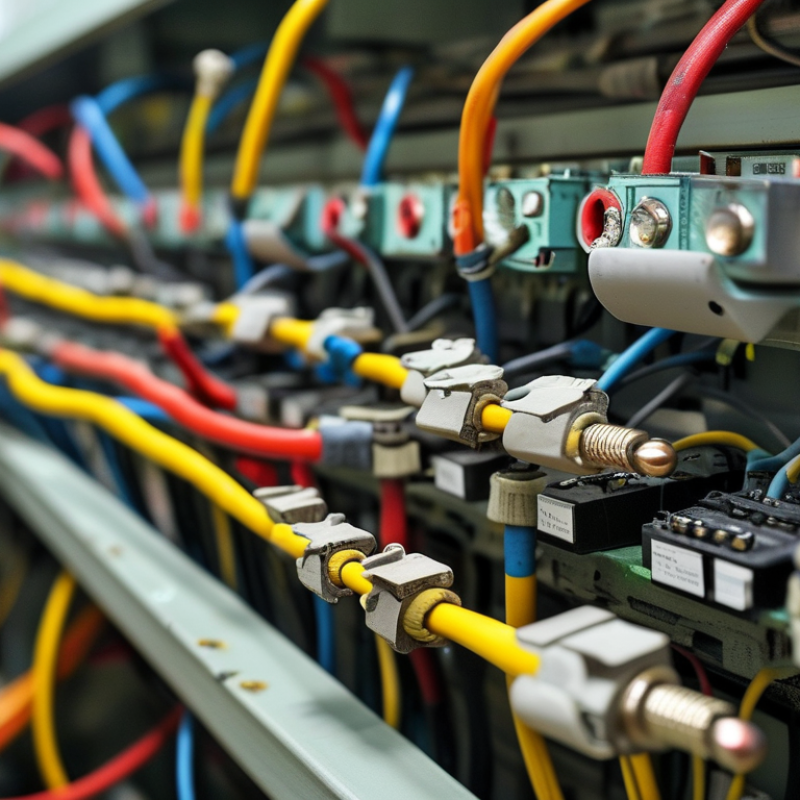
Terminal lugs play a crucial role in electrical connections. They provide a secure point for wire terminations. This ensures that electrical currents can flow efficiently. When wires are connected to terminal lugs, they create a stable link. A solid connection reduces the risk of faults. It also minimizes energy loss.
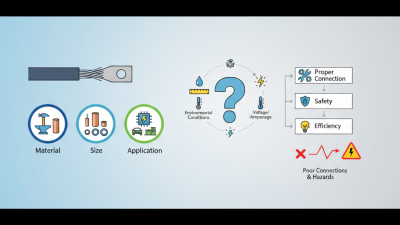
Proper installation of terminal lugs enhances reliability. However, improper usage can lead to issues. For instance, choosing the wrong size can cause overheating. Additionally, poor crimping may result in loose connections. It is vital to consider the specific requirements of your project. Different applications may demand various types of lugs.
Experience matters in selecting the right terminal lugs. Not all lugs are created equal. Some are better suited for certain environments or conditions. Understanding these details can save time and money. While it’s easy to overlook terminal lugs, their impact is significant. A small mistake here can disrupt an entire project. Always ensure quality and compatibility for successful electrical connections.
Why Are Terminal Lugs Essential for Your Electrical Projects?
| Dimension |
Description |
Material |
Current Rating (A) |
Application |
| 6 mm² |
Standard size for small equipment |
Copper |
30 |
Low voltage connections |
| 10 mm² |
Commonly used for household circuits |
Copper |
50 |
Electrical appliances |
| 16 mm² |
Suitable for larger installations |
Copper |
70 |
Industrial machinery |
| 25 mm² |
Heavy duty connections |
Copper |
95 |
Substantial electrical systems |
| 35 mm² |
For high current applications |
Copper |
125 |
Commercial installations |
Types of Terminal Lugs and Their Applications in Electrical Projects
Terminal lugs play a critical role in electrical projects. They ensure secure connections between wires and devices, reducing the risk of failure. These components support various applications in residential, commercial, and industrial settings. Understanding different types of terminal lugs can streamline your electrical work.
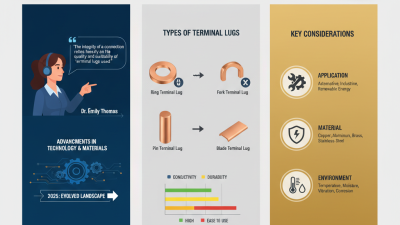
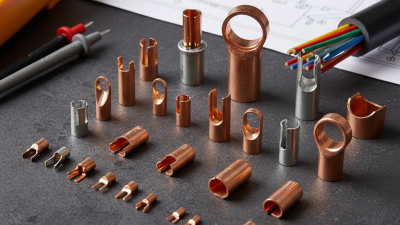
There are several common types of terminal lugs. Ring lugs are used for making secure connections to screws or bolts. They are suitable for both power and ground connections. Spade lugs offer quick disconnect capabilities, ideal for components needing frequent removal. Pin lugs are perfect for applications such as circuit boards, allowing easy connections in tight spaces. Each type serves a unique function, catering to specific project requirements.
Tips: Always match the lug type to your wire gauge for optimal performance. Undersized lugs can lead to overheating. Consider using crimping tools for a strong bond. Proper installation may require practical experience; practice on spare wires to build confidence. Strive for tidiness in your wiring. Neat connections not only enhance aesthetics but also promote safety and functionality.
Benefits of Using Terminal Lugs for Enhanced Electrical Safety
Terminal lugs play a crucial role in ensuring electrical safety in projects. These simple yet effective connectors secure wires and prevent accidental disconnections. They help create a stable connection that can withstand vibrations and temperature changes. When installed correctly, terminal lugs minimize the risk of short circuits, which can lead to significant damage.
Using terminal lugs also improves the overall performance of electrical systems. Their robust design allows for efficient current flow. This efficiency can enhance the lifespan of electrical components. It's important to select the right type and size of terminal lugs for the specific wires used. Sometimes, people overlook this detail, leading to potential hazards.
Furthermore, proper insulation of terminal lugs is essential. It protects against environmental factors and prevents shorts. Electrical connections without proper insulation can lead to dangerous situations. A small lapse in choosing the right materials can cause significant issues down the line. Attention to detail is key in electrical projects, and terminal lugs are a vital part of that equation.
Benefits of Using Terminal Lugs for Enhanced Electrical Safety
Installation Techniques for Terminal Lugs: Best Practices
When working with electrical projects, proper installation of terminal lugs is crucial. These components connect wires securely, ensuring efficient power transfer and reducing the risk of failures. When installing terminal lugs, cleanliness is vital. Debris or oxidation on the wire or lug can lead to poor electrical contact. Always prepare the wires by stripping them carefully. A clean cut ensures that the wires fit snugly into the lug.
Crimping is one of the most reliable methods for securing terminal lugs. Use a high-quality crimping tool specifically designed for the size of the lug. Ensure the crimp is complete; an incomplete crimp can weaken the connection. After crimping, check the connection. Pull on the wire to verify the lug holds firmly. This small step can prevent significant issues later.
Soldering is another technique, though less common. It's essential for specific applications where maximum conductivity is necessary. However, it requires practice and skill. If not done correctly, solder joints can break, leading to failures. Always focus on doing it right the first time. The quality of your terminal lug installation can impact the entire project. Aim for precision and reliability in every step.
Common Mistakes to Avoid When Using Terminal Lugs in Projects
When using terminal lugs in electrical projects, common mistakes can lead to failures and safety hazards. One common error is choosing lugs that do not match the wire gauge. The American National Standards Institute (ANSI) reports that improper gauge selection can cause overheating and potentially start fires. Ensuring the correct lug size for your wire is essential for electrical continuity and safety.
Another frequent mistake is failing to make secure connections. Loose connections can lead to voltage drops, increased resistance, and overheating. According to the National Fire Protection Association (NFPA), these issues contribute to nearly 30% of electrical fires. Professionals recommend using a torque wrench to achieve the proper tightness without damaging the lugs or wires.
Tip: Always clean the surfaces of the wire and lug before making a connection. Dirt or oxidation can impede electrical flow, leading to inefficiency.
Lastly, many overlook the importance of selecting the right material. Copper and aluminum lugs serve different applications. A report from the Institute of Electrical and Electronics Engineers (IEEE) highlights that using mismatched materials can significantly reduce the lifespan of electrical systems. Evaluating the environment, such as moisture or corrosion, is crucial in your decision-making.