Essential Tips for Choosing the Right Terminal Lugs for Your Projects
When embarking on any electrical project, choosing the right components is crucial for ensuring safety and functionality. Among these components, terminal lugs play a vital role in facilitating secure electrical connections. Terminal lugs are connectors that attach a wire to a terminal, providing a reliable joint that can withstand various environmental conditions. However, the selection of terminal lugs is not a one-size-fits-all scenario; it requires careful consideration of several factors, including material, size, and application.
Understanding the different types of terminal lugs available on the market and their specific uses can greatly impact the efficiency of your project. Incorrectly chosen terminal lugs can lead to poor connections, potential short circuits, and even hazardous situations. Therefore, equipping yourself with essential knowledge about the various options will ensure that you make an informed decision tailored to your project's unique requirements. In this guide, we will explore key tips for selecting the appropriate terminal lugs that can enhance the performance and safety of your electrical endeavors.

Understanding Terminal Lugs: Definitions and Types
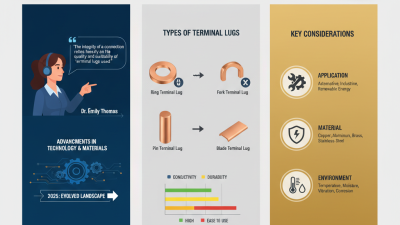
Terminal lugs are essential components in electrical connections, ensuring a secure and reliable link between wires and terminals. These lugs come in various types, each designed for specific applications and performance requirements.
The two primary categories include insulated and non-insulated lugs.
Insulated lugs are covered with a protective material, reducing the risk of accidental short circuits and enhancing safety in installations.
Non-insulated lugs, on the other hand, provide a more compact solution where space is a concern, but they require careful handling to avoid electrical hazards.
When selecting terminal lugs, it's crucial to consider the wire gauge and the application's voltage and current ratings. For instance,
compression lugs are ideal for high-current applications, providing excellent conductivity and mechanical strength.
In contrast, crimp lugs are widely used for standard wiring tasks due to their ease of installation and affordability.
Additionally, understanding the environmental factors, such as exposure to moisture or chemicals, can guide you in choosing the appropriate material, whether copper, aluminum, or a specialized alloy, to ensure longevity and reliability in your projects.
Factors to Consider When Selecting Terminal Lugs
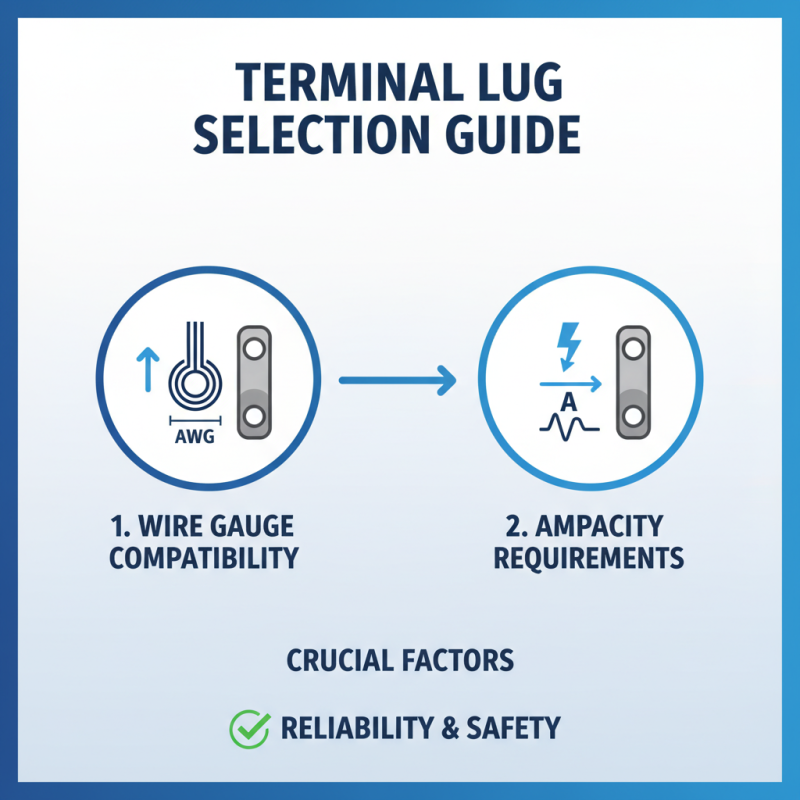
When selecting terminal lugs for your projects, several factors play a crucial role in ensuring proper functionality and safety. First, consider the wire gauge that will be used. Terminal lugs are designed to accommodate specific wire sizes, so it's essential to choose lugs that match the gauge of wire to prevent overheating or connection failures. Additionally, evaluate the ampacity requirements, as different lugs can handle varying amounts of current. Matching the terminal lugs to the necessary electrical load is vital to ensure reliability in your project.
Another important factor is the material composition of the terminal lugs. Common materials include copper and aluminum, each with distinct benefits. Copper provides excellent conductivity, while aluminum is often lighter and more cost-effective. The choice of material should align with your project's specific requirements and environmental conditions, such as moisture or corrosion.
Tip: Ensure you have the proper crimping tools for your selected terminal lugs to achieve a secure and lasting connection. Moreover, consider the installation environment; if the lugs will be exposed to harsh conditions, opt for tinned or coated lugs to enhance their longevity and performance. Taking these factors into account will lead to better decision-making and successful project outcomes.
Materials Used in Terminal Lugs: Pros and Cons
When selecting terminal lugs for your projects, understanding the materials they are made from is crucial. Common materials include copper, aluminum, and stainless steel, each with its own set of advantages and disadvantages.
Copper, for instance, is highly conductive, making it ideal for electrical applications, but it is prone to corrosion when exposed to moisture. On the other hand, aluminum is lightweight and cost-effective but has lower conductivity than copper and may require specific treatments to prevent oxidation.
When considering terminal lug materials, it’s essential to weigh the pros and cons based on the environment in which they will be used. Stainless steel offers excellent corrosion resistance, which is beneficial in harsh conditions, yet its conductivity is not as high as copper. This can impact the performance of electrical projects.
Tip 1: Always take the operational environment into account when choosing materials—if your project is exposed to moisture, opt for corrosion-resistant options like stainless steel or ensure proper coatings are applied to copper and aluminum.
Tip 2: Check the specifications for your electrical load requirements. The choice of material should not only focus on conductivity but also on the mechanical strength and durability required for your application. Proper selection can significantly enhance the reliability and longevity of your electrical connections.
Sizing and Compatibility: Ensuring a Proper Fit
When selecting terminal lugs for any project, proper sizing and compatibility are crucial factors that should not be overlooked. Terminal lugs come in various sizes to fit different wire gauges, and choosing the right size ensures a secure and efficient electrical connection. It is essential to refer to the American Wire Gauge (AWG) standards or similar sizing guides to match the lug with the corresponding wire diameter. An incorrect size can lead to loose connections, which may result in increased resistance, overheating, or even failure of the electrical system.
Additionally, compatibility between the terminal lug and the connection point is vital. Factors such as the lug's material, coating, and design can impact its performance. For instance, a lug designed for soldering may not work effectively with a crimp connection. Furthermore, considering the environmental conditions, such as humidity or exposure to chemicals, can influence the choice of materials—copper or aluminum lugs may offer different advantages based on these factors. By assessing both the size requirements and the compatibility with other components in the circuit, one can ensure a reliable and long-lasting connection for any electrical project.
Application Examples: Choosing the Right Lugs for Your Project
When selecting terminal lugs for your project, understanding the specific application is crucial to ensure optimal performance and safety. For instance, in automotive wiring, choosing lugs that are resistant to vibration and corrosion is essential. In these scenarios, insulated lugs with robust materials can provide the necessary durability. Furthermore, considering the gauge of the wire is vital, as the lug must accommodate the wire size to maintain a secure and efficient connection.
In contrast, projects involving electronic devices may require smaller, more precise terminal lugs to fit in compact spaces. Here, miniature lugs with a low-profile design can help streamline the assembly process while ensuring reliable connectivity. It's also important to assess the electrical current capacity needed for the application. Matching the lug's specifications with the amperage will prevent overheating and potential failures. By analyzing the requirements of your project, you can choose the right type of terminal lugs that enhance performance and longevity while meeting safety standards.
Essential Tips for Choosing the Right Terminal Lugs for Your Projects
This chart illustrates the distribution of different types of terminal lugs used in various projects, highlighting their percentages based on common application scenarios. Copper lugs are the most widely used, followed by aluminum and insulated lugs.