Top Auto Connectors for Global Buyers in 2026?
As the automotive industry evolves, "Auto Connectors" play a crucial role in vehicle functionality, safety, and performance. Leading industry expert, Dr. Emily Chen, notes, “Auto connectors are the unsung heroes behind every successful automotive system.” This underscores their significance in ensuring seamless connectivity in modern vehicles.
In 2026, global buyers will seek top-notch auto connectors. Their importance has grown with the rise of electric vehicles and advanced driver-assistance systems. Enhanced performance, durability, and adaptability are key factors driving demand in this sector. Buyers need to stay informed on the latest innovations and trends to make informed decisions.
Navigating the diverse offerings in the market can be challenging. Not all connectors are created equal. Some may not meet the rigorous standards of the automotive industry. It’s essential to assess quality and reliability when choosing suppliers. The right auto connectors can make a significant difference in overall vehicle performance and safety.

Top Global Markets Influencing Auto Connector Demand in 2026
The global auto connector market is witnessing a significant transformation. By 2026, demand for auto connectors is projected to reach approximately $27 billion, driven by advancements in vehicle technology. The shift towards electric and autonomous vehicles is reshaping the landscape. Reports indicate that electric vehicles alone could increase connector usage by over 30%.
Regions such as Asia-Pacific are leading the charge. Countries like China and India are investing heavily in automotive technology. The electric vehicle market in China is expected to grow at a compound annual growth rate (CAGR) of 20% through 2026. Despite these positive trends, the industry faces challenges. Supply chain disruptions and raw material shortages could hinder growth.
North America also plays a critical role in this landscape. The U.S. automotive sector is adapting to new technologies, emphasizing the integration of smart connectors. Statistics show that smart connector solutions in North America may see a rise of 15% annually. However, the increasing complexity of systems and standards may pose implementation hurdles. Continued innovation and collaboration will be essential to navigate these obstacles and meet growing global demand.
Top Auto Connectors for Global Buyers in 2026
This chart illustrates the projected demand for auto connectors across different global markets in 2026. It highlights the significant demand in the Asia-Pacific region, followed by North America and Europe, indicating a shift in market dynamics.
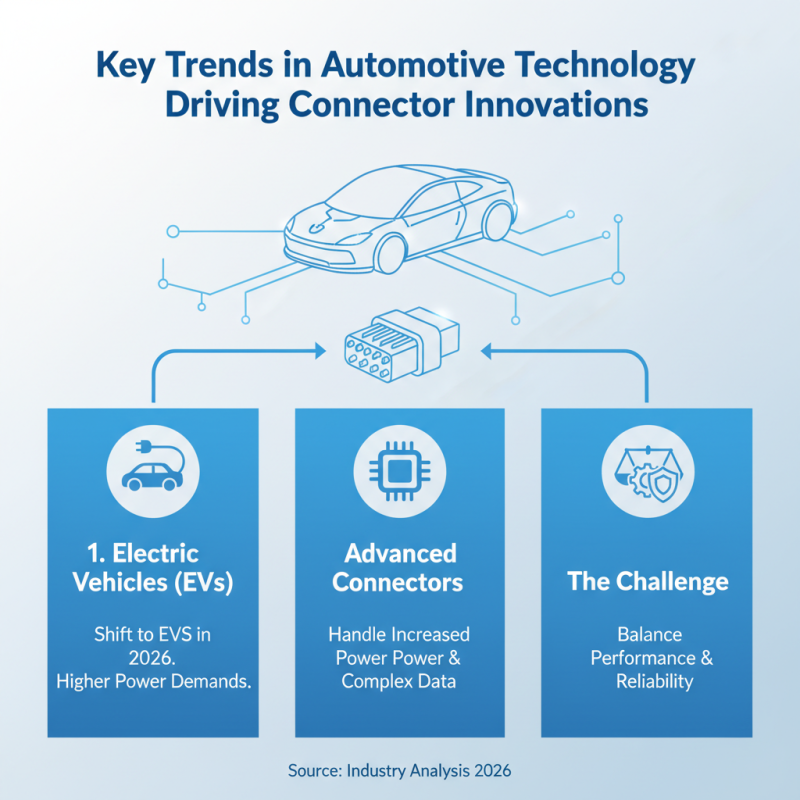
Key Trends in Automotive Technology Driving Connector Innovations
The automotive industry is undergoing rapid transformations, driven by innovations in technology. In 2026, one prominent trend is the push for electric vehicles (EVs). This shift increases the demand for advanced connectors. These connectors must handle higher power demands and more complex data transmissions. The challenge is balancing performance and reliability.
Another major trend is the rise of autonomous vehicles. As vehicles become more reliant on sensors and communication systems, connectors need to be extremely robust. They must withstand harsher conditions and facilitate real-time data exchange. This evolution calls for more durable materials and designs that ensure seamless connectivity, which isn’t without its own complications.
Sustainability is critical as well. The industry faces pressure to reduce its environmental impact. There are ongoing discussions about recyclable materials for connectors. Yet, achieving this goal while maintaining performance standards can be difficult. These interconnected trends highlight the need for innovation and adaptability in automotive connectors. As we move closer to 2026, the focus will remain on evolving solutions that address these challenges effectively.
Leading Manufacturers and Their Market Shares in Auto Connector Sector
The auto connector market is expected to evolve significantly by 2026. Key manufacturers are focusing on innovation and quality to secure their positions. Each player has a unique strategy, but the common goal is to meet the growing demand for reliable connections in vehicles.
In this sector, leading manufacturers are capturing substantial market shares through various methods. They invest in research and development, enhancing their products to support advanced automotive technologies. As electric and autonomous vehicles gain traction, the need for high-performance connectors increases. This escalation presents challenges, including the need for durability under harsh conditions.
Despite growth opportunities, there are areas that require attention. Manufacturers must address supply chain vulnerabilities. Fluctuations in raw material costs can impact production. Companies should prioritize sustainability while maintaining performance standards. Striking the right balance is essential for long-term success in the auto connector market.
Projected Growth Rates for Auto Connector Industry through 2026
The auto connector industry is expected to witness significant growth through 2026. Emerging technologies in electric vehicles and advanced driver-assistance systems are driving demand for innovative connectors. This growth reflects a broader trend in automotive electrification, impacting various sectors, including design and manufacturing.
According to market research, the global auto connector market is projected to expand at a robust rate. The increasing focus on safety features and connectivity in vehicles adds to the momentum. As manufacturers adapt, they must tackle challenges such as material sustainability and supply chain resilience. New materials are necessary to enhance performance and reliability as vehicles become more complex.
Amid these advancements, companies face pressure to innovate while ensuring cost-effectiveness. Balancing quality with affordability remains a challenge. Buyers should stay informed about market dynamics to make strategic decisions. Identifying reliable partners in the supply chain is crucial. Despite the optimistic outlook, staying adaptable will be vital for success as demands evolve.
Sustainability Practices in Auto Connector Production and Design
In the rapidly evolving automotive sector, sustainability is becoming essential in auto connector production and design. A recent industry report highlights that over 70% of global manufacturers are shifting towards environmentally friendly materials. This trend is driven by increasing regulatory pressures and consumer demand for greener products. Using recyclable materials not only reduces waste but also cuts down on energy consumption during the production process.
Manufacturers need to adopt strategies that align with sustainable practices. Implementing circular economy principles is vital. This means designing connectors that can be easily disassembled for recycling. Moreover, companies are encouraged to invest in innovations like biodegradable plastic alternatives. Such advancements can significantly limit the environmental impact. However, challenges remain. High costs and limited availability of sustainable materials may hinder widespread adoption.
Tips: Evaluate your supply chain for sustainability gaps. Regular assessments help identify areas for improvement. Engage with suppliers who prioritize eco-friendly practices. Also, consider consumer feedback on sustainability; it can guide production choices effectively.