Top 10 Board Wire Types for Effective Electrical Connections?
When it comes to effective electrical connections, selecting the right Board Wire is crucial. According to industry expert, Dr. Emily Carter, “The choice of Board Wire can make or break your electrical design.” This highlights the importance of understanding different wire types.
Board Wires come in various types, each with unique properties. The challenge is to identify the best option for specific applications. Factors like conductivity, insulation, and flexibility must be considered. Proper selection enhances reliability in electrical systems and reduces potential failures.
Understanding the nuances of Board Wire types can be overwhelming. Many engineers rush decisions, leading to performance issues. This can be a setback, affecting overall project success. Engaging with experts and exploring current options is essential for informed choices. Balancing quality and cost is key.
Overview of Board Wire Types in Electrical Connections
In the world of electrical connections, choosing the right board wire types is crucial for performance and reliability. Different wire types serve varied purposes, impacting both conductivity and safety in electronic applications. According to industry reports from the Electronic Industry Alliance, around 29% of electrical failures stem from improper connections. This highlights the need for meticulous selection of board wire types.
Solid wire, for example, is often used in applications where minimal movement occurs, providing stability and low resistance. Conversely, stranded wire offers greater flexibility, making it ideal for environments where vibrations are common. A recent study by IPC found that using the appropriate wire type can enhance signal integrity by 40%. Poor wire choices can lead to lost signals and increased electromagnetic interference, raising concerns in high-frequency environments.
However, it is essential to recognize that not all applications will fit neatly into a predefined category of wire type. Some projects may involve trial and error, as users navigate factors like temperature, voltage, and physical layout. It's a balancing act between performance and practicality. The evolving technology landscape also demands that engineers stay updated on emerging wire types to ensure connections remain efficient and safe.
Top 10 Board Wire Types for Effective Electrical Connections
| Wire Type |
Material |
Conductor Size (AWG) |
Max Current Rating (A) |
Temperature Rating (°C) |
Common Applications |
| Hook-Up Wire |
Copper |
18-28 |
5-15 |
80 |
General electronics |
| Ribbon Cable |
Copper |
20-26 |
1-3 |
60 |
Data transmission |
| Twisted Pair |
Copper |
22-24 |
0.5-2 |
75 |
Networking |
| FLEX Cable |
Copper |
16-20 |
10-30 |
90 |
Robotics |
| Coaxial Cable |
Copper & Aluminum |
18-22 |
2-7 |
90 |
Video transmission |
| Flat Cable |
Copper |
22-26 |
1-3 |
60 |
Consumer devices |
| Multi-Conductor Cable |
Copper |
16-24 |
5-20 |
80 |
Industrial control |
| Power Cable |
Copper |
14-2 |
15-50 |
90 |
Power distribution |
| Shielded Cable |
Copper |
24-30 |
1-2 |
75 |
Signal protection |
| Thermocouple Wire |
Copper |
20-30 |
0.5-5 |
200 |
Temperature measurement |
Key Characteristics of Effective Board Wires
When selecting board wires for electrical connections, certain key characteristics become crucial. Effective board wires must provide excellent conductivity. They should facilitate the easy flow of electricity. This ensures reliable performance and minimal energy loss. Additionally, flexibility is important. Wires should be able to bend and fit into tight spaces without breaking.
Durability plays a vital role as well. Wires must withstand various environmental conditions. They face temperatures, humidity, and mechanical stress. Using robust materials helps in maintaining their integrity over time. Moreover, insulation is another critical aspect. Proper insulation prevents short circuits and electrical hazards. It must resist wear and tear while providing safety.
Lastly, consider compatibility. Wires need to work seamlessly with different components and circuits. Mismatched materials can lead to inefficiencies. Understanding the applications is necessary. Each project has unique requirements. Effective communication with technical experts can guide better decisions. Reflection on past wiring projects can offer insights into necessary improvements. Taking all these factors into account can significantly enhance electrical connections.
Top 10 Board Wire Types and Their Applications
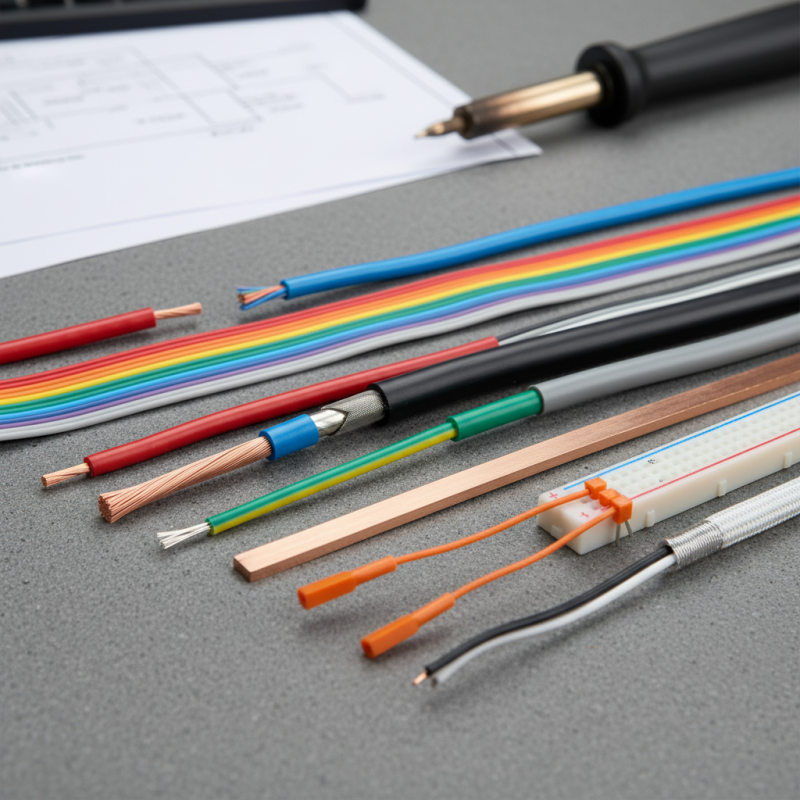
When selecting board wire types, certain applications stand out. There are various materials and designs tailored for specific tasks. Stranded wire is common for its flexibility. It's ideal for tight spaces and bending requirements. Solid wire, while less flexible, provides strong connections where rigidity is essential.
Another option is ribbon cable, which allows multiple connections in a compact form. It's highly useful in crowded circuit boards. Also, twisted pair wires excel in reducing electromagnetic interference. These wires are often found in communication systems, ensuring cleaner signals.
Moreover, heat-resistant wires are vital in environments where temperatures soar. They protect against shorts and ensure reliability. Each wire type presents unique advantages and potential downsides. Users must critically evaluate their needs. This awareness fosters better choices in electrical connections.
Top 10 Board Wire Types for Effective Electrical Connections
Comparative Analysis of Board Wire Performance
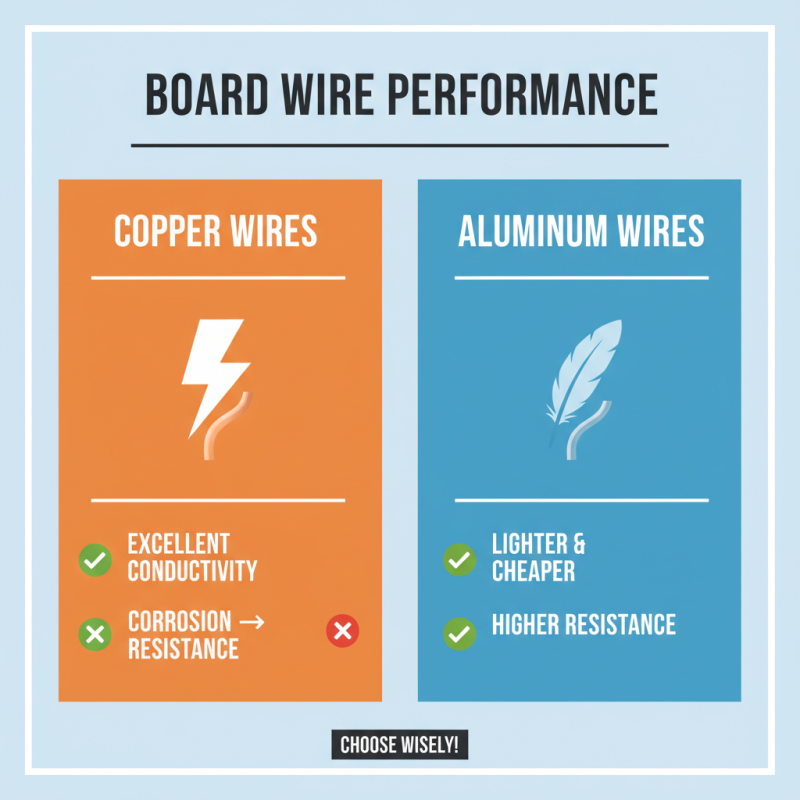
When exploring board wires, it's crucial to compare their performance. Different types of board wires exhibit unique characteristics that affect their suitability for various applications. Copper wires are favored for their excellent conductivity. However, they may be prone to corrosion. This can lead to increased resistance over time. Aluminum wires, on the other hand, are lighter and often cheaper. Yet, they have higher resistance and can be less reliable in the long run.
Flexibility is another aspect to consider. Many wires are designed to bend easily, accommodating intricate circuit layouts. But this flexibility can sometimes lead to fatigue, especially in high-movement areas. While some may excel in high-temperature environments, others may not withstand extreme conditions without degrading. Knowing these nuances allows for informed decisions when selecting board wires for specific tasks.
Ultimately, performance metrics like resistivity, temperature tolerance, and flexibility vary widely among wire types. This indecisiveness means that an ideal wire for one project may falter in another. Conducting thorough tests can reveal surprising results and highlight areas needing improvement. Exploring these factors leads to better electrical connections in practice.
Best Practices for Selecting Board Wires in Projects
When selecting board wires for electrical projects, understanding the impact of wire types is crucial. The choice of materials, gauge, and insulation can significantly affect performance. For instance, using the correct gauge ensures minimal resistance. Insulation type also matters. PVC insulation is common, but other materials might offer better heat resistance or flexibility.
Evaluate the project’s requirements. A low-power application may not need the same durable wire as a high-load system. Consider the environment too. Damp or high-temperature settings might require special insulation. Testing various types before finalizing can reveal unexpected challenges. Some wires may impress initially but underperform in durability tests.
Installation practices also play a role in wire effectiveness. Poor connections often lead to failures. It's essential to avoid twists and ensure proper crimping. Keeping your workspace tidy can help prevent accidental shorts. Manufacturers' guidelines can aid in making informed decisions. Yet, some may lack practical insights or real-world testing results. Gathering feedback from others in the industry fosters a more effective selection process. Always be open to learning from mistakes made in previous projects.