Top Cable Wire Harness Types For Your Project Needs?
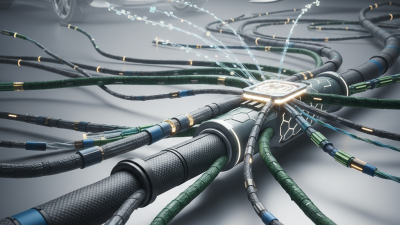
When considering your project needs, the choice of a Cable Wire Harness plays a crucial role. These harnesses organize multiple wires and cables, enhancing efficiency and safety in your application. They are essential in various industries, including automotive, telecommunications, and aerospace.
The right Cable Wire Harness can streamline connections and improve reliability. There are different types available, each tailored for specific uses. Custom harness designs can accommodate unique requirements. However, with so many options, choosing the ideal fit can be daunting.
Sometimes, projects demand harnesses that tackle complex wiring needs. If not carefully selected, issues may arise, leading to project delays. It’s essential to evaluate your options, understanding the features and limitations of each Cable Wire Harness type. This process can significantly influence your project's outcome, ensuring functionality and effectiveness.
Understanding Cable Wire Harness: Basics and Definitions
Cable wire harnesses are crucial in modern electronic systems. They serve as a backbone, connecting different components and ensuring power and data flow. According to a report by Allied Market Research, the global cable assembly market is expected to reach $162.6 billion by 2027, indicating the growing reliance on these systems. Understanding their basic structure and types can help streamline any project.
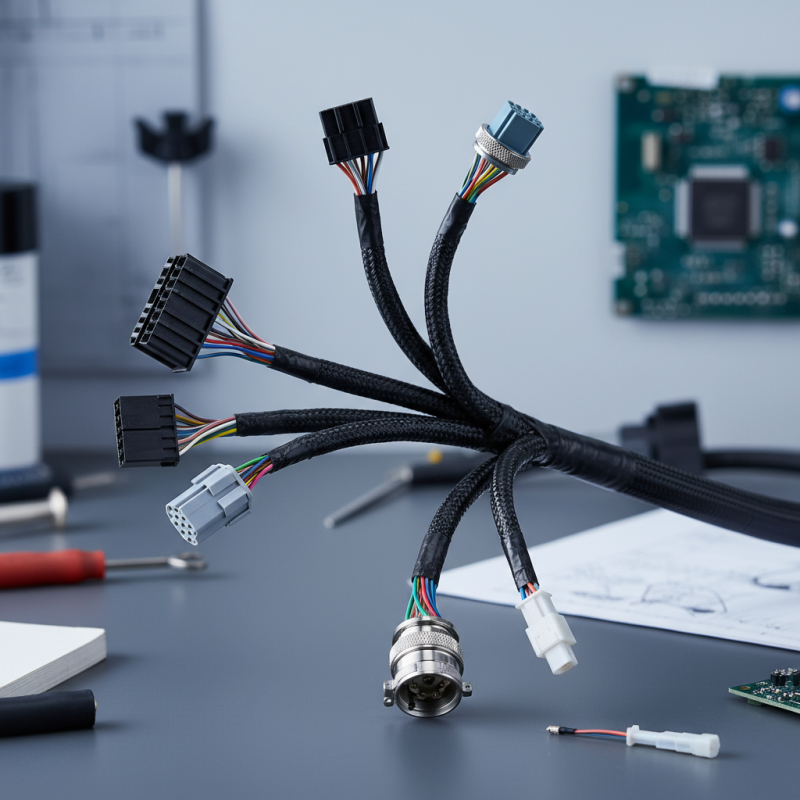
A wire harness comprises wires, connectors, and terminals, all bundled together in a protective casing. This arrangement minimizes electrical interference and physical damage. Custom harnesses often fit specific project requirements, but standard types, like flat and round harnesses, are widely used across industries. As technology evolves, so do the designs. Often, however, businesses overlook the importance of proper planning in developing these harnesses, which can lead to costly revisions.
Moreover, the selection of materials is vital. Materials must withstand various environmental factors. Using subpar components can lead to short circuits or failure. A lack of proper quality checks can result in significant operational setbacks. The manufacturing process also presents challenges; too many variations can complicate assembly. Balancing customization and efficiency often requires careful thought and continuous improvement.
Top Cable Wire Harness Types For Your Project Needs
| Type |
Description |
Applications |
Advantages |
| Standard Wire Harness |
Basic assembly of wires and connectors. |
Consumer electronics, appliances. |
Cost-effective, easy to assemble. |
| Custom Wire Harness |
Tailored design based on project specifications. |
Industrial machinery, automotive. |
Specific to needs, optimized performance. |
| Military Wire Harness |
Durable design for harsh conditions. |
Defense applications, aerospace. |
High durability, reliability. |
| Automotive Wire Harness |
Complex assembly for vehicles. |
Cars, trucks, motorcycles. |
Safety, regulation compliance. |
| Solar Wire Harness |
Designed for solar panel connectivity. |
Solar energy systems. |
Enhanced efficiency, environmental benefits. |
Common Types of Cable Wire Harnesses for Various Applications
When selecting cable wire harnesses, understanding the common types available is crucial. Each type serves specific functions across various applications. For instance, printed circuit board (PCB) harnesses are widely used in consumer electronics. They allow compact connectors and high-density interconnections, enhancing the design's efficiency.
Another type is the multi-conductor cable harness. It typically combines multiple insulated wires into one sheath. This arrangement is ideal for automotive and industrial machinery.
Recent reports suggest that demand for multi-conductor designs is increasing, especially in automated systems and robotics. It's a trend worth noting for manufacturing sectors aiming for streamlined production.
Tips: Always assess the environment where the harness will be used. Factors like temperature, humidity, and vibration can affect performance. Additionally, don’t overlook the importance of testing. Ensuring the cable harness meets specific industry standards is vital. Imperfections during assembly can lead to costly failures. Regular evaluations can mitigate risks and enhance reliability in your project.
Key Materials Used in Cable Wire Harness Manufacturing
When considering cable wire harness manufacturing, the choice of materials is crucial. Several key materials influence the performance and durability of these harnesses. Common materials include copper, PVC, and various types of insulation. Copper is favored for its conductivity. It helps in transmitting electrical signals effectively and efficiently. PVC is known for its flexibility and resistance to moisture. This makes it an ideal choice for various environmental conditions.
In cable wire harness production, not all materials are equal. For instance, using lower-quality insulation may lead to failures. This choice can cause issues like short circuits and wire damage over time. Be mindful of the environment your harness will operate in. Different materials perform better under different conditions.
Tips: Always consider the long-term use of materials. Ask manufacturers about material certifications. Ensure compliance with industry standards. Testing prototypes before full production can save you from future headaches. Replace materials that underperform. It ensures reliability and longevity for your project.
Factors to Consider When Choosing a Cable Wire Harness Type
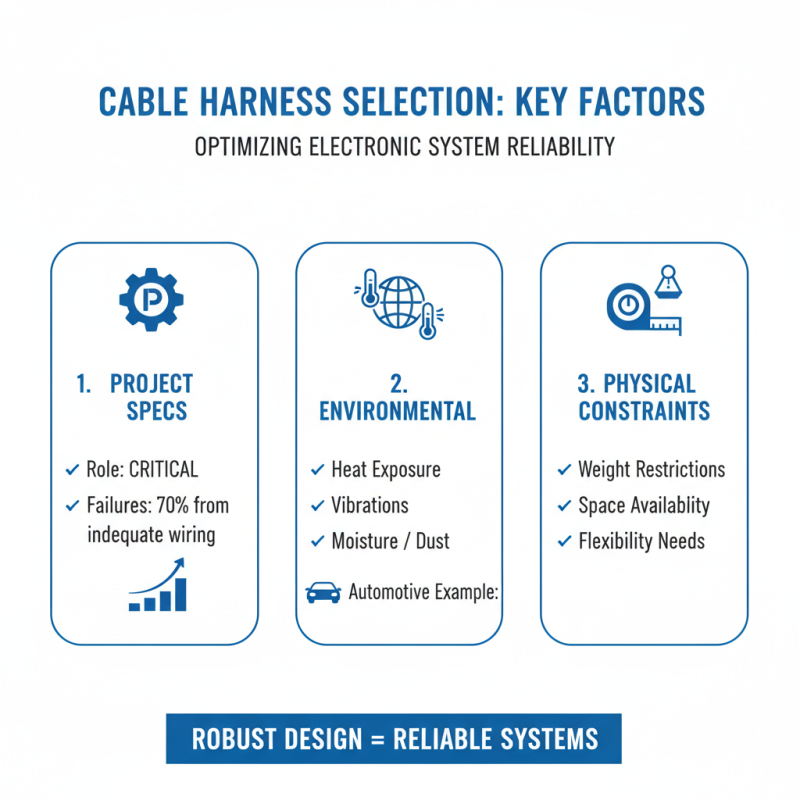
When selecting a cable wire harness type, the project specifications play a vital role. Industry reports show that 70% of failures in electronic systems arise from inadequate wiring solutions. This highlights the importance of thorough evaluation. Consider factors such as the environment, weight restrictions, and space availability. For example, in automotive applications, exposure to heat and vibrations is common. A robust harness design must account for these stresses.
Customization is another critical aspect. Options vary from standard configurations to complex, custom designs. Data indicates that 45% of projects benefit from tailored solutions. This allows for better integration and longevity. Assessing your current and future needs is essential. Often, teams overlook the anticipated changes in technology or project scale. They may choose a short-term solution without considering long-term implications. These choices can lead to costly revisions later.
Material selection is equally important. The right insulation can enhance durability and safety. Recent studies suggest that 35% of harness failures relate to poor material choices. Conducting thorough research on materials and conducting tests may prevent future issues. Make sure to analyze the total cost of ownership, rather than just upfront costs. The wrong choice may save money initially but lead to loss later on.
Best Practices for Installing and Maintaining Cable Wire Harnesses
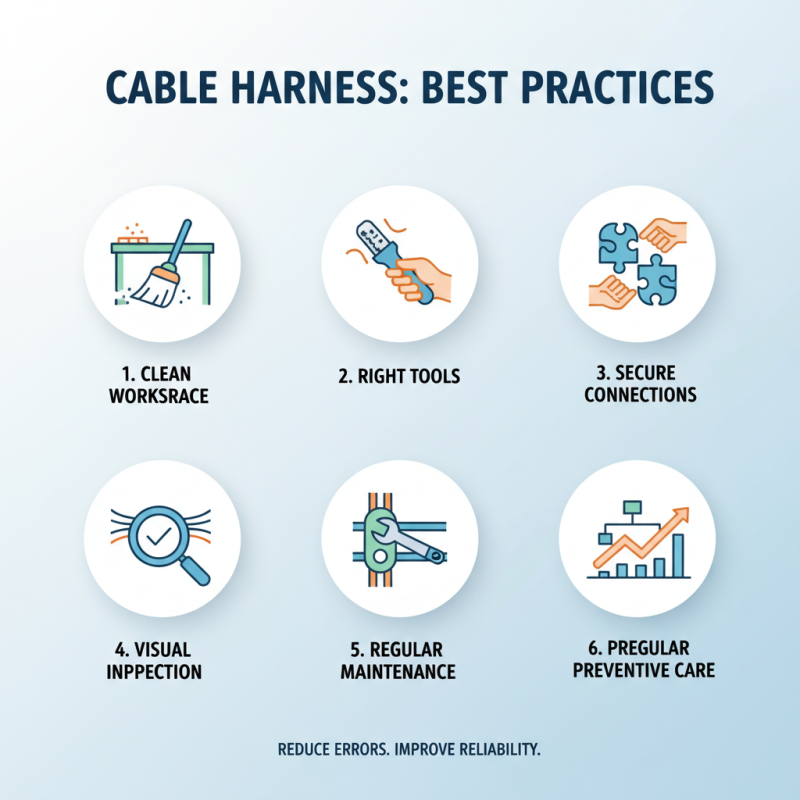
Installing and maintaining cable wire harnesses requires careful attention to detail. First, ensure that the workspace is clean and organized. Dust and debris can damage delicate wires. Use appropriate tools to strip, cut, and crimp wires. This minimizes the risk of errors. In many projects, overlooked connections lead to issues.
Another key aspect is labeling. Properly label each wire to avoid confusion. Use heat-shrink labels or color coding for better clarity. After installation, always test the harness thoroughly. A faulty connection can disrupt the entire system. Remember to update documentation as changes happen.
Maintenance plays a crucial role in longevity. Regularly inspect for wear and tear. Look for exposed wires or broken connectors. Address issues as they arise to prevent further damage. Some users may hesitate to address minor problems, thinking they can wait. This is often a mistake. Regular upkeep ensures functionality and safety.