Top 5 Tips for Choosing Auto Connectors for Your Needs?
Choosing the right auto connectors is crucial for any automotive application. Quality connectors ensure reliable operation, efficient conductivity, and durability. However, with numerous options on the market, the selection process can be overwhelming.
When considering auto connectors, it’s important to focus on factors like material quality, compatibility, and environmental resistance. The right insulation can prevent short circuits and damage, which is critical in harsh conditions. Yet, many overlook these details, leading to costly mistakes. Selecting the wrong type can impact performance and safety.
Expert advice can guide you in making informed choices. Evaluate your specific needs and consult professionals if necessary. This effort can lead to long-term reliability and satisfaction. Remember, taking a little extra time to choose the right auto connectors can save you from potential headaches down the road.

Understanding the Different Types of Auto Connectors Available in the Market
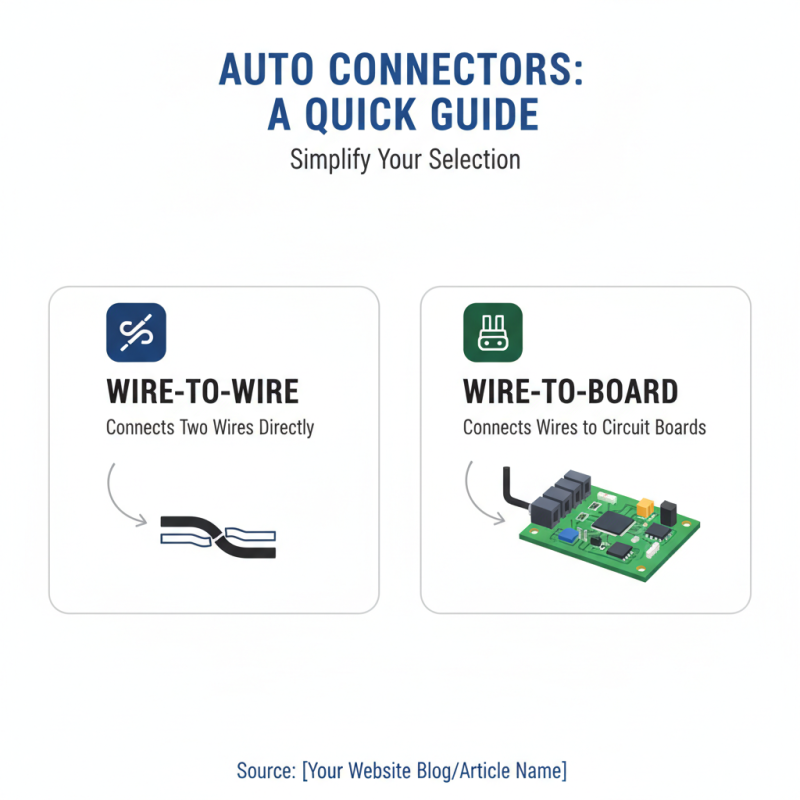
When selecting auto connectors, understanding the different types available is crucial. Various connectors serve different purposes, and knowing these can simplify your decision. For instance, you have wire-to-wire connectors, which allow the direct connection of two wires. There's also wire-to-board connectors, essential for connecting wires to circuit boards.
Consider the environment the connectors will be used in. Some connectors are designed for harsh conditions, with better insulation and water resistance. Look for types that can withstand your specific needs. This can save you time and money on replacements.
While researching, take note of compatibility issues. Not all connectors fit all vehicle models or configurations. Using the wrong type can lead to malfunctions. It’s essential to double-check specifications. If you’re unsure, asking professionals for guidance can be beneficial. When in doubt, don’t hesitate to seek expert insight.
Evaluating Compatibility: Matching Connectors with Your Vehicle's Requirements
When selecting auto connectors, compatibility is crucial. It's essential to evaluate if the connectors fit your vehicle’s specific requirements. Industry reports indicate that improper connector choices can lead to reduced functionality and even safety hazards. For example, a study found that mismatched connectors can increase the risk of electrical failures by up to 30%.
To ensure proper compatibility, start by checking your vehicle's manual. It provides detailed specifications for the connectors used. You may want to consider the electrical rating of connectors. Connectors capable of handling higher voltage are often necessary for modern vehicles. Always remember to look for connectors that are designed for your specific make and model.
Evaluating materials is vital too. Many connectors today are made from durable thermoplastics and metal alloys, enhancing their longevity and performance. However, the quality can vary significantly. A report from a leading automotive association highlights that using low-grade materials can lead to connectors failing in under five years. Further, double-check the connector design to make sure it accommodates your wiring layout.
In summary, a thoughtful approach to compatibility can greatly enhance your vehicle's performance. Prioritize checking specifications, electrical ratings, and materials to make a well-informed decision. Take your time to reflect on these aspects before making a choice.
Assessing Durability and Performance Specifications for Long-Lasting Use
When choosing auto connectors, assessing durability and performance is critical for longevity. Durability directly influences how a connector withstands various conditions. For instance, connectors exposed to extreme temperatures or humidity should be beneficial. Look for materials like thermoplastics, which can resist wear and tear over time.
Performance specifications also matter significantly. Consider factors like current ratings and resistance levels. A connector that manages high currents will support more demanding applications. Pay attention to specifications from reputable sources. This information is vital for making informed decisions.
Here are some tips when selecting auto connectors. Check certificates and guarantees for reliability. This adds to your confidence in the product. Evaluate user reviews to see real-world durability experiences. Sometimes, personal anecdotes highlight issues not evident in technical data. Maintain an open mind about needs. Reflect on how often the connector will be used. Not all connectors are made for every vehicle type, which can lead to premature failure if mismatched.
Considering Environmental Factors: Selecting Connectors for Specific Conditions
When selecting auto connectors, environmental factors are crucial.
Extreme temperatures can impact performance. For instance, connectors exposed to high heat may degrade faster.
Cold environments pose risks as well. They can lead to brittleness and thermal contraction.
Choosing materials that withstand these conditions becomes essential.
Moisture is another key consideration.
Water ingress can cause electrical failures. Look for connectors designed with seals to prevent this.
In addition, vibration and shock are common in automotive applications.
Connectors should be robust enough to resist these forces. They should stay secure, even under strain.
While many connectors meet basic requirements, not all can handle harsh environments.
Reflect on the specific conditions your connectors will face. Consider factors like
dust, chemicals, and mechanical stress.
It's crucial to weigh these issues against connector specifications.
A well-chosen connector can enhance durability and reliability in challenging situations.
Budgeting: Balancing Cost and Quality in Your Connector Choices
When selecting auto connectors, budgeting is crucial. Balancing cost and quality often presents challenges. According to industry research, cheaper connectors can lead to higher failure rates. A study found that 30% of low-cost connectors failed within two years. This highlights the importance of investing wisely.
Quality connectors typically offer better performance. They can withstand extreme temperatures and vibrations. A 2023 report noted that high-quality connectors could improve the overall efficiency of automotive systems by up to 25%. This data underscores how spending a bit more on reliable components can lead to significant long-term savings.
However, it’s essential to assess your specific needs. Not every application requires the highest grade connectors. Sometimes, mid-range options provide a fair compromise between cost and functionality. Understanding the environment in which connectors will be used can guide your decision-making. Make sure to evaluate both immediate costs and potential future expenses.