2026 How to Choose Male Female Header Pins for Your Needs?
Choosing the right Male Female Header Pins can be challenging. With various options on the market, it's crucial to understand your specific needs. Renowned expert in electronic components, Dr. Emma Wu, emphasizes, "The right header pin can greatly impact your project's reliability." This underscores the importance of making informed choices.
When selecting Male Female Header Pins, consider factors like pin count, spacing, and material. These elements can influence performance and durability. For example, a project requiring compact designs may benefit from lower pin counts. Additionally, the chosen material can affect conductivity and resistance to environmental factors.
However, many users overlook critical specifications. Some might choose based solely on appearance instead of functionality. It's essential to balance aesthetics with performance needs. A poor choice can lead to project failures or costly revisions. Reflecting on these aspects can help ensure you select the best Male Female Header Pins for your applications.
Understanding the Basics of Male and Female Header Pins
Male and female header pins are essential components in electronic design. Understanding their types is key for effective application. Male pins are designed to fit into female connectors, ensuring a secure connection. They often come in various pin counts, such as 2, 4, or even 40 pins. This diversity allows flexibility in circuit design.
Data from industry reports shows that the demand for header pins is rising. The global market for electronic connectors is projected to grow at a CAGR of 6.5% from 2023 to 2030. This indicates a significant increase in the use of male and female header connectors in applications ranging from consumer electronics to automotive systems.
It's important to choose the right size and type. Mismatched header pins can lead to connection failures. Many engineers suggest testing different configurations during prototype development. This trial-and-error approach may slow down progress, yet it often leads to better outcomes. Striking the right balance between size, strength, and functionality can make a significant difference in the final product's reliability.
Types of Male and Female Header Pins Available on the Market
When selecting male and female header pins, understanding the types available is crucial. Header pins are vital for various electronic connections. They provide reliable and secure connections in numerous applications, from prototyping to final product assembly.
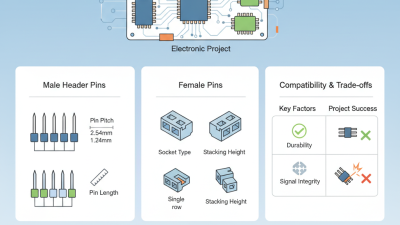
The market offers different types of header pins. Male header pins typically feature a row of pins that connect to female sockets. They come in various pin counts, usually ranging from 2 to 40 pins. Female header pins, on the other hand, have sockets that accommodate male pins. They are essential when a secure connection is needed.
Tip: When choosing header pins, consider the pitch, which is the distance between pins. Standard pitches are 2.54 mm and 1.27 mm. This dimension affects compatibility with connectors and devices.
Quality is another aspect that often goes unnoticed. Not all header pins are created equal. Low-quality pins may rust or weaken over time. This could lead to connectivity issues and equipment failure. Always consult industry standards for material and performance specifications before purchasing.
Tip: Assess the intended application to select the suitable header pin type. Factors like current rating and mechanical strength are essential. Investing in quality components reduces long-term risks.
Factors to Consider When Choosing Header Pins for Specific Applications
Choosing the right header pins for male and female applications is critical. One must consider factors like size, durability, and material. The right size ensures a proper fit within circuit boards, while inappropriate sizing can lead to connection issues. Reports suggest that 30% of electronic failures are due to poor connections, highlighting the importance of accurate size selection.
Material choice is equally significant. Options like brass offer great conductivity, while stainless steel provides corrosion resistance. A study from the IEEE noted that corrosion can lead to a 20% reduction in lifespan for electronic components. Additionally, the operating environment affects decisions. For example, exposure to moisture demands sealed or coated pins to ensure longevity.
Lastly, don’t overlook the pin configuration. Different applications may require specific arrangements for efficient connectivity. It’s essential to reflect on your unique needs. An analysis from TechInsights reveals that custom configurations may lead to a 15% better performance in certain applications. The choice of header pins should align with specific requirements to maximize efficiency. This process is not always straightforward, and manufacturers need to be aware of limitations and potential revisions.
Installation and Compatibility of Header Pins in Electronic Projects
When selecting header pins for your electronic projects, installation and compatibility are crucial. These components connect various parts of a circuit, ensuring reliable performance. According to industry reports, the right header pins can drastically reduce failure rates in prototypes, highlighting their importance in design and testing phases.
Tips: Always check the pitch and pin count before purchasing. Mismatched specifications can lead to fitting issues.
Mounting options also vary. Through-hole pins are standard, but surface mount versions are gaining popularity due to their space efficiency. Reports show that nearly 40% of new projects now opt for surface mount configurations, which require precise soldering skills. This choice influences overall project compatibility and ease of integration.
Tips: Consider using solderless connectors for prototypes. They simplify adjustments during testing phases.
Pay attention to the material as well. Common options include brass and tin. While brass offers good conductivity, tin coating can enhance corrosion resistance. Selecting the right material affects not only conductivity but also lifespan. Some projects may benefit from choosing a combination of materials to optimize both performance and durability. Always analyze your project requirements carefully to make informed decisions.
Best Practices for Maintaining and Using Header Pins Effectively
Maintaining and using header pins effectively requires attention to detail. Ensure that the pins are clean before use. Dust and debris can hinder conductivity. Regularly inspecting pins for bending or damage is important. A simple visual check can save time during assembly or repairs. If you notice any issues, replacing the pins promptly is crucial.
Proper handling of header pins is essential. Always insert and remove them gently to avoid wear. Sometimes, it might be tempting to force a connection. Yet, this can lead to long-term issues. Use appropriate tools to aid installation when necessary. Additionally, storing pins correctly is vital. Keep them in a dry place to prevent corrosion. Packaging that protects them from moisture is ideal.
Lastly, keep a record of your usage and repairs. Tracking how often pins are replaced helps you understand their lifespan. This process may reveal patterns that need addressing. Experimenting with different types of pins can also offer insights into better practices. By reflecting on each project, you can refine your approach over time.
Usage of Header Pins in Electronics (2023)