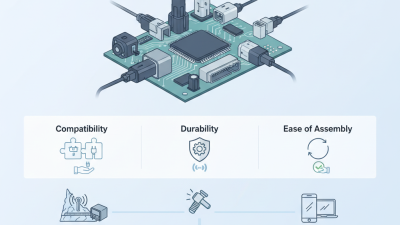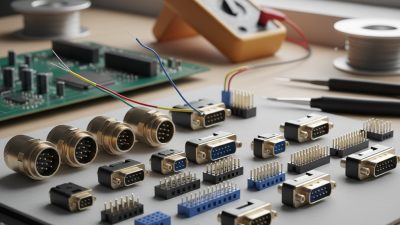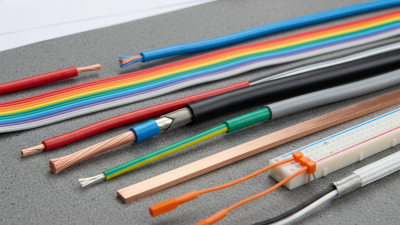
The 2026 search for the world’s top Terminal Block Connector suppliers is not simply a ranking exercise. It is a practical review of safety, wiring density, modularity, delivery reliability, and field performance. Control cabinets may look orderly, yet one loose clamp can stop an entire production line.
MarketsandMarkets estimates that the global terminal block market will continue expanding through the decade, supported by factory automation, renewable-energy projects, rail systems, and electrical infrastructure upgrades. Grand View Research also identifies industrial automation and energy distribution as major demand areas. These reports indicate growth, but their market boundaries differ. Direct comparisons require caution.
IEC 60947-7-1 and UL 1059 remain important references for evaluating terminal blocks, especially regarding current capacity, insulation, temperature rise, and application safety. Phoenix Contact, WAGO, Weidmüller, ABB, Eaton, Schneider Electric, and TE Connectivity are frequently considered influential suppliers. However, “top” depends on the application. A compact spring connection may suit vibration-prone machinery, while a screw terminal may remain preferred in familiar maintenance environments.
As WAGO engineer Bernd Künnemann has stated, “The connection is only as good as its weakest point.” This principle deserves attention. Supplier reputation matters, but so do test records, compatible accessories, labeling systems, and regional technical support. This guide compares leading manufacturers using available industry data, engineering documentation, and practical purchasing considerations. Some conclusions may change as 2026 pricing and capacity information develops. That uncertainty should remain visible, not hidden.

Terminal block connectors remain a practical choice for organized industrial wiring. In panel work, I check the conductor size, current rating, voltage rating, and insulation temperature before comparing suppliers. IEC 60947-7-1 provides a useful framework for low-voltage terminal blocks, including electrical performance and construction requirements. It does not replace application testing.
Details matter.
UL 1059 is commonly used for terminal blocks evaluated for North American installations. Its requirements may differ from IEC-based documentation, so identical-looking products should not be treated as interchangeable. I verify certification scope, markings, test conditions, and the exact product series. A familiar approval symbol alone is not enough. This is where supplier documentation often feels incomplete.
DIN rail compatibility also deserves careful inspection. Many terminal blocks mount on 35 mm rails, but rail profile, locking strength, end stops, and spacing can vary. A loose block may shift during maintenance, especially when wiring is stiff or crowded. I look for secure engagement, clear terminal numbering, accessible test points, and reliable screw or spring-clamp performance. Tightening torque should match the stated value, not a technician’s guess. In practice, I have seen otherwise sound layouts fail because accessories did not match the rail or block family. That mistake is easy to prevent, yet frequently overlooked. Suppliers that provide traceable test reports, dimensional drawings, and consistent technical support deserve closer attention for 2026 sourcing.
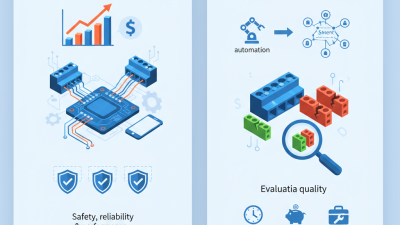
Terminal Block Connector Basics: IEC 60947-7-1, UL 1059, and DIN Rails
IEC 60947-7-1 covers terminal blocks for low-voltage switchgear and controlgear, with rated limits reaching 1,000 V AC or 1,500 V DC. UL 1059 covers terminal blocks rated up to 600 V. DIN EN 60715 defines standardized mounting-rail dimensions and does not establish an electrical voltage rating; therefore, its value is shown as zero for comparison only, not as a zero-voltage operating limit.
The 2026 terminal block connector landscape is shaped by three major European suppliers. Their portfolios typically cover feed-through, ground, multi-level, and modular blocks. Each competes through wiring density, tool-free installation, and certification depth.
MarketsandMarkets estimates the terminal block market will grow at roughly 5% annually through 2028. Grand View Research identifies industrial automation, energy systems, and transportation as key demand sectors. These figures support continued supplier investment, but market estimates differ by product scope. That uncertainty matters. A catalog can look complete while missing regional approvals, temperature limits, or vibration data.
Field audits often reveal small failures. Labels fade. Screws loosen. Space disappears inside crowded control cabinets. Supplier selection should therefore compare contact resistance, rated current, wire range, short-circuit performance, and test documentation. IEC 60947-7-1 provides a useful technical reference for low-voltage terminal blocks. UL and regional conformity records add purchasing confidence, but only when matched to the final installation.
Tips: Request samples before volume orders. Test the largest approved conductor. Check accessories, jumpers, end stops, and marking systems together. Compare total cabinet space, not unit price alone. Recheck every report date. Older data can mislead.
Choosing a terminal block supplier in 2026 requires more than comparing catalog prices. Rated current is the practical starting point. A 10 A label may depend on conductor size, ambient temperature, and contact spacing. For high-load panels, request test conditions, temperature-rise data, and continuous-current limits. A supplier that explains these details earns more trust than one offering vague maximum figures.
For systems rated from 300 to 1,000 V, verify insulation rating and creepage distance separately. Do not treat voltage and current as interchangeable specifications. Check whether the terminal accepts your required AWG range, including solid and stranded conductors. Pitch also matters. A 5.08 mm pitch may fit one rail layout, while a 7.62 mm version may improve clearance. In practical panel reviews, mismatched pitch often creates wiring congestion and rework. Compare drawings, torque values, material data, and independent test reports before selecting suppliers worldwide.
Tips: Build a comparison sheet with rated current, voltage, AWG, pitch, temperature limits, and certification evidence. Ask for samples. Test the actual wire. Catalog tables are not always perfect, and one overlooked derating rule can change the result. Recheck the design under heat, vibration, and limited cabinet space.
Ranking the 2026 Top Terminal Block Connector Suppliers Worldwide requires evidence, not attractive catalogs. MarketsandMarkets’ 2024 terminal block study projects steady market growth through 2029, increasing pressure on capacity and delivery reliability. Certifications should receive serious weight. Check IEC 60947-7-1 compliance, UL 1059 recognition, and ISO 9001 quality controls. Request current certificates, test reports, and production-site details. A certificate without traceability is weak evidence.
IP ratings also need careful interpretation. IEC 60529 defines protection against dust and water, but an IP65 rating does not guarantee performance in every outdoor installation. Ask for test conditions, materials, temperature ranges, and cable-entry limitations. Lead time should reflect actual performance, not a sales promise. Compare the last twelve months of confirmed orders, on-time delivery percentages, minimum order quantities, and emergency capacity. A supplier offering seven-day dispatch may still fail during connector shortages. Supply Chain Insights’ 2024 procurement research identifies resilience and multi-source planning as major purchasing priorities, supporting this practical test.
Technical support separates capable suppliers from simple distributors. Measure quotation speed, engineering response time, sample availability, and failure-analysis procedures. Ask whether drawings, torque data, and change notifications are controlled. Short answers are useful. Vague answers are not. My ranking model would assign 30% to certification and quality, 25% to delivery history, 20% to IP and application evidence, and 25% to support. The weighting is not perfect. A high score can still hide regional logistics risks, so audit results should remain open to revision.
Supplier-neutral evaluation matrix for comparing terminal block connector manufacturers and authorized production partners worldwide.
| Priority | Evaluation Dimension | Required Data Point | Strong 2026 Benchmark | Verification Evidence | Weight |
|---|---|---|---|---|---|
| 1 | Product Safety Compliance | Applicable terminal-block standard, rated voltage, rated current, conductor range, temperature rating, and approval scope. | Documented conformity with IEC 60947-7-1 and/or UL 1059 for the specific product family. | Current certificate, test report, datasheet, approval file number, and model-level scope confirmation. | 20% |
| 2 | Quality Management | Quality-system certification, certificate validity, manufacturing-site coverage, corrective-action process, and audit history. | ISO 9001 for the supplying site; IATF 16949 where automotive production is required. | Certificate issued by an accredited certification body, scope statement, expiry date, and site address. | 15% |
| 3 | Ingress Protection | IP rating of the complete assembled product, sealing method, cable-entry conditions, and installation limitations. | IP20 for protected internal assemblies; IP65 or higher only when the complete enclosure, sealing accessories, and installation method are tested as an assembly. | IEC 60529 test report or technical file identifying the exact housing, cover, gasket, cable entry, and test configuration. | 12% |
| 4 | Lead Time and Supply Capacity | Standard-production lead time, custom-tooling lead time, minimum order quantity, annual capacity, and allocation policy. | Standard items: approximately 2–6 weeks; custom items: approximately 8–16 weeks after drawing and tooling approval, subject to written confirmation. | Written quotation, production calendar, capacity statement, safety-stock policy, and recent on-time-delivery records. | 15% |
| 5 | Electrical and Mechanical Performance | Voltage/current rating, torque range, pull-out force, vibration resistance, temperature rise, mating cycles, and wire-retention performance. | Ratings clearly defined by wire size, conductor material, ambient temperature, mounting method, and applicable test standard; no “universal” rating without conditions. | Model-specific datasheet, type-test report, dimensional drawing, torque specification, and sample validation results. | 12% |
| 6 | Materials and Environmental Compliance | Housing resin, flammability class, terminal-plating material, restricted substances, conflict-minerals policy, and material traceability. | RoHS compliance under Directive 2011/65/EU and amendment (EU) 2015/863; REACH declaration under Regulation (EC) No 1907/2006; preferably UL 94 V-0 housing material where required by the application. | Material declaration, RoHS test or declaration, REACH statement, resin grade, plating specification, and supplier-change notification procedure. | 10% |
| 7 | Engineering and Customization Support | Drawing turnaround, sample availability, design-for-manufacturing review, tooling ownership, change-control process, and engineering language coverage. | Initial technical response within 1 business day; preliminary drawing or feasibility feedback within 3–5 business days for standard customization requests. | Named technical contact, engineering workflow, sample plan, revision-controlled drawings, and documented engineering-change notices. | 8% |
| 8 | After-Sales and Technical Support | Response time, failure-analysis process, warranty terms, replacement policy, field-support coverage, and escalation path. | Initial response within 1 business day; containment plan within 3 business days for critical quality incidents; formal 8D or equivalent corrective-action report when applicable. | Service-level agreement, warranty document, complaint workflow, escalation contacts, and anonymized corrective-action examples. | 5% |
| 9 | Traceability and Business Continuity | Lot-code system, production-site identification, process-change notification, disaster-recovery planning, and secondary-source options. | Lot-level traceability from finished product to production date and material batch; documented change notification before implementation. | Traceability sample, PCN procedure, business-continuity plan summary, and approved alternate-material or alternate-site records. | 3% |
Recommended scoring: Rate each dimension from 0 to 5, multiply by the listed weight, and rank suppliers by the resulting weighted total. A supplier should not be approved solely on its total score if a mandatory safety or compliance requirement is missing.
Important qualification: Lead-time and support figures are procurement benchmarks, not universal market facts. IP ratings, electrical ratings, and certifications must always be verified for the exact terminal-block model, assembly configuration, and manufacturing site.
Reference standards: IEC 60947-7-1, IEC 60529, UL 1059, ISO 9001, IATF 16949, RoHS Directive 2011/65/EU and (EU) 2015/863, REACH Regulation (EC) No 1907/2006, and UL 94 where applicable.
The best supplier depends on the application, not catalogue size. For control panels, choose modular terminal blocks with clear marking, touch-safe barriers, and reliable jumper systems. MarketsandMarkets’ 2024 Terminal Blocks Market report forecasts roughly 6% annual growth through 2029. That reflects wider automation demand, but growth does not remove installation risks.
For power distribution, compare current ratings, conductor range, temperature rise, and short-circuit performance. A compact block may save cabinet space while creating difficult heat-management problems. Suppliers should provide test evidence against IEC 60947-7-1 and relevant UL requirements.
For PCB applications, inspect pin retention, pitch accuracy, solder compatibility, and field-wiring access. Grand View Research reports continued expansion in the global PCB market, driven by industrial electronics and connected equipment. The detail matters.
High-vibration systems need stronger evidence. Ask for vibration and shock test methods, retention results, plating details, and torque stability after cycling. In rail, robotics, and mobile machinery, a connector can appear secure while loosening over months. Spring-clamp designs often reduce retightening work, although they may complicate visual inspection.
I would not rank suppliers by price alone. In practical panel audits, documentation quality often separates a dependable source from an attractive catalogue. Some supplier data sheets remain incomplete. That deserves scrutiny. Verify samples under real wire sizes, temperature, vibration, and maintenance conditions before approving a global source.