Leave Your Message

2026 Best Pin Connector Types for Global Buyers?

Choosing the right Pin Connector in 2026 requires more than comparing price and pin count. Global buyers must match connector design with current, voltage, vibration, temperature, and installation conditions. A compact 2.54 mm pitch connector may suit control boards, while a sealed circular connector may perform better outdoors. Small differences matter.

This guide reviews common types, including board-to-board, wire-to-board, circular, automotive, waterproof, and high-current connectors. It considers contact materials, gold or tin plating, locking systems, crimp quality, housing strength, and available wire gauges. Practical sourcing also matters. Buyers should request dimensional drawings, test reports, sample units, and clear production records before approving large orders.

A reliable connector should withstand real handling, not only laboratory inspection. Check mating cycles, insulation resistance, temperature ratings, and ingress protection claims. Confirm whether the supplier follows recognized technical standards and can provide traceable quality documents. Regional certification needs may also affect the final selection.

No connector wins every project. A lower-cost option can create expensive field failures. Yet premium specifications do not always guarantee better performance. This is where careful testing becomes essential. Compare samples under realistic load, humidity, vibration, and repeated connection. One detail is often missed: installation tools can affect crimp reliability as much as connector design. This overview offers practical guidance, but product data should be verified with manufacturers and qualified engineers before purchase. Mistakes remain possible, especially when catalogs use unclear terminology. Good decisions come from evidence, not attractive specifications.
2026 Best Pin Connector Types for Global Buyers?

What Are Pin Connectors and How Do They Work?

Pin connectors are compact electromechanical parts that join wires, circuit boards, or panels. They use metal pins and matching contacts to carry electrical current or signals. When the connector mates, spring pressure holds each pin against its contact surface. This creates a stable conductive path. That contact matters. Small parts, serious consequences.

Common types include wire-to-board, board-to-board, and wire-to-wire connectors. Some use soldered terminals, while others use crimped contacts or press-fit pins. Straight and right-angle versions support different installation spaces. Pitch describes the distance between neighboring pins. A smaller pitch saves space but usually requires more careful assembly. Locking tabs, guide keys, and polarized housings help prevent incorrect insertion.

In practical purchasing, pin count is only one factor. Buyers should check current rating, voltage rating, contact resistance, temperature range, mating cycles, and required protection against dust or moisture. A connector for a vibrating machine needs stronger retention than one inside a quiet control cabinet. Gold-plated contacts can resist oxidation, but plating thickness and base material still matter. A datasheet may look convincing, yet real performance depends on wire size, crimp quality, and installation skill. I would request test reports, dimensional drawings, and traceable material information before approving a large order. No selection method is flawless. Field testing can expose a weak latch or excessive heating before shipment规模 becomes a costly mistake.
Which Pin Connector Types Are Available in 2026?

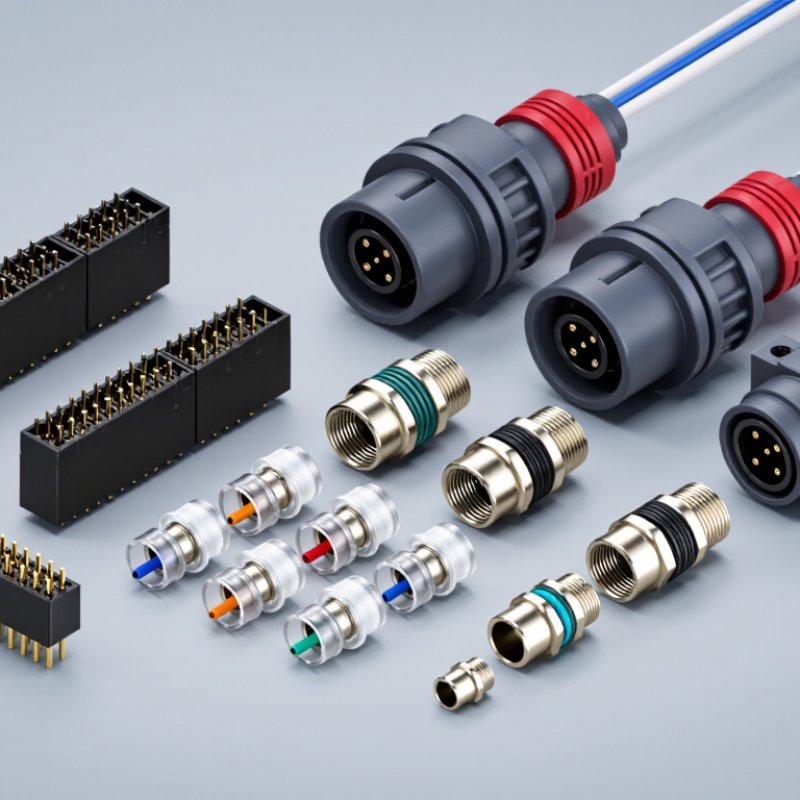
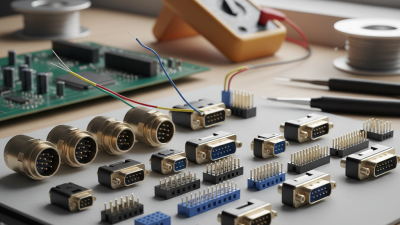
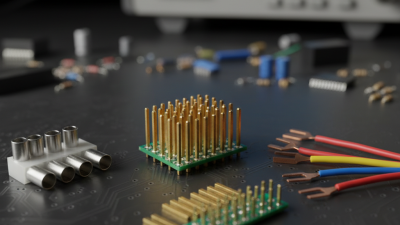
In 2026, buyers can choose from several pin connector types for electronics and industrial equipment. Pin headers remain common for simple board-to-board connections. They are available in straight, right-angle, single-row, and double-row designs. Typical pitches include 2.54 mm, 2.00 mm, and 1.27 mm. Smaller pitches save space but require tighter assembly control.

Spring-loaded pogo pin connectors suit test fixtures, charging contacts, and removable modules. They tolerate repeated contact when pressure and alignment are properly designed. Wire-to-board connectors support compact cable assemblies in control panels and consumer devices.

Circular pin connectors offer stronger mechanical protection for outdoor or industrial applications. Sealed versions may include environmental protection ratings. Check the test conditions carefully.

High-current pin connectors serve batteries, power supplies, and motor systems. Board-to-board mezzanine connectors support dense computing and control equipment. Buyers should compare current capacity, voltage rating, contact plating, insulation material, operating temperature, and mating cycles. I once saw a compact connector selected only by pitch. It fit the board, but its retention force was inadequate. That mistake was expensive.

Ask suppliers for dimensional drawings, material data, inspection records, and sample testing. Confirm whether specifications apply to one contact or the complete connector. A connector rated for a short laboratory test may perform differently inside a vibrating cabinet. Regional availability also matters. The cheapest option can create longer lead times, replacement problems, or inconsistent batches. Some assumptions need questioning.

How Do You Compare Pin Connector Performance and Compatibility?

Pin Connector Performance and Compatibility for Global Buyers

Comparing pin connectors requires more than counting terminals. Check pin pitch, contact layout, wire size, and the available installation space. A connector with a high current rating may still fail when heat builds inside a sealed enclosure. Review continuous current, peak current, voltage, and derating data at the expected temperature.

Material selection also affects performance. Copper alloys can provide stable conductivity, while suitable plating helps resist oxidation during repeated mating. Examine contact resistance, mating cycles, vibration tolerance, and locking strength. For outdoor equipment, confirm the ingress protection rating after assembly, not only in laboratory conditions. A loose seal can expose contacts to moisture. That detail is easy to miss.

Compatibility depends on the complete system. Match the connector with the cable diameter, PCB hole pattern, insulation thickness, and required safety spacing. Confirm whether the pin order prevents reverse connection. Request samples and test them under realistic loads, including heat, vibration, dust, and repeated unplugging. Datasheets are useful, but field conditions are less polite. A connector may perform well in a short test and weaken after months of movement. I have found that tolerance differences between suppliers can create unexpected assembly problems. Measure actual samples with calipers and electrical testing equipment before approving a larger order. Check regional certification requirements and keep test records for traceability.

2026 Best Pin Connector Types for Global Buyers? — How Do You Compare Pin Connector Performance and Compatibility?

Connector Type Typical Contact Pitch Typical Current per Contact Typical Voltage Rating Typical Mating Cycles Environmental Capability Main Compatibility Factors Performance Profile
Wire-to-Board Pin Header 2.00–5.08 mm 1–10 A 50–600 V AC/DC 50–500 cycles Usually indoor or protected equipment; approximately −40°C to +105°C depending on insulation and plating Matching pitch, pin count, contact position, keying, wire size, and board layout Good
Board-to-Board Pin Header 0.40–2.54 mm 0.5–3 A 30–250 V AC/DC 30–200 cycles Best suited to enclosed electronics; limited resistance to dust, moisture, and vibration unless mechanically supported Exact pitch, stack height, row configuration, pin numbering, polarization, and mating direction Good
Pogo Pin Connector 0.80–3.00 mm 0.5–8 A 12–250 V DC 10,000–100,000 cycles Excellent for repeated docking; exposed contacts require protection against contamination and corrosive environments Contact stroke, compression force, probe diameter, target-pad geometry, alignment, and current derating Excellent
Circular Pin Connector Contact spacing varies by shell size; commonly 1.5–8 mm 2–40 A 100–1,500 V AC/DC 500–5,000 cycles Strong mechanical protection; sealed versions can provide IP65–IP69K protection when correctly mated Contact arrangement, shell size, keyway, coupling method, cable diameter, shielding, and sealing system Excellent
D-Sub Pin Connector 2.74 mm standard contact spacing 1–7.5 A 250–500 V AC/DC 200–500 cycles Suitable for controlled industrial and computing environments; backshells improve strain relief and shielding Shell size, contact count, male/female gender, mounting hardware, cable termination, and signal assignment Good
Automotive Sealed Pin Connector 1.50–6.30 mm 3–40 A 12–600 V DC 10–100 cycles Designed for vibration, temperature cycling, fluids, and moisture; sealed designs commonly target IP67 or higher Terminal size, wire range, cavity seal, secondary lock, polarization, circuit count, and vehicle harness standards Excellent
High-Density Micro-Pin Connector 0.30–1.27 mm 0.2–2 A 30–150 V AC/DC 30–100 cycles Recommended for protected assemblies with controlled assembly conditions and limited mechanical stress Fine-pitch PCB design, contact alignment, insertion force, coplanarity, signal integrity, and inspection capability Good
Spring-Loaded Board Contact 1.27–5.00 mm 1–15 A 30–300 V AC/DC 1,000–20,000 cycles Good for removable modules and battery contacts; performance depends strongly on contact pressure and surface cleanliness Working stroke, contact force, pad finish, compression tolerance, wiping action, and mechanical travel limits Good
Terminal Block with Pin Contacts 2.50–10.16 mm 5–41 A 150–1,000 V AC/DC 25–100 cycles Suitable for industrial control panels and fixed wiring; environmental rating depends on housing and installation enclosure Wire cross-section, screw or spring-clamp mechanism, clearance, creepage, rail or PCB mounting, and safety certification Good
High-Speed Shielded Pin Connector 0.50–2.00 mm 0.5–5 A 30–250 V AC/DC 50–500 cycles Best for controlled indoor or enclosed systems; shielding and grounding determine electromagnetic compatibility Differential-pair geometry, impedance control, shielding continuity, crosstalk, insertion loss, and connector orientation Excellent

How to use this comparison: Select a connector by matching the required current, voltage, pitch, mating frequency, environmental exposure, mechanical retention, and signal-speed requirements. Electrical ratings must be checked against the applicable product specification and derated for temperature, wire size, contact spacing, and grouped circuits.

Values are representative engineering ranges for common connector constructions, not universal ratings. Actual performance varies by contact material, plating, insulation system, housing design, assembly quality, and applicable safety standards.

What Standards and Safety Factors Matter for Global Buyers?

2026 Best Pin Connector Types for Global Buyers?

For global buyers, connector shape is only the starting point. Wire-to-board, board-to-board, circular, and rectangular pin connectors serve different vibration and installation needs. IEC 61984 defines safety requirements for connectors, including temperature rise, creepage, and clearance. These details matter when a connector sits beside a warm motor or inside a dusty control cabinet. Small pitch saves space, but it can reduce insulation margins. That trade-off is easy to underestimate.

Safety testing should follow recognized methods, not marketing language. IEC 60512 covers electrical, mechanical, and environmental tests, including contact resistance and repeated mating cycles. IEC 60529 helps buyers verify ingress protection, such as IP65 for dust and water jets. UL 1977 is also widely referenced for component safety in industrial applications. However, an IP rating does not prove resistance to chemicals, oil, or continuous vibration. The enclosure may pass testing, while the cable seal fails in service.

Market scale adds pressure to standardize. Grand View Research’s 2024 connector report estimated the global connector market at about USD 84.7 billion in 2023, with projected growth near 6.3% annually through 2030. Buyers should request test reports, material declarations, mating-cycle data, and derating curves. RoHS and REACH documentation may support cross-border procurement, but paperwork can become outdated. A practical sample test remains necessary. On a cold morning, a loose crimp can reveal more than a polished certificate.

2026 Best Pin Connector Types for Global Buyers

Typical ingress-protection levels by connector category. The first digit represents dust protection and the second digit represents water protection under IEC 60529. Higher values indicate greater environmental protection, but the final rating depends on the complete mated connector system.

Global buyer safety checklist: confirm IEC 60529 ingress protection, IEC 61984 connector safety requirements, IEC 60664-1 insulation coordination, and applicable UL or regional certification requirements. Check rated voltage, rated current, creepage distance, clearance, contact temperature, flammability, locking strength, and current derating at the actual operating temperature. IP ratings apply only when the connector, seal, cable, and mating interface are correctly assembled.

How Can You Select the Right Pin Connector for Your Application?

Choosing the right pin connector starts with the application, not the catalog image. Bishop & Associates estimated the global connector industry at about US$84 billion in 2023, showing how many options buyers must compare. Define current, voltage, mating cycles, temperature, vibration, and available space before requesting quotations. Small details matter.

For power circuits, select pin size and contact spacing after checking continuous current and heat rise. Do not rely only on the stated maximum current. Wire length, airflow, plating, and grouped contacts can reduce real performance. IEC 60512 testing covers contact resistance, vibration, and temperature-related reliability. Ask suppliers for test conditions, not just attractive figures. This step prevents a common mistake: comparing ratings measured under different assumptions.

Signal applications need different priorities. Check impedance, shielding, crosstalk, insertion loss, and contact stability. The IEA Global EV Outlook 2025 reported more than 17 million electric cars sold worldwide in 2024, increasing demand for compact, vibration-resistant interconnects. Yet automotive requirements may be excessive for office equipment. IP protection, locking method, and service access should match the environment. I would also build a sample harness and test it repeatedly; laboratory results rarely reveal every assembly error. A lower-cost connector may become expensive after field maintenance, while an oversized design wastes space and material. Evaluate the complete lifecycle.