Leave Your Message

What Is Board Wire and What Is It Used For?

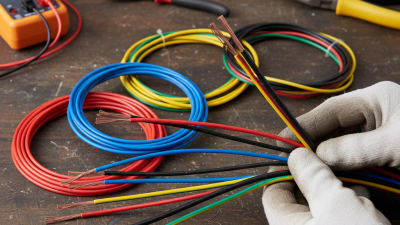
Board Wire is a practical term for insulated conductors used to connect components on or around an electronic board. In a small control unit, short red and black leads may carry power, while thinner signal wires link a sensor to a connector. The exact meaning can vary by supplier, so the product specification matters more than the label alone. That distinction matters.

This guide explains what Board Wire is, where it is used, and how its construction affects performance. Conductor material and size influence resistance and flexibility. Insulation helps protect against abrasion, heat, and accidental contact. A wire suited to a low-voltage prototype may not fit a warm enclosure or moving assembly. Check the rated voltage, temperature range, current capacity, strand type, and compatible terminals before selecting it. Manufacturer data should guide those choices.

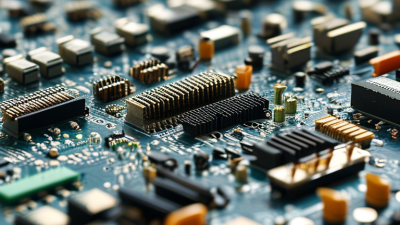
Board wire appears in prototypes, appliances, control panels, and equipment repairs, but it is not automatically right for every board connection. Some boards use printed copper traces or specialized cable assemblies instead. Confusing these options is easy, especially when product names are inconsistent. A useful selection process starts with the circuit, available space, and operating conditions—not just a broad category name. Small details matter. This overview offers a clear starting point, while leaving room to verify each application against its actual requirements.
What Is Board Wire and What Is It Used For?

What Board Wire Is and How It Is Defined

Board wire is an insulated electrical conductor used within or around an assembled circuit board. It carries power or signals between components, terminals, connectors, and other parts that cannot be linked conveniently by printed copper traces. A short stranded wire might connect a board terminal to a switch, while a thicker lead may supply power to a nearby module.

The term is descriptive, not a single universal wire specification. Its exact meaning can vary by manufacturer or application, so the wire’s material, gauge, insulation, and temperature rating matter more than the label alone. Solid conductors hold their shape, while stranded conductors bend more easily during assembly. Insulation helps prevent accidental contact with nearby pins or metal enclosures.

That distinction matters. Board wire is not the same as a copper trace, which is formed directly on a circuit board. Nor should “board wire” automatically imply one fixed voltage or performance rating.

When identifying it, check the equipment documentation and the markings on the wire; appearance alone can be misleading.
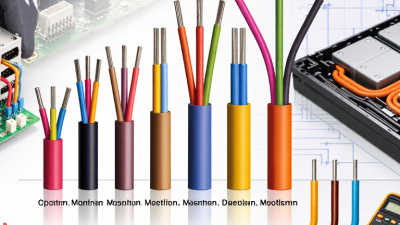
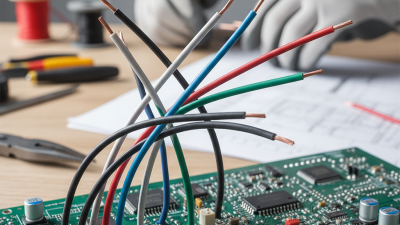
How Board Wire Is Constructed and Insulated

Board wire is built around a conductive core, usually solid or stranded copper, covered by an insulating layer. The conductor carries current; the insulation keeps neighboring wires and conductive surfaces apart. Copper Development Association technical data use 100% IACS, about 58 MS/m at 20°C, as the reference conductivity for electrical copper. Actual resistance still depends on wire size, length, temperature, and connection quality.

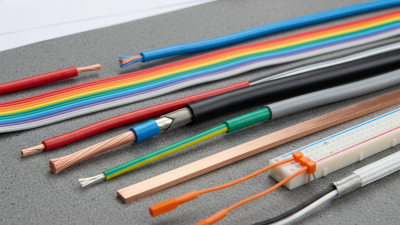
The core may be a single solid conductor for fixed routing, or multiple fine strands for easier bending around board edges and components. A thin, even coating of PVC, silicone, or fluoropolymer protects the metal. The choice affects flexibility, abrasion resistance, and heat tolerance. UL 758 assigns ratings to specific wire constructions, so temperature and voltage limits should be checked on the wire specification—not guessed from color or thickness. A common 105°C rating is not universal.

In practice, an installer strips only enough insulation to expose the conductor, then routes the wire clear of sharp leads and hot parts. Too much exposed copper can touch nearby conductors. Too little can leave a weak connection. IPC-2152 provides guidance for relating copper dimensions and temperature rise in circuit conductors, but it does not replace the wire’s own rating. I would still verify the finished route under real operating conditions; a tidy-looking board can hide a tight bend or trapped insulation.

What Is Board Wire and What Is It Used For? — How Board Wire Is Constructed and Insulated
Wire Type or Feature Typical Construction Common Insulation Typical Uses Important Considerations
General-purpose board wire Usually a solid or stranded copper conductor covered by a continuous insulating layer. Stranded conductors are more flexible than solid conductors of the same size. PVC is common; other materials are selected when flexibility, heat resistance, or chemical resistance is needed. Internal wiring in control panels, electrical equipment, and electronic assemblies. “Board wire” is a broad descriptive term, not one universal construction or rating. Confirm the applicable product specification.
Solid-conductor wire One solid copper conductor beneath the insulation. Often PVC or another material appropriate to the equipment and operating environment. Fixed routing and short connections where the wire is not repeatedly flexed. Can be easier to terminate in some fixed installations, but is less suited to repeated movement than stranded wire.
Stranded-conductor wire Multiple small copper strands twisted or bunched together and covered with insulation. Some conductors are tin-plated to help resist surface oxidation and aid soldering. PVC, silicone rubber, fluoropolymer, or other specified insulation. Equipment wiring that needs easier routing around bends or vibration-resistant connections. Strand count and strand size affect flexibility. Terminals must be suitable for stranded conductors.
PVC-insulated wire Solid or stranded copper conductor with an extruded polyvinyl chloride (PVC) covering. PVC; formulation and thickness vary by product and rating. General internal wiring in many appliances, control equipment, and electronic assemblies. Temperature, voltage, flame, and chemical ratings depend on the specific wire specification; PVC is not suitable for every environment.
Silicone-insulated wire Typically a stranded copper conductor with a soft, flexible silicone-rubber covering. Silicone rubber. Connections that require flexibility or operation at temperatures beyond the limits of many general-purpose PVC wires. Check the product’s stated temperature and electrical ratings. Soft insulation may need protection from abrasion or sharp edges.
Fluoropolymer-insulated wire Usually a solid or stranded copper conductor with a thin, durable polymer insulating layer. Materials such as PTFE or ETFE, depending on the product. Compact equipment wiring and applications requiring specified heat, chemical, or abrasion performance. Do not assume all fluoropolymer wires have the same temperature, voltage, or processing limits; use the datasheet for the exact type.
Conductor size and current capacity Commonly specified by cross-sectional area in mm² or by American Wire Gauge (AWG). Insulation thickness and material form part of the complete wire rating. Selection for power, signal, grounding, and control connections. Permitted current depends on conductor size, insulation temperature rating, ambient temperature, bundling, installation method, and applicable electrical rules.
Insulation and safety markings Markings may identify wire type, conductor size, rated voltage, temperature, or compliance information. Insulation is selected to provide electrical separation and suit the intended operating conditions. Specification checks, installation, maintenance, and inspection. Use wire with ratings appropriate to the equipment and jurisdiction. A color or appearance alone does not establish a wire’s rating.
Selection note: Board wire is generally insulated hook-up wire used for internal electrical or electronic connections. Its exact conductor construction, insulation, and ratings vary by application. Always verify the manufacturer’s technical datasheet and applicable standards before installation.

How Board Wire Connects Components on Circuit Boards

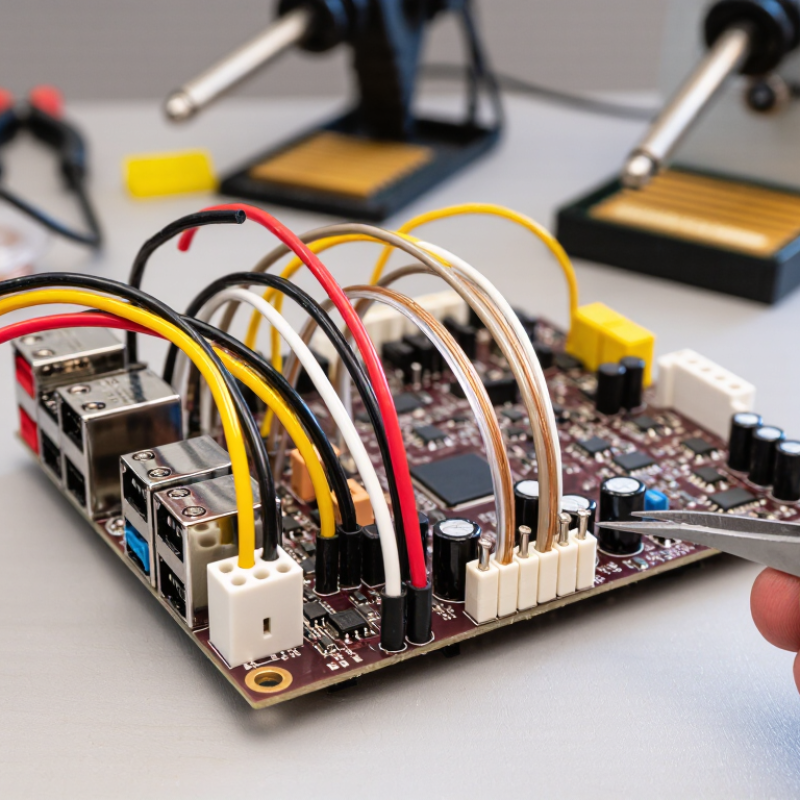
Board wire provides a physical connection between components when copper traces alone cannot make the required route. It may link a switch to a board, carry power to a sensor, or bridge two points on a prototype. Small paths matter. Unlike a printed trace, a wire can cross an open area or connect parts mounted at different heights.

A short, insulated copper wire is often soldered to component leads or designated pads. The stripped ends need enough exposed metal for a sound joint, but too much bare wire can touch nearby conductors. Keep the wire close to the board and secure it where movement could stress the solder. A loose joint may work during testing, then fail after repeated handling.

Wire choice depends on current, signal speed, distance, and available space. Thin wire can suit low-current signals, while power connections may need a thicker conductor. Long or poorly routed wires can pick up noise, so keep sensitive signal paths short and away from switching power lines. It is easy to assume any wire will do. That assumption deserves a second look: the board’s layout, heat, and vibration all affect reliability.

Where Board Wire Is Commonly Used

Board wire is commonly used inside electronic devices to connect a circuit board with parts that cannot sit directly on it. Short lengths may link a board to a switch, indicator light, sensor, battery holder, or external connector. In a small control panel, for example, colored wires can run from the board to buttons on the front, while a cable carries power to the assembly. Keep it short. Fewer loose loops make inspection and servicing easier.

It also appears in appliances, test fixtures, and prototype builds, where components may need flexible connections or occasional replacement. On a workbench, a few centimeters of wire can connect a sensor to a board without redesigning the whole circuit. The correct wire depends on current, temperature, insulation, and movement; thin signal wiring is not a safe substitute for a power lead. In compact enclosures, wires can press against sharp edges or become trapped beneath a cover, so routing and strain relief matter. Neat wiring is the goal, though real assemblies are not always tidy. That is worth checking before closing the case.

How to Choose Board Wire for an Application

Choosing board wire starts with its job. A signal lead for a sensor carries different demands from a power lead for a motor. Check the expected current, voltage, and wire length before choosing a conductor size. A wire that is too thin can heat up or cause voltage drop; one that is too thick may strain small connectors. Small details matter.

Check the insulation’s temperature rating and compatibility with the board’s environment. Heat near a regulator, vibration in a moving assembly, or occasional moisture can change what is suitable. Also consider flexibility and routing space. A stiff wire may press against nearby components when the enclosure closes. Measure the path, including bends, rather than just the distance between connection points. Test the fit.

The termination must match the board’s connector or solder pad, and the wire should be secured so movement does not pull on the joint. Review the equipment specifications and applicable safety requirements instead of relying on a general gauge chart alone. It is tempting to select wire by color or availability, but those factors do not confirm electrical suitability. Prototype with the actual route and load, then check temperature and voltage under normal operation. A tidy layout can still conceal a weak connection.