Leave Your Message

China Top 10 Tactile Switch Manufacturers

A Tactile Switch may be only a few millimeters wide, yet its click shapes how a device feels every day. In keyboards, control panels, remote controls, and handheld instruments, buyers judge more than price. Actuation force, travel, operating life, mounting style, and consistency all matter. A switch that feels crisp in a sample may behave differently after repeated use.

The broader electronics market offers useful context, but not a direct measure of tactile-switch demand. The Semiconductor Industry Association reported global semiconductor sales of $627.6 billion in 2024, citing World Semiconductor Trade Statistics. That figure signals continued activity across electronics supply chains; it does not quantify the tactile switch market. This distinction matters. Product-level claims deserve product-level evidence.

This guide to China Top 10 Tactile Switch Manufacturers is intended to help buyers compare suppliers with practical criteria. Look for published specifications, traceable quality processes, responsive engineering support, and samples tested under real operating conditions. Ask about force curves, contact ratings, lifecycle test methods, and customization limits. A polished catalog is not enough. Manufacturing capability can vary between product families, even within one company. Rankings also simplify a complex market, so treat the list as a starting point—not a substitute for audits, qualification tests, or direct supplier discussions.
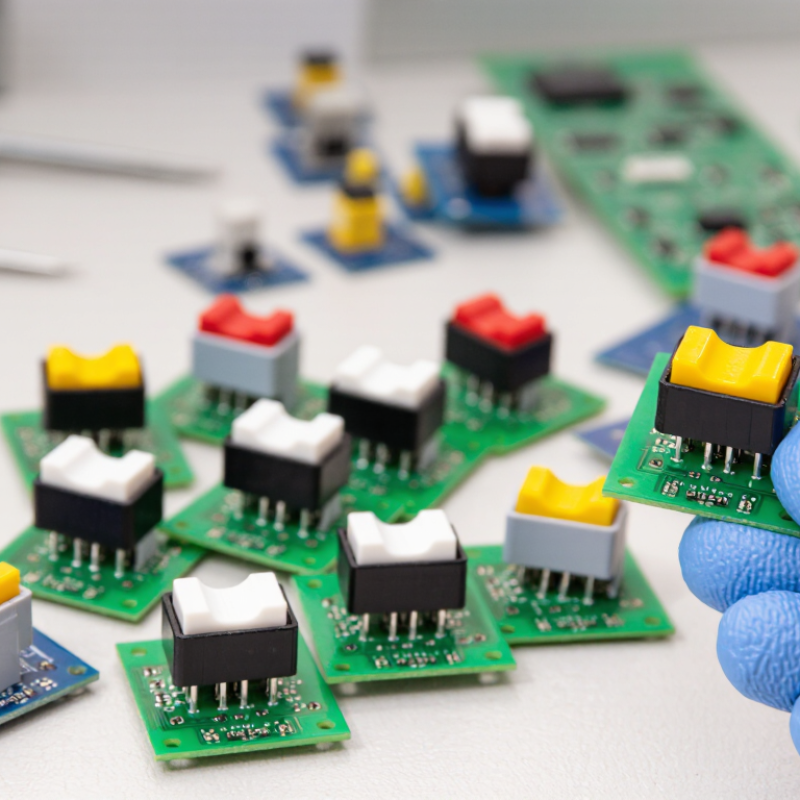
China Top 10 Tactile Switch Manufacturers

What Tactile Switches Are and How They Function

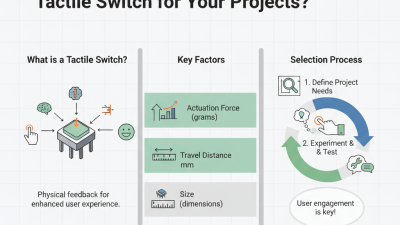
A tactile switch is a small momentary control: press it, and its contacts close; release it, and they open again. Inside, an actuator pushes a metal dome or spring contact against a circuit pad. The dome snaps through, creating the distinct bump under a fingertip. A click helps, but sound alone does not confirm reliable electrical contact. The details matter.

In a remote, appliance panel, or handheld meter, that brief action can trigger a command. Omdia’s 2024 smartphone shipment tracker estimated 1.22 billion global smartphone shipments that year, illustrating the scale of compact electronic interfaces where small controls must fit tight spaces. This figure is not a tactile-switch sales estimate. It is useful context, not proof of switch demand. Tiny parts still carry real design responsibility.

Engineers compare operating force, travel, contact rating, and mechanical life against the device’s use. A soft button may suit frequent presses; a firmer one can reduce accidental activation. Contact bounce can also create multiple electrical signals from one press, so circuit design may need debounce handling. Check the datasheet and test the switch in its actual enclosure. A prototype can feel right on a bare board, then change under a plastic panel. That detail is easy to overlook.
Criteria for Identifying Leading Tactile Switch Manufacturers in China

Evaluating a tactile switch manufacturer in China should begin with the application, not a catalogue. Define the required actuation force, travel, operating life, mounting style, and environmental conditions. Request drawings and test data for the exact part under consideration. Compare force-displacement curves, contact resistance, and dimensional tolerances across several samples. Small details matter. A switch that feels crisp on a bench may behave differently inside a tightly packed device.

Production consistency matters as much as a convincing sample. Ask how incoming materials are checked, how production lots are traced, and what happens when test results fall outside agreed limits. Review inspection records and confirm whether life testing reflects your expected use, rather than relying on a headline cycle count. Engineering support is another useful measure: can the team explain a proposed change to the actuator or housing and provide a revised sample? Clear answers build confidence. Still, a polished report cannot reveal every production variation; buyers should verify later batches, too. No checklist is perfect, and a low-cost sample can sometimes distract from weak process control. Look for evidence, not promises.

China Top 10 Tactile Switch Manufacturers

Criteria for Identifying Leading Tactile Switch Manufacturers in China

Suggested evaluation weights for comparing manufacturers: prioritize product quality and reliability, then assess customization, production capability, and compliance. These are proposed framework weights, not measured supplier scores or market research.

Profiles of Ten Notable Chinese Tactile Switch Manufacturers

Profiles of ten notable Chinese tactile switch manufacturers reveal a varied production landscape, not ten identical factories. One profile may emphasize miniature switches for compact control panels; another may focus on firm, audible feedback for keyboards. Some manufacturers offer broad catalogs, while others concentrate on custom dimensions, actuation force, or terminal layouts. These differences matter. A switch that feels crisp on a sample board may behave differently after repeated use.

A useful comparison also looks beyond catalog descriptions. Check operating force, travel distance, contact resistance, rated life, and available test reports. Ask how samples are inspected and whether production batches are checked consistently. Small details matter. Housing fit, solder terminals, and a clean tactile click can affect assembly and daily use. Some suppliers may provide stronger documentation; others may offer more flexibility for small design changes. Not every profile will suit every project. Without hands-on testing, a ranking can look more certain than the evidence allows. Compare samples under the same conditions, record the results, and note where the available specifications leave questions unanswered.

China Top 10 Tactile Switch Manufacturers - Profiles of Ten Notable Chinese Tactile Switch Manufacturers

Note: The entries below are anonymous product-area profiles, not independently verified company rankings or attributed company records. Product types and applications are general industry categories; confirm manufacturer-specific specifications and certifications directly with suppliers.

Anonymous Profile Product Focus Common Construction or Mounting Typical Applications Key Details to Verify
Profile 1 Standard tactile switches Through-hole or surface-mount options Remote controls, consumer electronics, and control panels Dimensions, actuation force, travel, and electrical rating
Profile 2 Surface-mount tactile switches SMT terminals for automated PCB assembly Compact consumer and portable electronic devices Reflow profile, tape-and-reel packaging, and solderability
Profile 3 Ultra-miniature tactile switches Small-footprint SMT or through-hole formats Wearables, compact controls, and space-constrained boards Overall dimensions, terminal layout, and mechanical tolerances
Profile 4 Illuminated tactile switches Switch versions with integrated lighting elements Backlit interfaces, keyboards, and equipment panels Lighting color, LED requirements, and circuit configuration
Profile 5 Water-resistant tactile switches Sealed designs, where offered Appliances and equipment exposed to occasional moisture Ingress-protection test standard, rating, and test conditions
Profile 6 Side-actuated tactile switches Horizontal or side-push actuator arrangement Handheld electronics and edge-mounted controls Actuator direction, operating force, and board footprint
Profile 7 Long-life tactile switches Mechanical designs specified for repeated operation Frequently used consumer or industrial controls Tested operating life, load conditions, and test method
Profile 8 Low-profile tactile switches Reduced-height bodies for thin product designs Slim control panels and compact electronic assemblies Installed height, actuator clearance, and mounting dimensions
Profile 9 Custom tactile switch configurations Options may include actuator, terminal, or packaging variations Products requiring a tailored PCB interface or control feel Tooling, minimum order quantity, sample lead time, and change control
Profile 10 Application-specific tactile switches Specifications selected for a defined end-use environment Industrial, automotive, or other specialized equipment, depending on qualification Applicable approvals, environmental tests, traceability, and compliance documents

Product Types, Technical Features, and Industry Applications

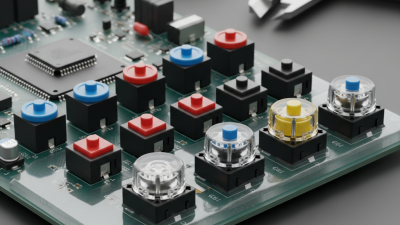
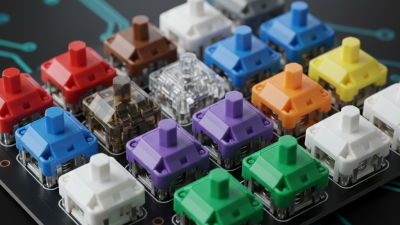
Tactile switches vary by mounting style and feedback design. Common types include surface-mount and through-hole parts, sealed versions for dusty environments, and illuminated switches for visible controls. Their small click can confirm a command without requiring users to watch a screen. Feel matters. Buyers should compare operating force, travel, contact resistance, bounce, and rated mechanical life against the actual circuit and user task.

Technical values are not interchangeable. A force measured under one test method may feel different in a compact handheld device. Confirm the supplier’s test conditions, soldering profile, and life-cycle data before approving a part. Sealing can help resist dust and splashes, but it does not automatically make a complete control panel waterproof. This detail is easy to overlook.

Applications span phones, vehicle consoles, appliances, and industrial control panels. IDC reported 1.24 billion worldwide smartphone shipments in 2024, up 6.4% year over year, supporting continued demand for compact interfaces. The China Association of Automobile Manufacturers reported 31.28 million vehicles produced in China in 2024, a scale that makes durable dashboard and steering controls important. These figures describe broad markets, not tactile-switch demand specifically. For sourcing from Chinese manufacturers, request samples and test click consistency, solder-joint integrity, and performance after repeated operation. A datasheet alone is not enough.

How to Compare Suppliers and Select a Suitable Manufacturer

When comparing China’s top tactile switch manufacturers, judge the evidence, not the catalogue. WSTS’s Autumn 2024 forecast put global semiconductor sales at $626 billion in 2024, up 19% year over year. That broader electronics-market signal makes supply consistency worth checking, though it does not measure tactile-switch demand directly. Ask each supplier for a dated datasheet, lot traceability, and test results for the exact part number. Compare operating force, travel, contact resistance, rated load, and electrical life under the same test conditions. Tiny differences matter. A force curve that feels crisp on one sample may vary across production lots.

Request samples from more than one lot, then test them on your own board and enclosure. Record actuation force and bounce behavior; inspect solder joints after reflow. Ask how the supplier controls material changes, incoming inspection, and defect handling. Verify stated quality-system certifications with current documents, and clarify whether testing is performed in-house or independently. IEC 61058-1 may help frame switch safety requirements where relevant, but it is not a substitute for application-specific validation. Compare lead times using actual production capacity, not a sales estimate. A polished sample can still mislead. I would also ask for a written change-notification process; many buyers forget this until a part has already changed.