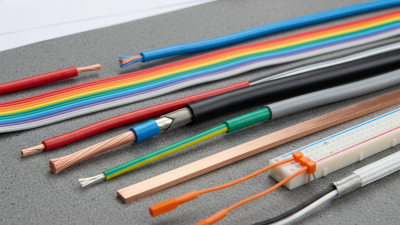
China Top 10 Board Electronics Suppliers? This question deserves more than a simple popularity list. A capable supplier must combine stable production, responsive engineering, and transparent quality controls. The best candidates usually support PCB assembly, embedded boards, control modules, and related electronic integration.
Eric Bogatin, a respected signal-integrity engineer, often emphasizes, “If you don’t understand the return path, you don’t understand the signal.” His warning applies directly to supplier evaluation. A board may look perfect under bright factory lighting, yet fail during vibration, heat cycling, or high-speed data transmission. Real performance lives inside the details.
This guide examines ten Chinese Board Electronics suppliers through practical criteria. These include manufacturing experience, component traceability, inspection equipment, prototype support, and delivery consistency. Certifications matter, but paperwork alone proves little. Visitors should review production records, test procedures, and sample results whenever possible. Ask how suppliers manage obsolete components, engineering changes, and unexpected defects.
Some companies excel at high-volume consumer electronics. Others are stronger in industrial control, automotive electronics, medical equipment, or custom development. The “top” supplier depends on your application, risk level, and required production scale. That point is easy to overlook.
The comparison is not a final verdict. Supplier capabilities change, and public information can be incomplete. A careful buyer should verify current certifications, factory capacity, and communication quality before signing an agreement. One overlooked detail can become a costly redesign. Yet a thoughtful shortlist can reveal partners that deliver more than assembled boards: they can provide dependable engineering support from prototype to production.
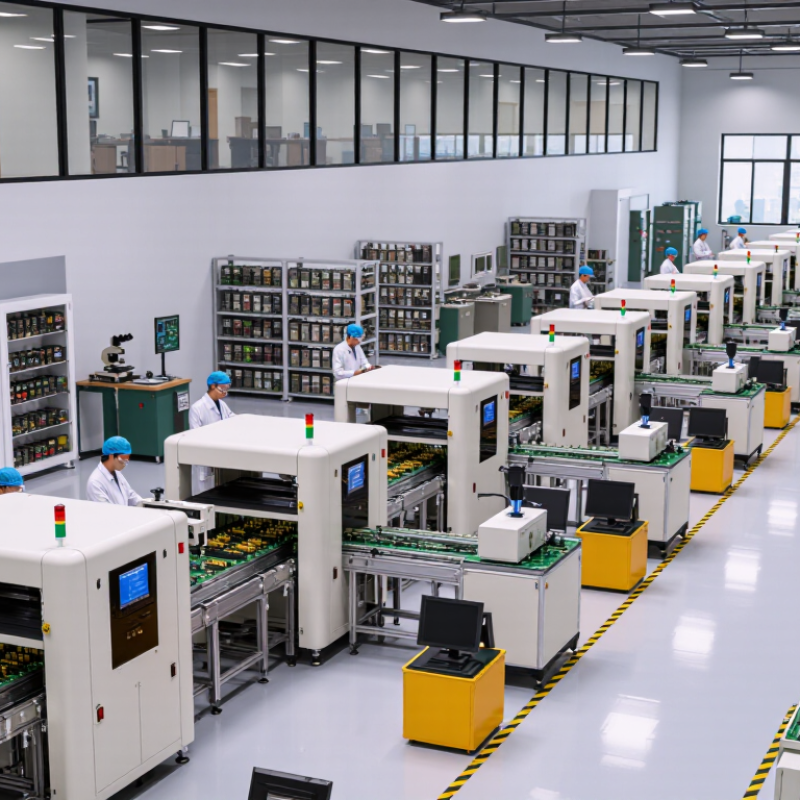
China Top 10 Board Electronics Suppliers?
Definition and Scope of Board Electronics Suppliers in China
Board electronics suppliers are not limited to printed circuit board factories. The scope includes bare PCB production, flexible circuits, rigid-flex boards, semiconductor substrates, component assembly, testing, and engineering support. Suppliers may serve automotive, telecommunications, industrial control, medical, and consumer electronics customers. That distinction matters. A board manufacturer may not provide assembly or final functional testing.
Prismark’s 2024 industry update placed worldwide PCB sales near US$70 billion in 2023. China remained the largest production base, contributing roughly half of global output by value. The China Printed Circuit Association also continues to report strong demand for high-density interconnect, flexible boards, and advanced packaging substrates. These figures show scale, but they do not prove supplier quality. Capacity can hide uneven process control.
A practical supplier review should examine layer capability, minimum line width, material traceability, yield, delivery records, and certification systems. IPC standards provide useful benchmarks for workmanship and reliability. Site audits should check clean storage, automated optical inspection, laboratory records, and operator training. A factory with modern equipment may still perform poorly under urgent orders. This is where many rankings become too simple. The boundary between a board supplier and an electronics manufacturing service provider is not perfectly clean, so each company requires careful classification and independent verification.
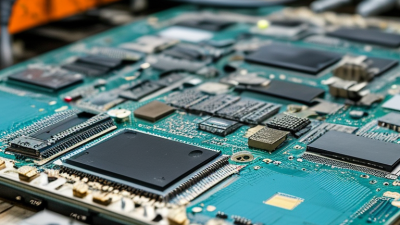
Ranking China’s top ten board electronics suppliers requires more than comparing quoted prices. In factory audits, buyers should verify production capacity, process control, and delivery records. IPC’s 2024 Electronics Industry Impact Report valued the global electronics industry at about US$5.3 trillion. This scale makes supplier reliability a commercial necessity, not a minor preference.
Quality should carry significant weight. Review defect rates, first-pass yield, corrective-action speed, and compliance with IPC-A-600 and IPC-6012 requirements. ISO 9001 certification supports process consistency, but it cannot replace physical inspection. Request cross-section samples, solderability results, and traceability records for materials and batches. Small details matter.
Delivery performance also separates strong suppliers from attractive quotations. Compare on-time delivery, capacity during peak seasons, and recovery plans for component shortages. Engineering support deserves a separate score, especially for impedance control, thermal management, and design-for-manufacturing reviews. Total cost should include tooling, testing, freight, rework, and warranty exposure. The lowest quote may be misleading.
Sustainability and compliance should influence the final ranking. The IEC 62474 material declaration framework helps buyers review restricted substances and supply-chain data. Financial stability, cybersecurity controls, export documentation, and customer references add further evidence. A practical scorecard might assign 30% to quality, 25% to delivery, 20% to engineering, 15% to total cost, and 10% to compliance. No ranking is perfect. Audit findings can change the order.
China’s top ten board-electronics suppliers should be judged by expertise, not factory size. The strongest candidates usually specialize in one or two demanding fields. These include HDI boards, rigid-flex circuits, automotive electronics, medical assemblies, high-frequency boards, power-control boards, aerospace-grade production, rapid prototypes, high-volume PCBA, and low-volume engineering builds. Prismark’s 2024 industry data indicates that China remains the world’s largest PCB manufacturing base, representing roughly half of global production value. Scale matters, but process control matters more.
A useful expertise-based shortlist should examine ten supplier profiles. HDI specialists handle fine traces and microvias. Rigid-flex experts manage repeated bending. Automotive suppliers follow strict traceability routines. Medical producers emphasize contamination control and documentation. High-frequency specialists control signal loss. Power-board manufacturers manage heat and copper thickness. Aerospace suppliers focus on reliability testing. Prototype houses shorten engineering cycles. High-volume factories optimize yield. Flexible-build suppliers support changing designs. IPC’s 2024 technology research continues to highlight miniaturization, reliability, and advanced materials as major industry pressures. Some supplier claims remain difficult to verify, however. Factory tours can look impressive while hidden subcontracting weakens consistency.
Tips: Request recent first-pass yield data, not only capacity figures. Ask for cross-section samples. Check impedance reports, material certificates, and corrective-action records. A supplier that explains one failed batch honestly may be safer than one promising perfection. Confirm whether testing occurs in-house. Also review communication speed, engineering feedback, and change-control discipline. The cheapest quotation can become expensive after solder defects, delayed samples, or repeated tooling corrections.
| Rank | Anonymous Supplier Profile | Primary Expertise | Board Technologies | Typical Capability | Common Compliance Requirements | Best-Fit Applications |
|---|---|---|---|---|---|---|
| 1 | Supplier Profile 01 | High-density interconnect PCB production | HDI, microvia, sequential build-up, rigid multilayer | Fine-line routing, laser-drilled microvias, high-density layouts, impedance control | IPC-6012, IPC-A-600, ISO 9001, RoHS, REACH | Smartphones, networking equipment, compact computing devices |
| 2 | Supplier Profile 02 | Automotive electronics boards | Rigid multilayer, heavy-copper, metal-core PCB | Thermal management, vibration-resistant construction, controlled dielectric performance | IATF 16949, ISO 9001, IPC-6012, AEC-Q-related component requirements | Battery systems, vehicle control units, lighting and driver-assistance electronics |
| 3 | Supplier Profile 03 | Flexible and rigid-flex circuits | Flex PCB, rigid-flex, dynamic-flex assemblies | Polyimide constructions, bend-radius control, coverlay processing, lightweight designs | IPC-2223, IPC-6013, IPC-A-600, ISO 9001, RoHS | Wearable devices, cameras, displays, medical instruments and compact modules |
| 4 | Supplier Profile 04 | High-layer-count and high-reliability PCBs | Multilayer, back-drilled, sequential-lamination boards | Complex stack-ups, via-in-pad processing, signal-integrity and power-integrity control | IPC-6012, IPC-2221, ISO 9001, UL recognition, RoHS | Servers, storage systems, telecom infrastructure and industrial controllers |
| 5 | Supplier Profile 05 | Radio-frequency and high-speed boards | RF PCB, microwave laminate, low-loss multilayer | Low-loss materials, controlled impedance, tight registration and RF testing | IPC-6012, IPC-2221, ISO 9001, RoHS, customer signal-integrity specifications | Wireless infrastructure, radar modules, satellite communications and test equipment |
| 6 | Supplier Profile 06 | Power electronics and thermal PCB solutions | Heavy-copper, metal-core, thick-copper multilayer | High-current routing, thermal vias, copper weights commonly ranging from 2 to 6 oz | IPC-6012, IPC-6016 where applicable, ISO 9001, RoHS | Power supplies, motor drives, renewable-energy inverters and LED systems |
| 7 | Supplier Profile 07 | Medical and instrumentation PCBs | Fine-pitch rigid, flex, rigid-flex and high-reliability multilayer | Traceability, contamination control, inspection records and process validation | ISO 13485, ISO 9001, IPC-6012, IPC-A-600, RoHS | Diagnostic equipment, patient-monitoring devices and laboratory instruments |
| 8 | Supplier Profile 08 | Industrial control and automation boards | Rigid multilayer, mixed-technology and plated-through-hole PCB | Stable long-term production, component availability planning and functional testing | ISO 9001, IPC-6012, IPC-A-600, RoHS and customer test protocols | Factory automation, measurement systems, robotics and process-control equipment |
| 9 | Supplier Profile 09 | Rapid prototyping and low-volume engineering builds | Two-layer to multilayer rigid, HDI prototype and flex prototype | Fast engineering review, prototype fabrication, DFM feedback and sample assembly support | IPC-6012, IPC-A-600, ISO 9001, RoHS and customer drawing requirements | Startups, research laboratories, product-development teams and pilot production |
| 10 | Supplier Profile 10 | Aerospace, defense and mission-critical electronics | High-reliability multilayer, rigid-flex and controlled-impedance PCB | Enhanced documentation, lot traceability, microsection analysis and reliability testing | AS9100, IPC-6012, IPC-A-600, ISO 9001, RoHS and customer-specific qualification | Avionics, secure communications, navigation systems and ruggedized equipment |
Note: Supplier names and brands are intentionally omitted. Capability descriptions reflect established PCB manufacturing technologies and commonly used industry qualification standards; exact layer counts, materials, certifications and production limits should be verified directly during supplier qualification.
China’s leading board electronics suppliers cover more than standard printed circuit boards. Their product ranges include rigid boards, flexible circuits, rigid-flex assemblies, metal-core boards, and high-density interconnect designs. Many also provide surface-mount assembly, box-build integration, testing, and component sourcing. One overlooked detail is documentation quality. A capable supplier should share stack-up drawings, impedance data, inspection records, and material certifications before production.
Technology choices depend on the application. Automotive controllers may require thermal management, vibration resistance, and automated optical inspection. Medical devices need traceability, controlled materials, and stable repeatability across small batches. Industrial systems often use heavy-copper boards for power conversion. Telecommunications equipment favors high-frequency laminates, tight impedance control, and low-loss routing. Consumer electronics typically prioritize miniaturization, fast tooling, and competitive assembly costs.
The strongest suppliers usually combine engineering review with flexible production capacity. They can check solder-mask clearance, adjust drill sizes, and identify manufacturability risks before fabrication. Some facilities support laser drilling, microvia structures, precision milling, and functional testing. Others remain better suited to simple two-layer boards. That difference matters. A supplier ranking can look convincing, yet hide weak after-sales communication or inconsistent lead times. Buyers should compare sample quality, process control, export experience, and response speed. Factory audits help, but they do not reveal everything. A promising prototype can still need several production revisions.
A top-ten list can attract attention, but it cannot identify the right Chinese board electronics supplier for every project. Selection should begin with technical fit, not search ranking. The supplier must understand PCB assembly, component sourcing, testing, traceability, and export documentation. WSTS forecast the global semiconductor market would reach about 611 billion US dollars in 2024, showing strong demand and tighter capacity pressure. That makes production visibility more important than a low quotation.
Request samples from two or three factories. Compare solder quality, component substitutions, inspection records, and delivery consistency. Ask whether the factory follows IPC standards and maintains ISO 9001 quality procedures. For automotive or medical applications, verify sector-specific controls and documented process validation. A supplier should provide realistic tolerance data, not only attractive photographs. In practical sourcing reviews, the cheapest offer often becomes expensive after rework, delayed approvals, or unclear material changes. I would also check financial stability and backup production capacity. This step is sometimes neglected.
Tips:
Use a written scorecard covering quality, lead time, engineering support, communication, and total cost. Audit the actual production line, not only the sales office. Request recent test reports and sample serial records. Clarify who pays for failed batches. Prismark’s industry outlook places continued growth in the global PCB market, but growth does not guarantee reliable execution. Leave room for a pilot order. A perfect supplier rarely exists. Your evaluation should remain adjustable.